Destroying Iran’s nuclear program and regime change. Are either achievable?
- Written by: Ian Parmeter, Research Scholar, Middle East Studies, Australian National University
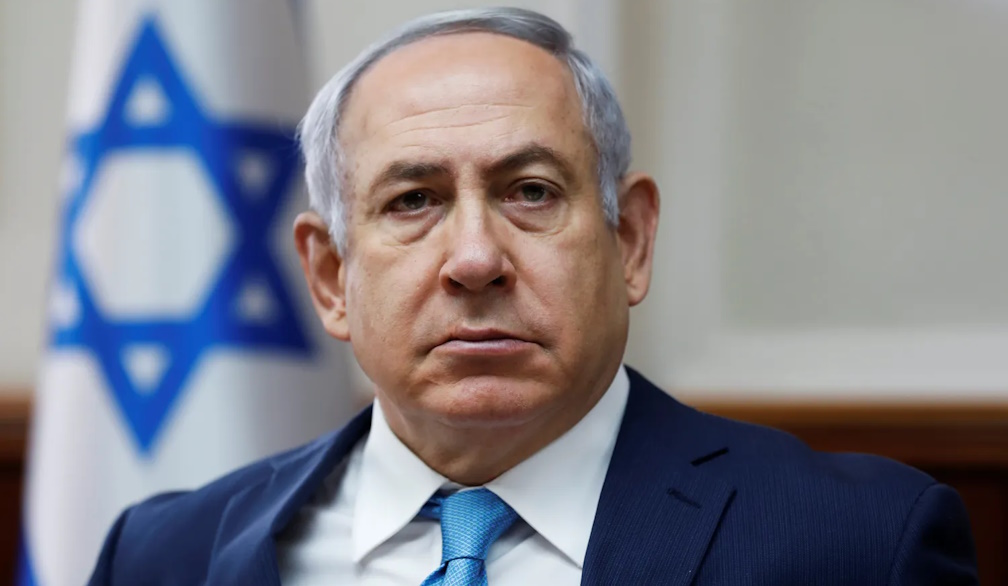
Israeli Prime Minister Benjamin Netanyahu has said Israel’s attack on Iran’s nuclear facilities could last for at least two weeks[1].
His timing seems precise for a reason. The Israel Defence Forces and the country’s intelligence agencies have clearly devised a methodical, step-by-step campaign.
Israeli forces initially focused on decapitating the Iranian military and scientific leadership and, just as importantly, destroying virtually all of Iran’s air defences.
Israeli aircraft can not only operate freely over Iranian air space now, they can refuel and deposit more special forces at key sites to enable precision bombing of targets and attacks on hidden or well-protected nuclear facilities.
In public statements since the start of the campaign, Netanyahu has highlighted two key aims: to destroy Iran’s nuclear program, and to encourage the Iranian people to overthrow the clerical regime.
With those two objectives in mind, how might the conflict end? Several broad scenarios are possible.
A return to negotiations
US President Donald Trump’s special envoy for the Middle East, Steve Witkoff, was to have attended a sixth round of talks[2] with his Iranian counterparts on Sunday aimed at a deal to replace the Iran nuclear agreement negotiated under the Obama administration in 2015. Trump withdrew from that agreement during his first term in 2018, despite Iran’s apparent compliance to that point.
Netanyahu was opposed to the 2015 agreement and has indicated he does not believe Iran is serious about a replacement.
So, accepting negotiations as an outcome of the Israeli bombing campaign would be a massive climbdown by Netanyahu. He wants to use the defanging of Iran to reestablish his security credentials after the Hamas attacks of October 2023.
Even though Trump continues to press Iran[3] to accept a deal, negotiations are off the table for now. Trump won’t be able to persuade Netanyahu to stop the bombing campaign to restart negotiations.
Complete destruction of Iran’s nuclear program
Destruction of Iran’s nuclear program would involve destroying all known sites, including the Fordow[4] uranium enrichment facility, about 100 kilometres south of Tehran.
According to International Atomic Energy Agency (IAEA) Director General Rafael Grossi, the facility is located about half a mile underground, beneath a mountain. It is probably beyond the reach of even the US’ 2,000-pound deep penetration bombs[5].
The entrances and ventilation shafts of the facility could be closed by causing landslides. But that would be a temporary solution.
Taking out Fordow entirely would require an Israeli special forces attack. This is certainly possible, given Israel’s success in getting operatives into Iran to date. But questions would remain about how extensively the facility could be damaged and then how quickly it could be rebuilt.
And destruction of Iran’s nuclear centrifuges – used to enrich uranium to create a bomb – would be only one step in dismantling its program.
Israel would also have to secure or eliminate Iran’s stock of uranium already enriched to 60% purity. This is sufficient for up to ten nuclear bombs[6] if enriched to the weapons-grade 90% purity.
But does Israeli intelligence know where that stock is?
Collapse of the Iranian regime
Collapse of the Iranian regime is certainly possible, particularly given Israel’s removal of Iran’s most senior military leaders since its attacks began on Friday, including the heads[7] of the Islamic Revolutionary Guard Corps and the Iranian armed forces.
And anti-regime demonstrations over the years, most recently the “Women, Life, Freedom” protests after the death in police custody of a young Iranian woman, Mahsa Amini[8], in 2022, have shown how unpopular the regime is.
That said, the regime has survived many challenges since coming to power in 1979, including war with Iraq in the 1980s and massive sanctions. It has developed remarkably efficient security systems that have enabled it to remain in place.
Another uncertainty at this stage is whether Israeli attacks on civilian targets might engender a “rally round the flag” movement among Iranians.
Netanyahu said in recent days that Israel had indications the remaining senior regime figures were packing their bags[9] in preparation for fleeing the country. But he gave no evidence.
A major party joins the fight
Could the US become involved in the fighting?
This can’t be ruled out. Iran’s UN ambassador directly accused[10] the US of assisting Israel with its strikes.
That is almost certainly true, given the close intelligence sharing between the US and Israel. Moreover, senior Republicans, such as Senator Lindsey Graham, have called on Trump to order US forces to help Israel “finish the job[11]”.
Trump would probably be loath to do this, particularly given his criticism of the “forever wars[12]” of previous US administrations. But if Iran or pro-Iranian forces were to strike a US base or military asset in the region, pressure would mount on Trump to retaliate.
Another factor is that Trump probably wants the war to end as quickly as possible. His administration will be aware the longer a conflict drags on, the more likely unforeseen factors will arise.
Could Russia become involved on Iran’s side? At this stage that’s probably unlikely. Russia did not intervene in Syria late last year to try to protect the collapsing Assad regime. And Russia has plenty on its plate with the war in Ukraine.
Russia criticised the Israeli attack when it started, but appears not to have taken any action to help Iran defend itself.
And could regional powers such as Saudi Arabia or the United Arab Emirates become involved?
Though they have a substantial arsenal of US military equipment, the two countries have no interest in becoming caught up in the conflict. The Gulf Arab monarchies have engaged in a rapprochement with Iran in recent years after decades of outright hostility. Nobody would want to put this at risk.
Uncertainties predominate
We don’t know the extent of Iran’s arsenal of missiles and rockets. In its initial retaliation to Israel’s strikes, Iran has been able to partially overwhelm Israel’s Iron Dome air defence system, causing civilian casualties.
If it can continue to do this, causing more civilian casualties, Israelis already unhappy with Netanyahu over the Gaza war might start to question his wisdom in starting another conflict.
But we are nowhere near that point. Though it’s too early for reliable opinion polling, most Israelis almost certainly applaud Netanyahu’s action so far to cripple Iran’s nuclear program. In addition, Netanyahu has threatened to make Tehran “burn” if Iran deliberately targets Israeli civilians.
We can be confident that Iran does not have any surprises in store. Israel has severely weakened its proxies, Hezbollah and Hamas. They are clearly in no position to assist Iran through diversionary attacks.
The big question will be what comes after the war. Iran will almost certainly withdraw from the Nuclear Non-Proliferation Treaty and forbid more inspections by the International Atomic Energy Agency.
Israel will probably be able to destroy Iran’s existing nuclear facilities, but it’s only a question of when – not if – Iran will reconstitute them.
This means the likelihood of Iran trying to secure a nuclear bomb in order to deter future Israeli attacks will be much higher. And the region will remain in a precarious place.
References
- ^ two weeks (www.economist.com)
- ^ sixth round of talks (www.timesofisrael.com)
- ^ Trump continues to press Iran (www.abc.net.au)
- ^ Fordow (www.reuters.com)
- ^ 2,000-pound deep penetration bombs (www.nytimes.com)
- ^ sufficient for up to ten nuclear bombs (edition.cnn.com)
- ^ heads (www.nytimes.com)
- ^ Mahsa Amini (www.bbc.com)
- ^ packing their bags (www.timesofisrael.com)
- ^ directly accused (www.channelnewsasia.com)
- ^ finish the job (www.wsj.com)
- ^ forever wars (www.nytimes.com)