Could Labor’s super tax reforms be headed for a makeover? Here’s how a redesign might work
- Written by: Natalie Peng, Lecturer in Accounting, The University of Queensland
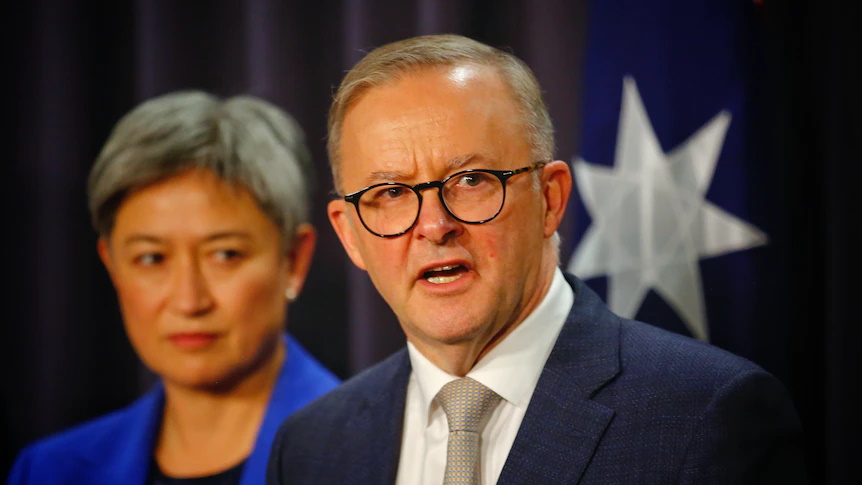
Late last week, citing anonymous sources, the Australian Financial Review reported[1] the federal government was considering delaying and possibly overhauling its plan to impose a higher tax on superannuation balances above $3 million.
The federal government has not confirmed such a pause, but sources reportedly indicated[2] officials were re-examining the policy amid mounting criticism.
There’s still the opportunity for a compromise. Recent polling[3] suggests more than half of Australians support the government’s proposed changes to the way large super balances are taxed. Yet, many groups remain vocally opposed[4] to the way this policy has been put together, for various reasons.
So, are the government’s plans for reform really in trouble – and what might come next?
How did we get here?
In 2023, the Albanese government announced[5] an additional 15% tax on earnings from super balances above $3 million. This would lift the effective rate from 15% to 30% on the wealthiest accounts.
The government estimated[6] this change would affect a very small group: fewer than 0.5% of super members, or about 80,000 people.
The change was framed as a matter of fairness – superannuation was designed to help Australians save for retirement, not to provide unlimited tax shelter for the very wealthy.
But controversy quickly flared over one unusual policy design choice: taxing unrealised capital gains. This would mean a super member could face a tax bill when the value of their fund’s investments rose — even without selling assets or receiving cash.
It’s a bit like being taxed on the rising value of your house each year, even if you were never going to sell it. Critics argue[7] this breaks with a core principle of Australia’s tax system: gains are normally taxed only when they’re realised.
Behind the backlash
Three major concerns dominate the debate around Labor’s proposed changes.
The first relates to “liquidity” – the ready cash someone can actually use, not just wealth tied up in assets like property or super. Critics say taxing “paper gains” could leave members scrambling for funds to pay their tax bill.
For example, a farmer with valuable land in their super fund might face a large tax bill on rising land values, even if they had no cash from a sale to pay it.
The second is the complexity of compliance. Super funds would need to revalue diverse investments every year, from listed shares to property and private equity. This would add significant cost and compliance burdens for funds and for the Australian Taxation Office.
The third concern relates to “bracket creep[8]”. The $3 million threshold central to this policy is not indexed.
As wages and prices rise over time, more Australians will be caught by the policy, even if their relative wealth hasn’t grown. It’s like a coffee that may have cost $3.50 a decade ago now costing $5.50. The coffee hasn’t changed, only the price tag.
In the same way, someone with a $3 million super balance in 20 years won’t be as wealthy as that figure implies today. Together, these concerns have driven industry pushback, fuelled media backlash, and rattled the government.

Alternative options
Indexing the $3 million threshold to inflation or wages would be one easy way to stop “bracket creep” and restore fairness over time. But indexation doesn’t solve what is arguably this policy’s biggest flaw: taxing gains before they are realised.
If the government does decide to pause and redesign its planned reforms, several alternatives are on the table:
Only taxing ‘realised gains’
Super members would pay the extra tax only when assets are sold and profits “crystallised”. This removes liquidity pressures, but may reduce short-term revenue and encourage investors to delay selling — the so-called “lock-in effect.”
Using ‘deeming rates’
The government could assume a notional rate of return called a “deeming rate” on super balances above $3 million and apply the extra tax to that. Deeming rates are fixed percentages the government uses in certain situations to calculate the assumed income from a person’s financial assets, regardless of what those assets actually earn.
This approach, already used for pension means testing, is simple and predictable. But choosing the right rate is tricky: set it too high and savers are overtaxed; set it too low and the government loses revenue.
Putting hard caps on super balances
Another option would be to set a maximum balance, say $3 million or perhaps $5 million, that could remain in the concessional system. Anything above this amount would need to be withdrawn and invested elsewhere.
This is straightforward in theory but politically sensitive: no government likes telling people they’ve saved “too much” and now have to pull money out of their preferred account.
The bigger picture
This debate is about more than tax mechanics. At stake is the very purpose of superannuation. The superannuation system was designed to provide retirement income, not to serve as a tax-free inheritance vehicle or wealth shelter. Extremely large balances stretch that purpose and risk undermining public trust.
It also raises issues of generational fairness. Younger Australians – already struggling with housing and unlikely to accumulate multimillion-dollar super balances – are effectively subsidising tax breaks for a wealthy few.
Politically, the government also faces a credibility challenge: constant tinkering erodes confidence, but poorly designed reforms do the same.
A combination or hybrid model of the options discussed here could be explored to balance simplicity, fairness and revenue needs. For example, indexing the threshold and also using a deeming rate to calculate returns.
The principle is clear: very large balances should not enjoy the same concessions as ordinary retirement savings. The challenge is finding a design that is workable as well as fair.
References
- ^ reported (www.afr.com)
- ^ reportedly indicated (www.afr.com)
- ^ Recent polling (australiainstitute.org.au)
- ^ vocally opposed (www.theaustralian.com.au)
- ^ announced (ministers.treasury.gov.au)
- ^ estimated (parlinfo.aph.gov.au)
- ^ argue (www.taxinstitute.com.au)
- ^ bracket creep (theconversation.com)
- ^ Dean Lewins/AAP (photos.aap.com.au)