Donald Trump and Xi Jinping Meet: Key Outcomes and Implications for Australia
- Written by: Times Media
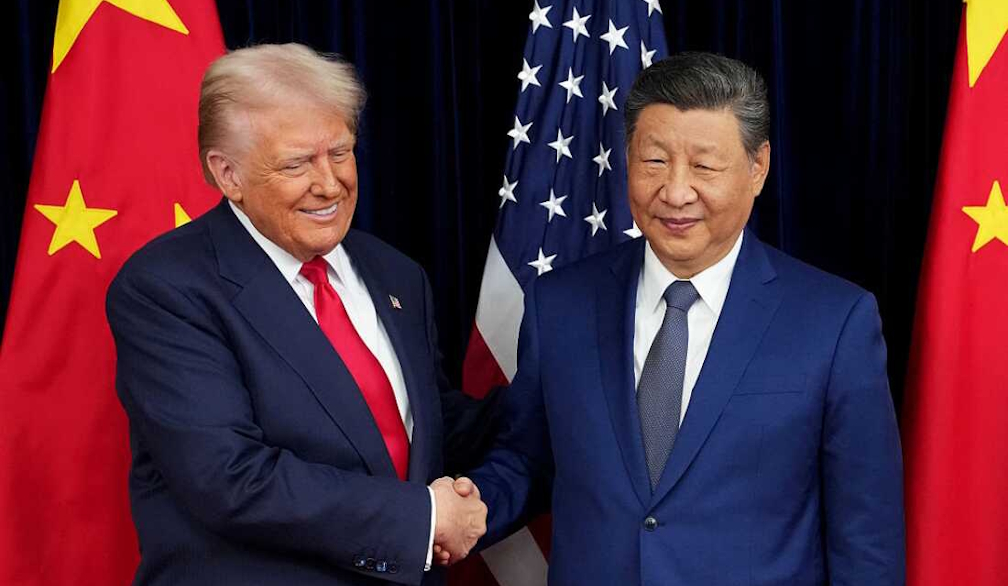
On 30 October 2025, U.S. President Donald Trump and Chinese President Xi Jinping held high-stakes talks on the sidelines of the APEC 2025 summit in Busan, South Korea. While the meeting did not resolve all longstanding trade, technology and security tensions between the U.S. and China, it yielded a number of concrete outcomes — plus a clear signalling effect — that have significant implications for the Indo-Pacific region. For Australia, with its deep trade and strategic links to both allies and China, the implications are especially important.
Below is a breakdown of:
-
What was agreed (and what wasn’t)
-
How the outcomes affect Australia’s interests (opportunities and risks)
-
What to watch going forward
1. What was agreed (and what remained unresolved)
Key outcomes:
-
China (via Xi) and the U.S. (via Trump) reached a deal that includes:
-
A pause in Chinese export controls on rare-earths and critical minerals for one year, easing tensions over supply-chain leverage.
-
China committed to resuming large-scale purchases of U.S. agricultural goods (notably soybeans) as part of a tariff/volume trade agreement.
-
The U.S. agreed to reduce some tariffs imposed on Chinese goods (the figure cited: from ~57 % down to ~47 %) and remove some trade friction.
-
Both sides signalled a broader diplomatic engagement: planned reciprocal visits, improved economic/trade dialogue and more regular bilateral talks.
-
What was not resolved / remaining friction points:
-
The talks did not appear to tackle some of the core geopolitical flashpoints: Taiwan was reportedly not discussed.
-
Structural issues in U.S.–China tech competition (semiconductors, AI, export controls) remain unresolved. The deal is better described as a truce than a full reconciliation.
-
China retains considerable leverage in supply-chains of rare-earths, minerals and components, meaning uncertainty remains for global firms.
-
While tariffs are reduced, they are still elevated relative to pre-trade-war levels; many underlying trade practice issues remain unaddressed.
Why this matters:
The meeting signals that both superpowers are seeking to stabilize their relationship after years of escalation. But it also signals that competition will persist and that Asia-Pacific will be a key theatre in that contest.
2. How Australia’s interests will be affected
Australia sits at a complex junction of trade, security and diplomacy: it trades heavily with China, while also being a close strategic partner of the U.S. The Trump–Xi meeting shifts dynamics in ways that will affect Australia in both positive and cautionary ways.
A. Trade & economic implications
Opportunities:
-
A reduction in U.S.–China trade tension may ease global supply chain stress, which is good for major Asian economies including Australia. For example, Australian dollar movements are sensitive to U.S.–China trade sentiment.
-
Australia has large reserves of critical minerals and rare earths; with China easing export controls and the U.S. keen to diversify from China, Australia stands to benefit from being part of upstream supply chains for minerals.
-
If China resumes significant purchases of agricultural or commodity goods (even if not Australian specific) the “risk premium” on commodity-trade may fall, which is positive for Australia’s resource-export-heavy economy.
Challenges / Risks:
-
If the U.S. deepens efforts to shift supply chains away from China, other suppliers (including Australia) may be pulled into competitive dynamics. Australia must manage whether it is aligned more with U.S. supply-chain objectives (reducing dependence on China) or maintaining its long-standing trade relationship with China.
-
Australia will need to guard against being caught between U.S. and China if trade decoupling accelerates. For example, if the U.S. imposes new tariffs or export controls and Australia is seen as siding too closely with either side, it may face retaliatory or secondary impacts.
-
With China retaining leverage in the rare-earth supply chain, Australia’s own mining and export industries may face volatility in pricing, regulatory risk and demand shifts.
B. Strategic & security implications
Positive angles for Australia:
-
The meeting suggests the U.S. is stabilising its relationship with China, which may reduce sudden shifts in regional strategic dynamics. A more stable U.S.–China “game” is beneficial for medium-sized regional players like Australia.
-
Australia’s defence and technology partnerships with the U.S. (for example via AUKUS) may gain traction as the U.S. refocuses on Indo-Pacific security and supply-chain resilience. Separate Australia-U.S. rare-earths deals (signed in October 2025) underline this.
-
Australia could leverage its dual trade/security relationship: being trusted by the U.S. and still trading effectively with China gives Canberra a degree of diplomatic flexibility.
Risks / dilemmas:
-
A U.S.–China “truce” might embolden China to concentrate on regional influence (South China Sea, Taiwan, Pacific islands) in ways that bypass the U.S. but impact Australia’s strategic environment. If Australia is too aligned with Washington, it may risk push-back from Beijing.
-
Australia’s choice of alliances and trade partners may increasingly be forced: e.g., if the U.S. presses for certain countries to choose sides in supply chains or military partnerships, Australia must balance its economic with its security imperatives.
-
A less confrontational U.S.–China posture might reduce the urgency for Australia to invest heavily in its own defence or diversify alliances — potentially risking strategic complacency.
C. Australia’s diplomatic position
-
The meeting underscores that Australia must now thread a triple-front strategy: maintain strong ties with the U.S., protect trade with China, and engage constructively with regional neighbours (ASEAN, Pacific islands) who may be caught in the super-power dynamics.
-
Australia may find itself asked to contribute more to the U.S. vision for Indo-Pacific security – for instance via submarines, infrastructure, critical minerals – which brings opportunities but also expectations and cost burdens (financial and diplomatic).
-
Australia needs to monitor how China responds to U.S.–China agreements: if China shifts policy to focus more intensely on its own regional strategy (instead of direct confrontation with the U.S.), Australia’s China-relationship risks may increase even as global U.S.–China tensions ease.
3. What to watch going forward
Here are some key variables and timelines that Australia should monitor:
-
Implementation of the rare-earth / supply-chain agreement: Will China honour for the full year the easing of export controls? Will U.S. and China follow‐through on volume commitments? How will that shift global supply-chain flows, and where will Australia fit in?
-
Tariff and trade policy shifts: The U.S. announced tariff reductions to ~47 % from ~57 % for Chinese goods in this deal. Will further rounds of reductions occur? Will the U.S. pivot to other trade instruments (export controls, investment screening)? Australia must assess collateral effects.
-
China’s strategic posture in the region: If China uses the truce to consolidate influence in the South China Sea, Taiwan Strait, Pacific islands or Belt & Road initiatives, Australia’s security environment may shift even without new tariffs.
-
Australia’s role in critical-minerals and defence supply-chains: Australia should track how the Australia-U.S. critical minerals deal evolves, and adjust its domestic policy (investment, regulation, workforce) accordingly. Meanwhile, participation in AUKUS and other defence tech projects will impose demands.
-
Exchange and currency flows: How the deal affects commodity prices, the Australian dollar (AUD), foreign investment, and Australia’s export markets. Already, AUD traded higher after the announcement.
-
Australia’s diplomatic balancing act: Will Australia be called upon by either side (U.S. or China) to make harder choices? How will Canberra defend its national interest while maintaining credibility with both powers?
-
Domestic political implications: In Australia, trade vulnerability (especially to China) remains a political risk. Public opinion on China and the U.S. is shifting. Canberra may face pressure to adapt policy accordingly.
Conclusion
The Trump–Xi meeting of late October 2025 marks a significant shift in U.S.–China dynamics: a moment of relief, a subtle recalibration, rather than a full reset. For Australia, the outcomes present both opportunities (especially in trade, supply-chains and defence technology) and risks (strategic hedging, dependency on external powers, regional shifts).
Australia’s core interest will be to maximise the upside — securing stronger links into the global critical-minerals and high-tech supply-chains, benefiting from stabilised U.S.–China trade tension — while piloting through the downside: ensuring its economic ties with China remain resilient, its security posture remains adaptive, and its diplomacy remains independent rather than reactive.
In short: this meeting offers Australia a window of opportunity to reposition itself in a changing landscape — but it also demands strategic clarity, domestic policy readiness and regional awareness. The next 12-24 months will likely show whether this moment becomes a stepping-stone towards diversification and resilience for Australia, or a source of new dependency and strategic exposure.