


the US Supreme Court raises doubts about Trump’s tariff regime
- Written by: Catherine Gascoigne, Macquarie Research Fellow in International Economic Law, Macquarie University
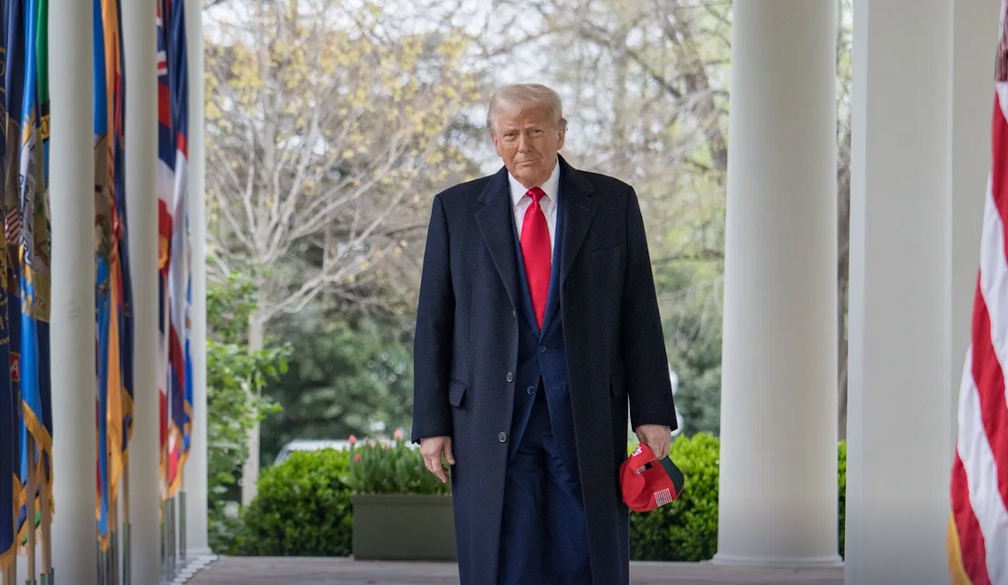
The US Supreme Court has heard arguments overnight on the legality of President Donald Trump’s “liberation day” tariffs on most countries around the world.
The number of sceptical questions posed by the justices in the hearings[1] was striking for a court that is dominated by conservative appointees by six to three.
At stake is not only whether the sweeping tariffs will be upheld, but the extent to which the Supreme Court is willing to extend the limits of presidential power.
So, what will the the court have to consider?
Where’s the emergency?
Trump issued these tariffs in April claiming an economic emergency, using the International Emergency Economic Powers Act[2] (IEEPA) of 1977. So, the two primary legal questions for the court to consider are:
-
whether the IEEPA authorises Trump to issue widespread tariffs; and
-
if the IEEPA does authorise tariffs, whether it delegates authority to the president in an unconstitutional manner.
These questions have already been considered by three lower US courts, including the United States Court of International Trade[3]. All three courts found that Trump’s tariffs were illegal.
Trump claims his power to impose tariffs is derived from the words “regulate … importation” in the IEEPA. However, justices from both sides of politics expressed scepticism about how much authority that implied. The majority in one of the lower courts described the phrase[4] as “a wafer-thin reed”.
Supreme Court Justice Brett Kavanaugh, a Trump appointee, said[5]:
Figuring out what ‘regulate importation’ means is – is obviously central here […] One problem you have is that presidents since IEEPA have not done this.
Chief Justice John Roberts and Justice Amy Coney Barrett[6], both conservatives, expressed doubt about that phrase authorising tariffs of the scale of the “liberation day” tariffs. Justice Roberts said[7]:
The justification is being used for a power to impose tariffs on any product from any country for – in any amount for any length of time. […] that’s major authority, and the basis for the claim seems to be a misfit.
Justice Elena Kagan, a Democratic appointee, seemed to sum up the case when she quipped[8] that the IEEPA “has a lot of verbs … It just doesn’t have the one you want”.
In short, whether such an ambiguous phrase could confer such sweeping powers was sharply questioned by justices on both sides of politics.
Discussion of refunds on tariffs already paid
The fact the Supreme Court went on to consider the question of remedies for potentially striking down the tariffs is also a telling sign.
Specifically, Justice Barrett asked how the process for issuing refunds for the potentially illegally collected tariffs would work.
Counsel for the plaintiffs explained the five businesses that brought the action against Trump’s tariffs would be reimbursed first.
As to the imports from the rest of the world, given the case was not a class action, the process would be “a very complicated thing”. As the lawyers for the businesses elaborated on what the refund process might look like, Justice Barrett interjected with the summation[9]: “So, a mess”.
Counsel for the businesses noted there may be legal precedent for the court to limit its decision to “prospective relief[10]”. This means the Supreme Court’s decision would only affect tariffs collected after the court’s judgement, with no effect on tariffs collected before it.
If this legal precedent were to be followed, refunds would not be issued for tariffs collected before the Supreme Court decision (except for the five businesses that brought the case). The court did not pass any comment on the likelihood of following such a precedent.
Regardless of how the refunds might be issued, it is clear they would result in economic and political upheaval, both for the US and exporters from around the world.
Nonetheless, counsel for the businesses noted the Supreme Court had previously said in a case from 1990, “a serious economic dislocation[11]” was not a reason not to do something. In other words, the fact the reimbursement process would be difficult to administer should not be a block to the Supreme Court ruling the tariffs are illegal.
When will the justices rule?
The court agreed to hear the case on an “expedited” basis, but has not set a date for when it will rule. Betting markets were swift to react, though, with traders marking down the chances of the court ruling in Trump’s favour to 30%[12] after the hearing, from nearly 50% before.
Never one for understatement, Trump has said[13], “I think it’s the most important decision … in the history of our country”.
Despite Trump’s hyperbole, the case currently before the US Supreme Court is not just about the “liberation day” tariffs. It is also about the role of the judiciary in limiting ever-expanding presidential power. This role is so important that it transcends political lines.
References
- ^ in the hearings (www.supremecourt.gov)
- ^ International Emergency Economic Powers Act (www.govinfo.gov)
- ^ United States Court of International Trade (www.cit.uscourts.gov)
- ^ described the phrase (www.cafc.uscourts.gov)
- ^ said (www.supremecourt.gov)
- ^ Justice Amy Coney Barrett (www.supremecourt.gov)
- ^ said (www.supremecourt.gov)
- ^ quipped (www.supremecourt.gov)
- ^ summation (www.supremecourt.gov)
- ^ prospective relief (www.supremecourt.gov)
- ^ a serious economic dislocation (www.supremecourt.gov)
- ^ to 30% (www.cnbc.com)
- ^ said (www.msn.com)










