Parents in America Will Welcome the Arrest of Maduro
- Written by: The Times
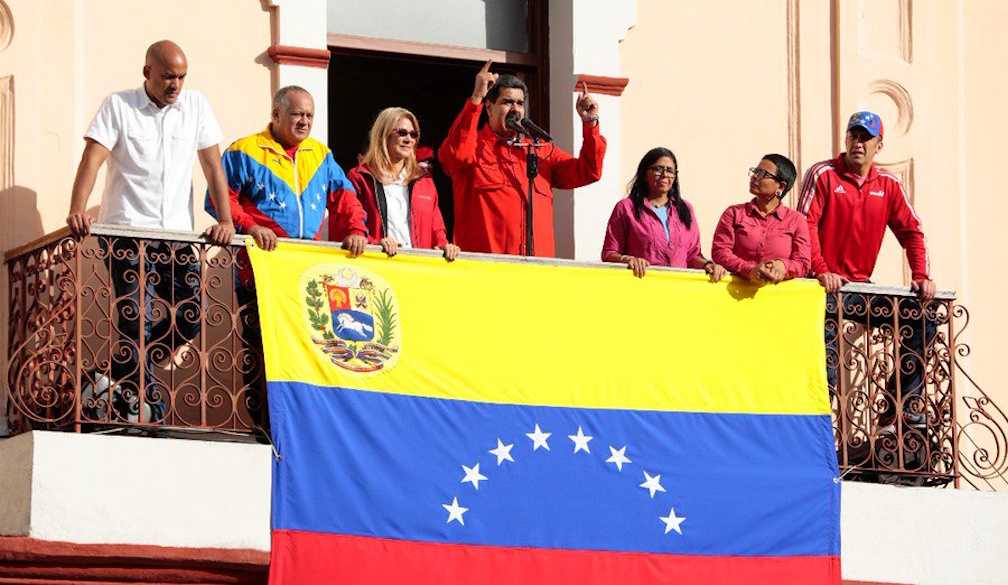
Not as a dictator — but as a drug dealer
For many parents across the United States, the arrest of Nicolás Maduro would be greeted not with geopolitical analysis, but with something far more personal: relief. Relief that a man long accused by U.S. authorities of enabling international drug trafficking is finally being treated not as an untouchable head of state, but as a criminal suspect whose alleged actions have poisoned communities far beyond Venezuela’s borders.
This reaction cuts across party lines and ideology. For parents who have buried children lost to fentanyl overdoses, meth addiction, or cocaine-fuelled violence, the question has never been whether Maduro is a socialist strongman, a populist, or a Latin American autocrat. The question has been simpler and harsher: who is responsible for the drugs that keep arriving, year after year, into American streets?
A criminal case, not a coup
From Washington’s perspective, the case against Maduro has long been framed in criminal — not ideological — terms. U.S. prosecutors have accused him of participating in, or protecting, narcotics networks that move cocaine from South America through Central America and the Caribbean, ultimately into the United States. In this framing, Maduro is not primarily charged as a dictator, but as a drug trafficker who used state power as cover.
That distinction matters deeply to ordinary Americans.
For parents in Ohio, Arizona, Texas or Pennsylvania, this is not about regime change or Cold War ideology. It is about fentanyl-laced cocaine killing teenagers at parties. It is about organised crime profiting from misery. It is about the belief that some leaders have hidden behind sovereignty while allegedly facilitating crimes that devastate families thousands of kilometres away.
Seen through this lens, an arrest would feel less like foreign interference and more like overdue law enforcement.
Why American parents see this differently
Drug policy debates often become abstract — statistics, charts, speeches. But for parents, the drug crisis is intimate and immediate. In many U.S. communities, one or two degrees of separation is all it takes to know someone who has overdosed.
When U.S. officials argue that Venezuelan state-linked networks helped flood the region with cocaine, parents hear something very specific: someone helped supply the poison that killed our kids.
That is why an arrest framed as a criminal prosecution — rather than a political takedown — resonates so strongly. It signals that power does not permanently shield individuals from accountability when their alleged actions have international consequences.
Trump, the campaign, and law-and-order politics
The renewed attention on Maduro also intersects with U.S. domestic politics. Donald Trump, campaigning once again on a hard-line law-and-order platform, has repeatedly emphasised border security, drug enforcement, and transnational crime.
For Trump and his supporters, a case against Maduro reinforces a broader narrative: that weak enforcement allowed criminal networks to flourish, and that decisive action is needed — even against powerful figures — to protect American families.
Critics argue this framing oversimplifies a complex regional crisis. Supporters counter that complexity has too often become an excuse for inaction.
Regardless of political allegiance, many parents care less about campaign messaging than outcomes. They want fewer drugs. Fewer funerals. Fewer names added to memorial walls.
Venezuela’s tragedy — and its spillover
None of this erases Venezuela’s own suffering. Millions have fled the country under Maduro’s rule, escaping economic collapse, food shortages, and political repression. Venezuelan families have paid an enormous price, and many resent seeing their nation reduced solely to a narco-state caricature.
But these realities coexist. A leader can preside over humanitarian catastrophe and be accused of international criminal conduct. One does not negate the other.
For American parents, empathy for Venezuelans does not cancel out anger over drugs entering U.S. neighbourhoods. They see two victims of the same system — one inside Venezuela, one abroad — and a small group of powerful figures allegedly deemed to have benefited while others suffered.
Sovereignty versus accountability
The arrest of a sitting or former head of state inevitably raises questions about international law and sovereignty. Critics warn of dangerous precedents. Supporters argue the precedent already exists — criminals operating at the highest levels have historically enjoyed impunity.
Parents who support prosecution rarely speak in legal theory. They speak in moral terms.
If an individual is accused of coordinating or enabling drug trafficking that kills tens of thousands, should their title protect them? Or should accountability follow the harm?
For many Americans, the answer feels self-evident.
A symbolic moment for the drug crisis
Whether or not a prosecution ultimately succeeds in court, the symbolism matters. Treating Maduro as a drug defendant rather than an ideological adversary reframes the conversation around responsibility and consequence.
To parents watching from afar, it signals that the global drug trade is not an abstract force of nature. It is run by people. People who make decisions. People who can, in theory, be held accountable.
That belief alone carries power.
What comes next
No single arrest will end the drug epidemic. Parents know this. They have watched enforcement victories come and go while addiction persists. But moments like this shape expectations — about seriousness, about priorities, about whether leaders truly intend to confront the machinery behind the crisis.
For American parents, the hope is not revenge. It is prevention. It is deterrence. It is the belief that fewer children will die because someone, somewhere, finally said that power does not excuse poison.
If Maduro is remembered not only as a dictator, but as a man accused of helping traffic drugs across borders, then to many grieving families, justice will feel — at least symbolically — closer than it has in years.
And for them, that alone makes the moment significant.