The Farrer By-Election: It’s Election Day in Farrer
- Written by: The Times
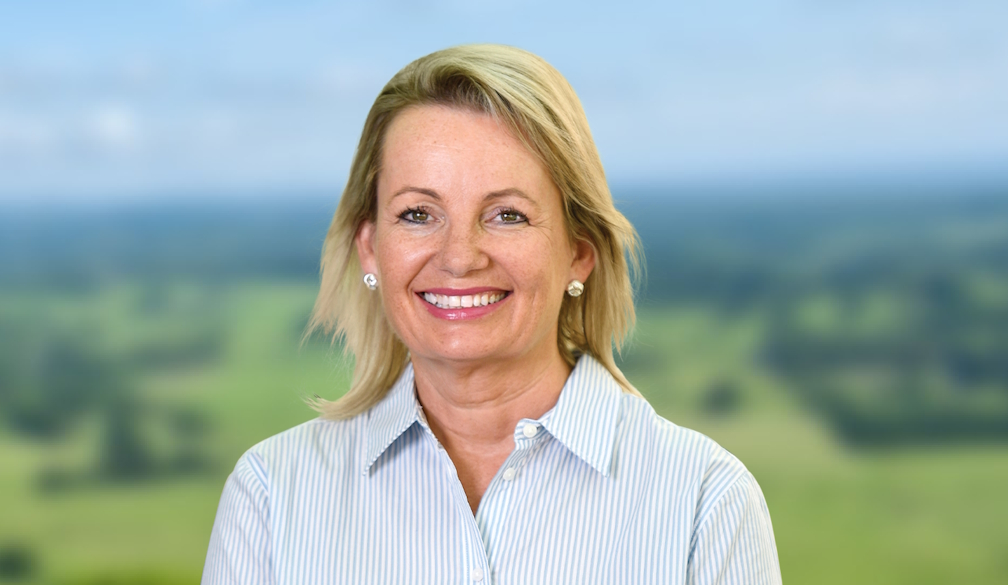
Today, voters across Division of Farrer head to polling booths in what has become one of the most closely watched by-elections in Australia this year. While the seat itself is geographically distant from Canberra’s inner political circles, the political meaning of the result may travel far beyond the towns, farms and regional centres that make up this vast electorate.
The contest is not simply about who will represent Farrer in federal parliament. It has increasingly become a test of mood, frustration, economic anxiety and political identity in modern Australia.
For the major parties, and particularly for the Albanese Labor Government, today’s vote may reveal whether voters are satisfied with the direction of the nation — or whether they are searching for alternatives.
Farrer is one of the most diverse electorates in regional Australia. It stretches across urban centres, farming communities, irrigation districts, small business towns and remote rural areas. It contains people whose daily realities differ enormously. Some voters worry about mortgage repayments and fuel prices in larger regional cities. Others are focused on water allocations, freight costs, crop viability and the future of country industries.
Yet despite those differences, many voters appear united by one broad concern: the feeling that life has become harder.
Across Australia, households are grappling with rising grocery prices, higher electricity bills, expensive insurance premiums and uncertainty about interest rates. While governments point to inflation moderation and economic resilience, many families still feel financially stretched.
That national atmosphere has inevitably flowed into the Farrer by-election campaign.
The candidates themselves reflect the broad political currents moving through regional Australia.
The Coalition candidate has campaigned heavily on cost-of-living concerns, regional infrastructure, farming issues and criticism of federal economic management. The Liberal and National parties understand that holding conservative regional seats is fundamental to their future prospects nationally. A poor result here would raise questions about whether traditional conservative support is beginning to fragment.
Labor, meanwhile, faces the difficult task of defending the government’s economic record during a period when many Australians remain frustrated with household finances. While the government continues to argue that inflation pressures were global and inherited, elections are often less about explanations and more about personal experience. Voters tend to ask a simple question: “Am I better off?”
If the answer is no, governments often suffer.
But perhaps the most intriguing aspect of the Farrer by-election has been the attention surrounding Pauline Hanson and One Nation.
For years, Pauline Hanson has positioned herself as a voice for Australians who feel ignored by major political institutions. Her party’s messaging frequently centres on national identity, immigration, cost pressures, regional decline, fuel prices, housing affordability and distrust of political elites.
In many ways, the Farrer by-election provides fertile ground for those arguments.
Regional Australia has experienced enormous change over recent decades. Many country towns have watched banks close branches, government services centralise, local newspapers disappear and younger residents move away seeking opportunity elsewhere. Farmers face increasing pressure from input costs, climate variability and international market forces. Meanwhile, some regional communities believe policy decisions are increasingly shaped by metropolitan priorities rather than rural realities.
Against that backdrop, protest voting becomes more understandable.
If the One Nation candidate performs strongly — or particularly if an upset victory were to occur — the political consequences would echo loudly through Canberra.
Such a result would likely be interpreted as more than a local issue. It would be viewed as a message from voters who believe Australia is declining economically, socially or culturally. It would suggest that a growing number of Australians feel disconnected from the major parties and are searching for alternatives outside the traditional political framework.
A strong One Nation performance would also intensify debate about immigration levels, energy policy, manufacturing decline and national self-sufficiency.
Supporters of Pauline Hanson argue that many Australians feel they are losing control over the direction of the country. Critics argue her politics simplify complex problems and risk division. Yet regardless of political opinion, One Nation’s continued presence demonstrates that a significant portion of the electorate wants its frustrations heard.
That may ultimately become the real story of Farrer.
Modern elections increasingly function as emotional referendums as much as policy contests. Voters are not simply choosing between candidates; they are expressing feelings about the nation itself.
Do Australians feel optimistic?
Do they feel secure?
Do they believe their children will enjoy a better future?
Do they believe governments understand ordinary life?
These questions sit quietly beneath every modern election campaign.
The Farrer electorate, with its combination of urban workers, retirees, farmers, small business operators and rural communities, may provide an unusually accurate snapshot of broader Australian sentiment.
Many residents of regional Australia often feel they experience national policy decisions first and hardest. Fuel costs hit country drivers harder because distances are longer. Electricity price increases affect farming operations and refrigeration costs. Housing shortages are no longer confined to Sydney and Melbourne. Medical access remains difficult in many country areas. Even basic services can involve long travel times.
As a result, regional voters frequently become early indicators of political dissatisfaction.
The by-election campaign has also highlighted another emerging political reality: voters increasingly distrust political messaging itself.
Both major parties continue to spend heavily on advertising, social media campaigns and carefully scripted announcements. Yet many voters now rely more heavily on personal experience than political promises. If supermarket prices remain high, official inflation figures matter less. If housing feels unaffordable, macroeconomic explanations carry limited emotional weight.
This creates a volatile political environment.
A by-election like Farrer can therefore become symbolic far beyond its numbers in parliament.
For Labor, a poor result may be interpreted as a warning that cost-of-living pressures remain politically dangerous despite attempts to stabilise the economy.
For the Coalition, failure to dominate a traditionally conservative electorate could suggest that disillusioned voters are drifting toward populist alternatives rather than returning automatically to mainstream conservatism.
For Pauline Hanson and One Nation, a strong showing would reinforce the idea that a segment of Australians want sharper political language and more direct challenges to establishment politics.
By tonight, Australia will know the result.
But perhaps more importantly, the nation may gain a clearer understanding of how Australians are feeling in 2026.
The Farrer by-election is not just about one electorate.
It is about confidence.
Confidence in government.
Confidence in the economy.
Confidence in the future.
And increasingly, Australians appear determined to use the ballot box to make those feelings known.
A particularly interesting element in this campaign has been the emergence of independent-style politics and the debate surrounding candidates who position themselves outside the traditional party system.
Questions have been raised during the campaign about whether candidates presenting themselves as independents are genuinely politically independent, or whether they align philosophically with the so-called “teal” movement that has reshaped parts of Australian federal politics in recent years.
Some voters in Farrer have openly debated whether the independent candidate represent a true community independent voice or whether, if elected, she would ultimately support Labor legislation and help sustain a Labor government in parliament.
That distinction matters politically.