AUKUS Pushes Ahead As Hegseth Warns Against Chinese “Hegemony” In Asia
- Written by: The Times
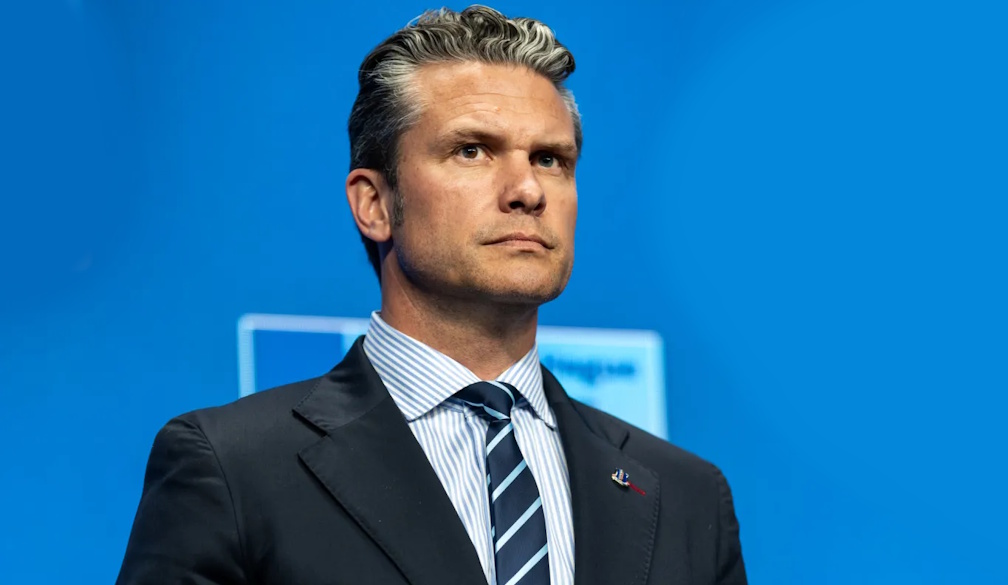
The AUKUS security partnership has moved into a new and more ambitious phase following high-level talks between Australian Defence Minister Richard Marles, United States Defence Secretary Pete Hegseth and British Defence Secretary John Healey in Singapore.
Meeting on the sidelines of the Shangri-La Dialogue, Asia’s most significant annual defence and security forum, the three allies reaffirmed their commitment to the AUKUS pact while unveiling new military technology initiatives and outlining the next stage of Australia’s nuclear-powered submarine pathway.
The meeting comes at a time of growing strategic competition across the Indo-Pacific and renewed debate about China’s expanding military influence throughout the region.
In one of the most closely watched speeches of the summit, Pete Hegseth declared the United States would not allow China to establish regional dominance.
“America will not allow China to impose hegemony” across Asia, Hegseth told delegates, while reaffirming Washington’s commitment to maintaining a strong military presence throughout the Indo-Pacific.
While his remarks were firm, observers noted that Hegseth adopted a more measured tone than some previous US statements on China. Rather than escalating rhetoric, he emphasised deterrence, alliance-building and regional stability while also calling on allies to contribute more to collective defence efforts.
For Australia, the meeting delivered significant developments.
The three AUKUS partners confirmed that Australia’s acquisition of nuclear-powered submarines remains on track, while announcing refinements to the planned purchase of Virginia-class submarines from the United States. The updated approach will see Australia acquire three in-service Virginia-class vessels, streamlining logistics, maintenance and training requirements.
The ministers also announced progress on Submarine Rotational Force-West at HMAS Stirling in Western Australia, a key component of the broader AUKUS framework that will host rotating US and UK submarine deployments from 2027. Australia has committed billions of dollars towards infrastructure, logistics and maintenance facilities to support the initiative.
Beyond submarines, the partnership is expanding rapidly into advanced military technologies.
The ministers unveiled what they described as the first major AUKUS Pillar Two signature project — the development of advanced payloads and systems for uncrewed undersea vehicles. Initial deliveries are expected to commence in 2027, providing new capabilities in surveillance, anti-submarine warfare, electronic warfare and maritime security.
Richard Marles used the summit to highlight broader security concerns emerging across the Indo-Pacific.
He warned of increasing attacks and damage to subsea infrastructure, describing undersea cables as critical arteries of modern civilisation. Marles pointed to incidents in the Taiwan Strait and Baltic Sea and called for greater transparency regarding maritime activities. He also stressed the importance of maintaining international maritime law and protecting critical infrastructure.
Despite raising concerns about regional security challenges, Marles also sought to balance Australia’s approach toward Beijing.
The Defence Minister noted that Australia values the stabilisation of its relationship with China over recent years and acknowledged China’s importance as Australia’s largest trading partner. He argued that productive engagement with Beijing remains possible alongside a strong national security posture.
One notable feature of this year’s Shangri-La Dialogue was China’s decision not to send its Defence Minister for a second consecutive year. The absence attracted significant attention among delegates and limited opportunities for direct engagement between Chinese and Western defence leaders.
The developments underscore the increasingly central role AUKUS is playing in Australia’s long-term defence planning.
While supporters argue the partnership is essential to maintaining strategic balance in the Indo-Pacific, critics continue to question the enormous financial commitments and whether the region is entering a period of accelerated military competition.
What appears increasingly clear is that AUKUS is no longer simply a future submarine program. It is rapidly evolving into a broad strategic alliance focused on advanced military technology, intelligence sharing, industrial integration and regional deterrence.
As tensions between the United States and China continue to shape global security calculations, Australia finds itself at the centre of one of the most consequential defence partnerships in modern history. The decisions announced in Singapore suggest that Canberra, Washington and London intend to move forward at full speed.