


If Australia Can Build New Suburbs, Why Not Build New Towns?
- Written by: The Times
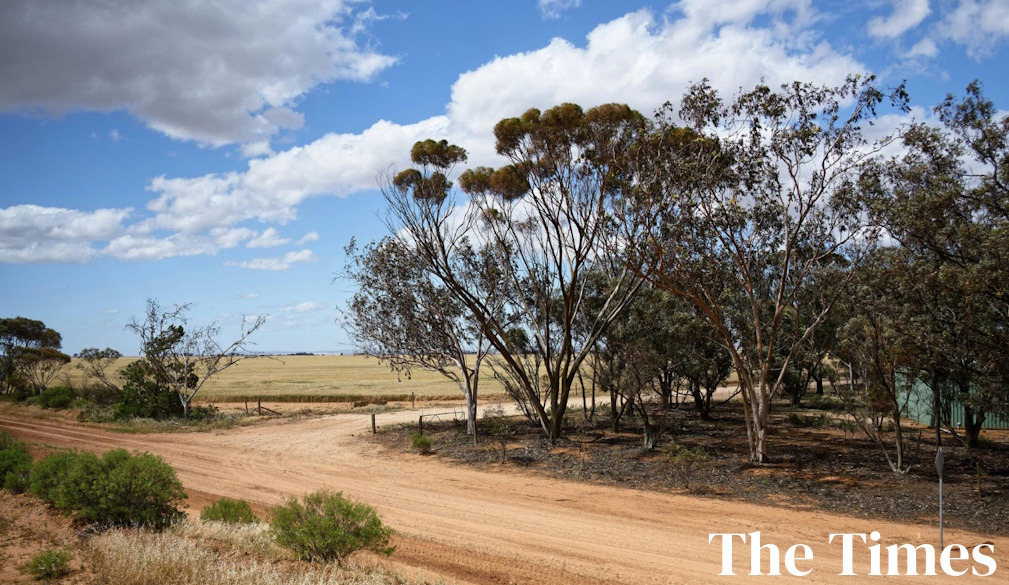
Australia has a housing problem, but it also has something many crowded countries do not have: land.
The national debate is usually about density, zoning, apartments, migration, interest rates and whether enough homes are being approved. Those issues matter. Australia has committed to a national target of 1.2 million new well-located homes over five years to June 2029.
But there is another question worth asking.
If Australia can keep building new suburbs on the edges of existing cities, why can it not build entirely new towns?
Across every state and territory there are locations with some of the essentials already nearby. Main roads. Rail lines. Regional airports. Water sources. Power corridors. Existing service towns. Land that is not locked inside the congestion of Sydney, Melbourne, Brisbane, Perth or Adelaide.
The idea is not fanciful. Canberra was planned. Albury-Wodonga was once treated as a major national growth centre. Australia has previously understood that settlement patterns can be shaped by policy, infrastructure and private investment.
A modern version would not need to be a government-only project. It could be a partnership between governments, major land developers, home builders and infrastructure providers.
The model is simple enough to describe, even if difficult to execute.
Choose suitable locations. Secure water, roads, power and communications. Create a dedicated planning authority. Appoint experienced developers. Build homes, schools, medical services, shops, parks and employment zones together, not as afterthoughts.
The lesson from failed housing expansion is that houses alone do not create communities. People need jobs, transport, healthcare, childcare, schools, trades, sport, hospitality and ordinary civic life. A new town must be designed as a place to live, not merely a place to sleep.
Planning would still need environmental safeguards, proper engineering, Indigenous consultation and transparent public accountability. Cutting red tape should not mean cutting standards. But it should be possible to reduce duplication between councils, state agencies and federal programs.
One option would be to create autonomous development localities for selected new towns. A single authority could manage planning, infrastructure staging and design standards, rather than leaving the project vulnerable to years of fragmented decision-making.
There would be risks. A new town without employment becomes a dormitory. A town without transport becomes isolated. A town without design discipline becomes another low-quality subdivision.
But doing nothing also carries risks. Capital city suburbs are spreading further out. Roads are crowded. Families are pushed into smaller blocks, longer commutes and higher debts. Regional centres absorb growth unevenly while infrastructure struggles to catch up.
Australia does not lack space. It lacks a clear settlement strategy.
The housing debate should not only ask how many homes can be squeezed into existing cities. It should also ask where the next generation of Australians should live.
Perhaps the next great national building project is not another outer suburb.
Perhaps it is a new town.
Ten Places Australia Could Build Its Next New Towns
Australia has no shortage of land. The challenge is finding the right land.
If governments ever embraced the idea of creating entirely new towns rather than simply extending existing suburbs, the ideal locations would share several characteristics. They would have reliable water, access to transport, relatively flat land suitable for development, proximity to employment or industry, and the ability to connect to existing electricity and communications networks.
No one is suggesting these locations should become cities overnight. Instead, they illustrate the type of regional locations where carefully planned communities could be established over the coming decades.
1. Inland South East Queensland
Between Toowoomba and the Darling Downs lie areas already connected by major highways, freight rail and growing industrial activity. The region benefits from established agriculture, manufacturing and logistics, making it a natural candidate for future residential expansion.
2. New South Wales – Central West
The corridor between Bathurst, Orange and Parkes already has excellent transport connections, established hospitals, universities, mining, agriculture and inland freight facilities. Rather than concentrating growth on Sydney's outskirts, additional communities could strengthen this thriving regional economy.
3. Victoria – North of Melbourne
Victoria continues to expand rapidly beyond Melbourne. Areas connected to the Hume Freeway and existing rail corridors could support entirely new master-planned communities while remaining linked to established regional centres.
4. South Australia's Mid North
The corridor between Adelaide and Port Augusta already carries significant road and rail traffic. Renewable energy projects, mining and agriculture provide an economic foundation that could support carefully planned population growth.
5. Western Australia's Wheatbelt
Not every new town must rely on mining. Parts of the Wheatbelt already have transport infrastructure, agricultural industries and proximity to Perth, offering opportunities for diversified regional development.
6. Tasmania's Northern Midlands
Located between Hobart and Launceston, the Midlands has highway access, agricultural land and room for carefully managed expansion. A new community here could strengthen Tasmania's north-south economic corridor.
7. Northern Territory – South of Darwin
With defence investment, expanding logistics and increasing strategic importance, the Darwin region continues to grow. Planned communities further inland could accommodate future population while supporting regional industry.
8. Queensland – Central Coast and Inland Corridors
Queensland has several inland corridors adjacent to established regional cities where transport, education and healthcare already exist. Planned growth could reduce pressure on the state's rapidly expanding coastal strip.
9. Western Sydney's Outer Fringe
Rather than another collection of disconnected housing estates, Australia's largest city could benefit from a genuinely planned satellite town built around employment, transport, education and recreation from day one.
10. Regional Western Australia Near Existing Ports
Ports handling agricultural exports, minerals and manufactured goods already support surrounding industries. Purpose-built communities near these economic centres could diversify local economies while creating attractive places to live.
Building More Than Houses
The success of any new town would depend on more than simply releasing land.
Employment would need to arrive early. Schools, medical centres, sporting facilities, shopping precincts and public transport would need to be planned from the beginning. Broadband, electricity, water security and environmental management would be as important as roads and housing.
History shows that the most successful communities are those where people can build careers, raise families and enjoy a high quality of life without depending on a distant capital city.
Australia has the engineering capability, the construction industry and the private-sector expertise to build such communities. The question is whether governments, developers and investors are prepared to think beyond the next suburban estate.
As the nation searches for long-term solutions to housing affordability and population growth, perhaps the next generation of Australians will not simply move to another suburb.
Perhaps they will help build Australia's next great regional town.










