Inside Labor’s National Conference: Who Really Shapes Party Policy?
- Written by: The Times
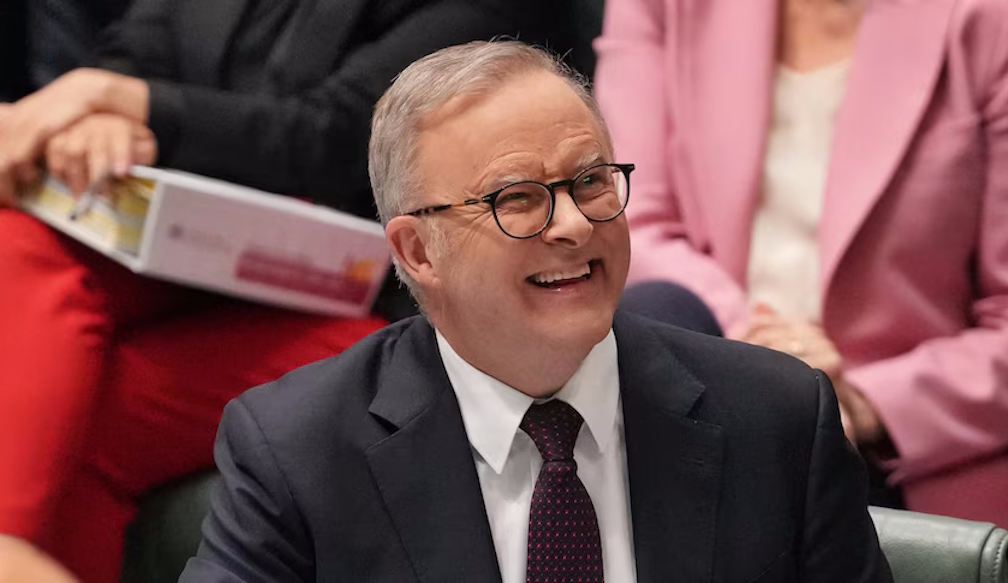
The Australian Labor Party is holding its 50th National Conference in Adelaide, bringing together parliamentarians, trade union representatives, party officials and grassroots members to determine Labor’s policy direction for the next three years.
To supporters, the conference is an expression of internal democracy: members of the broader Labor movement debating the values and policies of Australia’s oldest political party.
To critics, it is a powerful gathering at which unions, factions and political professionals can exert influence over the policies of a government elected by the wider Australian population.
Both descriptions contain an element of truth.
The National Conference does not govern Australia and cannot pass legislation. However, when Labor holds federal office, decisions made inside the conference hall can influence the priorities of the Commonwealth Government.
Where and when is the conference?
The 50th ALP National Conference is being held at the Adelaide Convention Centre from Thursday, July 23, until Saturday, July 25, 2026.
It is a significant anniversary for the party. Labor says the conference marks the 50th occasion on which national delegates have gathered to deliberate and determine the future direction of the movement.
The conference is generally held once during each federal parliamentary term. The previous full National Conference was held in Brisbane from August 17 to 19, 2023.
Who attends?
The conference includes approximately 400 voting delegates, although the wider gathering attracts more than 2,000 party members, observers, supporters, parliamentarians, union officials and representatives of interested organisations.
Those present include:
Federal Labor ministers and backbenchers.
State and territory Labor premiers, ministers and MPs.
Delegates representing Labor’s state and territory branches.
Representatives of trade unions affiliated with the party.
Young Labor delegates and other organisational representatives.
Party officials, campaign professionals and invited observers.
Prime Minister Anthony Albanese, senior Cabinet ministers and other members of the Federal Parliamentary Labor Party attend, but the conference is not simply a meeting of elected politicians.
It is a gathering of the wider Labor organisation.
Labor describes National Conference as its highest decision-making forum and Australia’s largest political gathering.
What does the National Conference do?
The conference debates and adopts Labor’s National Platform.
That platform sets out the party’s beliefs, priorities and broad program for government. It covers matters including taxation, employment, industrial relations, health, education, housing, energy, defence, immigration, environmental policy and international affairs.
A draft platform is developed before the conference by Labor’s National Policy Forum. Delegates then consider amendments, negotiate compromises and vote on the final document.
The conference can also change the ALP’s national constitution and organisational rules, consider policy motions and elect members of the party’s National Executive.
Labor’s own description says the National Platform provides members and the community with a statement of the party’s values and intended program for government.
In practical terms, National Conference performs several functions at once.
It is a policy convention, an organisational meeting, a political showcase and a gathering of the numerous groups that constitute the modern Labor movement.
What role do trade unions play?
Trade unions have been central to the Labor Party since its creation in the 1890s.
The party emerged from the labour movement and maintains formal relationships with affiliated unions. Union representatives therefore participate directly in Labor’s organisational and policy processes.
Labor’s rules provide for substantial union representation within state party conferences. The national constitution states that state conferences are generally to comprise 50 per cent union representatives and 50 per cent constituency party representatives, subject to particular arrangements applying to territory branches.
National Conference delegations are allocated through state and territory branches, meaning affiliated unions can have considerable influence over the people ultimately sent to the national gathering.
This does not mean every union agrees with every other union. Nor does it mean union delegates always control the final outcome.
Different unions align with different Labor factions and advocate different economic, industrial and social priorities. Agreements are frequently negotiated before proposals reach the conference floor.
Nevertheless, unions possess an institutional role within Labor that business groups, charities, professional associations and other community organisations do not have.
That is the source of much of the political controversy surrounding the conference.
Is it a socialist festival?
Labor’s constitution describes the party as a democratic socialist party.
It would therefore be inaccurate to pretend socialism has no place in Labor’s history, traditions or organisational identity.
However, describing National Conference simply as a socialist festival would obscure more than it explains.
Modern Labor governments operate within a market economy. They work with private companies, financial institutions, foreign investors and international trading partners. Labor administrations have privatised government assets, entered free-trade agreements and implemented market-based economic reforms.
The conference does provide a platform for unions and Labor’s ideological left to advocate greater public ownership, stronger workplace regulation, higher taxation of particular industries and restrictions on some commercial activities.
It also includes members of Labor’s more economically conservative right faction, Cabinet ministers responsible for maintaining business confidence and parliamentary representatives conscious of what voters will accept.
The result is generally not pure socialism. It is a negotiated Labor program combining market economics with government intervention, workplace regulation, public services and income redistribution.
Can unions determine how Australia is run?
Unions can influence Labor policy, particularly on workplace laws, wages, superannuation, industry regulation and employment conditions.
At the present conference, delegates have considered proposals involving superannuation for workers under 18, energy taxation, artificial intelligence in workplaces and the proposed creation of a Fair Work Court.
That influence is real and should not be understated.
However, unions do not possess direct constitutional power over Australia.
Australia is governed through Parliament, Cabinet, the courts and the federal system. Laws must be passed by the House of Representatives and the Senate before receiving royal assent. Government spending is subject to parliamentary authority, while executive decisions remain constrained by legislation and judicial review.
Union delegates cannot enact a tax, change an immigration law, recognise a foreign state or commit Australia to an international agreement merely by passing a conference motion.
What they can do is place political pressure on a Labor government to pursue a particular course.
Can the conference decide whom Australia interacts with?
Foreign affairs can be among the most contentious subjects considered at National Conference.
Delegates can adopt platform positions concerning defence alliances, trade, human rights, Israel and Palestine, China, Taiwan, the Pacific and Australia’s relationships with international institutions.
These positions matter because they become part of the governing party’s formal platform.
However, diplomatic recognition, treaties, sanctions and decisions about Australia’s official international relationships remain responsibilities of the elected government.
The 2026 conference has already illustrated the distinction. A representative of the Taipei Economic and Cultural Office reportedly attended as a general observer, prompting objections from a Chinese diplomat. Labor officials declined a request to remove the Taiwanese representative.
The incident demonstrates that foreign governments and diplomatic representatives take the conference seriously. It does not mean the conference independently controls Australian foreign policy.
Is a Labor government bound by conference decisions?
This is the central question.
A Labor government is politically and organisationally expected to respect the National Platform. Labor MPs belong to a disciplined political party and generally defend its agreed policies.
But conference resolutions are not Australian law.
A resolution does not automatically bind Parliament, the Governor-General, the courts or the public service. It cannot appropriate public money or compel Cabinet to introduce legislation.
Governments also face circumstances that conference delegates do not control: economic downturns, wars, diplomatic crises, budget limitations, Senate opposition and changing public opinion.
A Labor Cabinet may therefore delay, modify or decline to implement parts of the platform.
The difference can be seen when conference delegates endorse a policy that the government has previously resisted. The resolution increases internal political pressure, but implementation still requires a government decision and, frequently, legislation.
The National Conference is consequently authoritative within the Labor Party without being sovereign over the Australian nation.
Is the conference genuinely democratic?
The conference is democratic within the structures established by the Labor Party.
Delegates vote, amendments can be proposed and different groups are represented.
But it is not a direct referendum of Labor’s entire membership, much less the Australian electorate.
Factional organisation is important. Many outcomes are negotiated before public debate begins. Unions, parliamentary leaders and factional officials often seek compromises designed to avoid damaging confrontations on the conference floor.
This can make proceedings appear highly managed.
Supporters say negotiation is a normal feature of collective decision-making and allows a broad political movement to remain united.
Critics argue that prearranged deals can reduce open debate and give organised factions more influence than ordinary party members.
Both assessments help explain why National Conference can be simultaneously described as Labor’s highest democratic forum and as a carefully choreographed political production.
Why should Australians pay attention?
Most Australians will never attend an ALP National Conference.
However, its decisions may eventually affect their workplaces, taxes, retirement savings, energy bills, businesses and Australia’s international relationships.
The conference is particularly consequential while Labor governs federally. It provides an opportunity for affiliated unions, party branches, activists and parliamentarians to influence the government’s future agenda.
That influence is legitimate within a political party. It is also legitimate for Australians to examine who holds it, how it is exercised and whether the resulting policies serve the wider national interest.
The Times View
Labor’s National Conference is not an alternative Australian Parliament, and union delegates do not acquire governmental authority by entering the conference hall.
Nevertheless, the gathering matters.
It establishes Labor’s formal policy direction, gives affiliated unions privileged access to the party’s decision-making structure and applies political pressure to a government that carries the Labor name.
The correct response is neither to dismiss the conference as an irrelevant party gathering nor to portray it as a body secretly governing the country.
It should be understood for what it is: a powerful political forum that influences the government but remains subject to Cabinet decisions, parliamentary approval, constitutional limits and, ultimately, the judgment of Australian voters.