What Olympic athletes can teach us about regulating our emotions and staying dedicated
- Written by: Thomas Hannan, Postdoctoral research fellow, Griffith University
Olympians are often seen as the epitome of human performance, with incredible physical and mental strength. And with the 2020 Tokyo Olympic games well underway, it’s hard to not be impressed by the sheer talent and determination of athletes competing from all over the world.
For many of us non-Olympians, the thought of possessing such capabilities is but a dream. But research in sport psychology suggests there are indeed some skills we can learn from the experts, as long as we’re willing to put in the work ourselves.
What makes an Olympic athlete?
Being an Olympian not only requires immense physical talent but also an incredible amount of psychological control. Sport psychologists have spent decades trying to identify the key psychological ingredients that make the world’s greatest athletes great.
For one, elite athletes display high levels of passion and commitment towards their sport. They also tend to believe in their own abilities more than the average person - which can protect them against the negative effects of stress[1].
Resilience and determination help them bounce back from defeat. A case in point: after competing in three prior Olympic games, British diver Tom Daley recently won[2] his first ever Olympic gold medal in Tokyo.
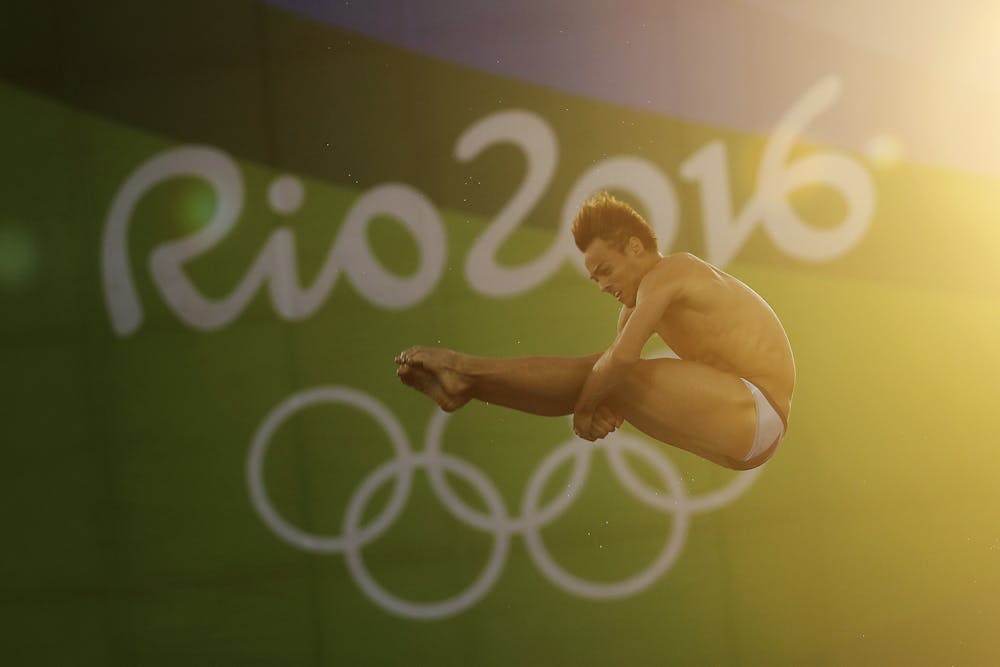 Tom Daley failed to qualify for the 10m final at the Rio 2016 Summer Olympics.
Wong Maye-E/AP
Tom Daley failed to qualify for the 10m final at the Rio 2016 Summer Olympics.
Wong Maye-E/AP
While competing, athletes must effectively regulate their emotions and attention to ensure best performance. Not keeping their emotions in check may compromise their performance under pressure — a phenomenon often referred to as “choking[3]”.
The withdrawal[4] of gymnast Simone Biles from the US women’s team and all-round finals to focus on her mental health has highlighted to the whole world how important it is for athletes to be aware of their emotional and psychological functioning.
But how is discipline developed?
While genetics do play a role in shaping an elite athlete[5], life experiences and environmental factors are also very important. Characteristics such as self-efficacy (your belief in your ability to perform a task) develop through experience and continued support from others.
Read more: Tokyo Olympics: what are the limits of human performance? Podcast[6]
Studies show enabling a supportive environment[7] which promotes free will, emotional expression and non-controlling feedback is important for enhancing athletes’ psychological well-being.
This type of environment fosters what we call “autonomous motivation”, which is the motivation to perform an action based on one’s own interest or enjoyment. Research has shown behaviours that are autonomously motivated are more likely to be maintained long-term[8].
Olympic champions often deal with multiple stressors relating to their sports performance, occupation and personal lives. But their work requires them to develop resilience[9] and approach stressors as challenges to be overcome.
An athlete’s performance can also be impacted by a variety of environmental cues[10] including their peers, opponents, training facilities, training activities and their coach. Coaches therefore have a particularly important role in shaping an athlete’s environment and promoting high performance.
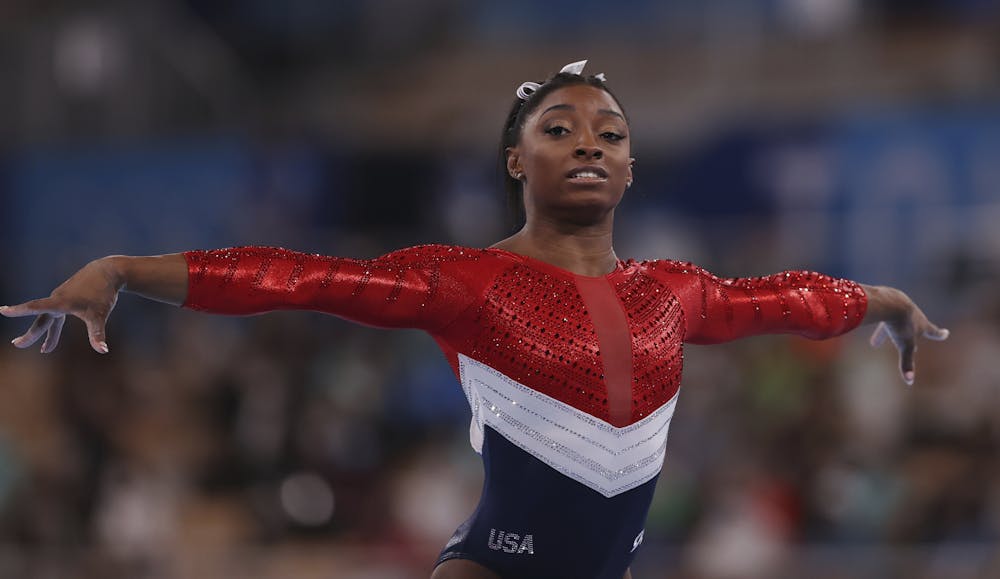 US gymnast Simone Biles told media outlets her withdrawal from the finals was motivated by concerns for her mental health.
Kunihiko Miura/AP
US gymnast Simone Biles told media outlets her withdrawal from the finals was motivated by concerns for her mental health.
Kunihiko Miura/AP
Adopting an elite mindset
Whether or not you’re training for the 2024 Paris Olympics, adopting some of the psychological skills used by Olympians can help you maintain focus and motivation in your own life.
Whether you want to exercise more, reduce your alcohol intake, or maybe be more productive at home or work — the following techniques can help you adopt an elite mindset.
1. Goal-setting
Elite athletes often set short-term and long-term goals. Setting “SMART” goals (specific, measurable, attainable, realistic and time-bound) can help you achieve those small wins to keep you motivated as you progress towards a greater goal.
When setting goals for yourself, try to make them meaningful by linking them to values you care about. For instance, you might wish to prioritise your health, or academic achievement. Doing so can help boost your motivation to achieve your goals[11].
2. Planning
Obtaining a goal can often take considerable time and effort, as we see with athletes preparing for the Olympics. Planning is an important psychological skill that can help you regulate your behaviour as you move toward your goals.
Consider creating detailed action plans which outline when, where and how you will progress toward your goal. Your action plan may look like this:
Every afternoon at 3:00pm (when) I will drive to the local swimming pool (where) and swim for 45 minutes (how).
In addition, creating detailed coping plans will help prepare you for potential challenges that may impede goal attainment. For instance:
If the pool is too busy, I will go for a 45-minute run through the park instead.
3. Positive self-talk
Many athletes engage in reflective practices such as self-talk[12] to help them focus or concentrate on the task at hand.
Identifying positive key words or phrases such as “I can do it” and “I’m almost there” can help redirect your attention and increase motivation to persevere through difficult or challenging situations. Positive self-talk can also help enhance your self-efficacy[13], which is a strong predictor of various positive outcomes.
4. Mental imagery
Before running towards the vault or executing a serve in volleyball, athletes often use mental imagery to visualise their performance. Visualising the steps needed to perform an action or reach your goal can boost motivation and anticipated pleasure[14] from completing the planned activity.
Read more: The power of no: Simone Biles, Naomi Osaka and Black women's resistance[15]
So the next time you sit back to watch the world’s best compete for glory, think about how you too can adopt the mindset of an Olympian, and feel motivated to excel in your own way.
References
- ^ negative effects of stress (doi.org)
- ^ recently won (www.theguardian.com)
- ^ choking (www.theguardian.com)
- ^ withdrawal (www.abc.net.au)
- ^ play a role in shaping an elite athlete (link.springer.com)
- ^ Tokyo Olympics: what are the limits of human performance? Podcast (theconversation.com)
- ^ enabling a supportive environment (www.tandfonline.com)
- ^ maintained long-term (ijbnpa.biomedcentral.com)
- ^ develop resilience (doi.org)
- ^ environmental cues (doi.org)
- ^ to achieve your goals (doi.org)
- ^ self-talk (doi.org)
- ^ enhance your self-efficacy (doi.org)
- ^ anticipated pleasure (doi.org)
- ^ The power of no: Simone Biles, Naomi Osaka and Black women's resistance (theconversation.com)