Vitamins and minerals aren't risk-free. Here are 6 ways they can cause harm
- Written by: Geraldine Moses, Adjunct Associate Professor, School of Pharmacy, The University of Queensland
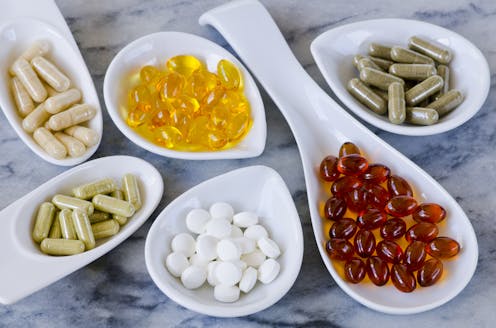
One reason dietary supplements are so popular is the perception they’re harmless.
But like all drugs, there are many potential dangers from taking vitamins and minerals.
The problem is that, unlike conventional medicines, dietary supplements aren’t required to provide warnings to consumers of their potential risks.
Nor are they required to submit extensive documentation of their risks to Australia’s drug regulator, the Therapeutic Goods Administration (TGA), when they’re licensed for marketing, leaving us all uninformed.
This week, I published a paper in Australian Prescriber[1] identifying six possible harms of taking vitamin and mineral supplements.
What do we mean by supplements?
Dietary supplements are natural health products such as vitamins, minerals, amino acids, enzymes, plant extracts, and algae used to augment people’s diets rather than treat disease[2].
Although these products are more commonly referred to as complementary medicines in Australia, particularly by the TGA, the term “dietary supplement” is frequently used by consumers and in the research literature.
Dietary supplements dominate the complementary medicines industry in Australia.
Sales reached A$4.9 billion in 2017, having doubled over the preceding ten years[3].
Complementary medicines are widely used in Australia. A national survey published in 2018[4] showed 63% of people use them regularly.
Supplements containing vitamins and minerals were the most popular type of complementary medicine, reportedly used by 47% of respondents[5]. Examples include vitamin D, vitamin C, calcium, magnesium and vitamin A.
Read more: Thinking about trying collagen supplements for your skin? A healthy diet is better value for money[6]
6 potential harms of dietary supplements
People often say they’ve never heard of harms of dietary supplements. This isn’t surprising, given their marketing is largely based on benefits with little, if any, mention of potential harms.
What’s more, consumer information leaflets are never provided, and few products carry warnings on their packaging of potential serious effects.
Nonetheless, there are well-recognised[7] harms[8] from the ingredients[9] of dietary supplements, which anyone who has studied pharmacology would know, especially when these substances are consumed in high doses.
For these reasons, some higher-dose vitamin A and selenium products are legally regulated by the TGA as Schedule 2 (pharmacy only), Schedule 3 (pharmacist only) and Schedule 4 medicines (prescription only) products.
When contemplating the possible harms that could arise with dietary supplements, most people just think of side effects.
However, as with any medicine, there are at least six types of harm that can occur which I identified in my research[10]:
Side effects. Side effects from vitamins and minerals can occur from short- or long-term use. Typically side effects emerge from doses that are too high, but not always. They can also cause new disease or upset existing conditions. There are risks from certain supplements during pregnancy and breastfeeding too
Drug interactions. Interactions with other drugs, certain foods, and some diseases can make other drugs more toxic or less effective
Cost. The cost of dietary supplements can impact on people’s finances and their ability to afford treatment or other essential items
Delay more effective therapy. Time spent taking ineffective products may delay more effective interventions, waste valuable time and allow a disease to progress
False hope or fraud. Falling for fraudulent claims offering false hope can be demoralising and depressing, which for some can make the difference between continuing to manage a health condition and giving up
Medication burden. As the number of medicines and supplements increases, so too does the chance of something going wrong. This includes the risk of side effects, drug interactions, or making a mistake.
The key to safety is the dose
Many dietary supplements are used safely for medical purposes. Women are prescribed folic acid and iodine in pregnancy, for example, or vitamin and minerals supplements are given for deficiencies, such as iron.
The key to using them safely is the dose, which is determined from research demonstrating the benefits outweigh the risks.
This isn’t the case when people self-medicate with products purchased on the open market. Consumers rarely consider the effective or safe dose and often just take the dose recommended on the label – which could be useless – or whatever they guess is right.
Many people neglect the risk of overdosing on the same ingredient such as vitamin B6 or vitamin A, which is most likley when taken via multiple products.
Read more: New vitamin supplement study finds they may do more harm than good[11]
For people to make informed decisions about using dietary supplements, details about the benefits and harms should be evidence-based and readily available. People need to know not only where to look for this information, but also how to critique it.
Health professionals can assist people by openly discussing the risks and benefits of dietary supplements, explain why dose is important for both efficacy and safety, and direct them where to go for good quality information that goes beyond what’s on the manufacturer’s label.
Manufacturers should be required to make this information more readily available.
When assessing the potential benefits and risks of supplements, it’s vital to look beyond the main or well-known ingredient. Identify the exact product being used, all its ingredients, the dose being taken, and the potential for cumulative overdose from repeated ingredients in multiple products.
As with all medicines, if you have any side effects or problems after taking dietary supplements, report them to the TGA[12].
References
- ^ in Australian Prescriber (www.nps.org.au)
- ^ rather than treat disease (www.fda.gov)
- ^ doubled over the preceding ten years (www.cmaustralia.org.au)
- ^ national survey published in 2018 (www.nature.com)
- ^ 47% of respondents (www.nature.com)
- ^ Thinking about trying collagen supplements for your skin? A healthy diet is better value for money (theconversation.com)
- ^ well-recognised (www.cambridge.org)
- ^ harms (www.nccih.nih.gov)
- ^ ingredients (academic.oup.com)
- ^ which I identified in my research (www.nps.org.au)
- ^ New vitamin supplement study finds they may do more harm than good (theconversation.com)
- ^ report them to the TGA (www.tga.gov.au)