How to prepare your child for a COVID test
- Written by: Therese O'Sullivan, Associate Professor, Edith Cowan University
We’ve been urged to get COVID tested even if we have mild symptoms. Or perhaps we don’t have symptoms but are a close or casual contact of a known case. This includes children.
So what can you do to make COVID testing as simple and stress-free as possible for your child?
With a bit of preparation, role play and modelling the type of behaviour you’d like to see, the process can be plain sailing.
Read more: The symptoms of the Delta variant appear to differ from traditional COVID symptoms. Here's what to look out for[1]
Start the conversation now
Ideally, you want to start the conversation about COVID testing before your child actually needs a swab. Reflect together on the pandemic so far[2] and envision what might happen in the future.
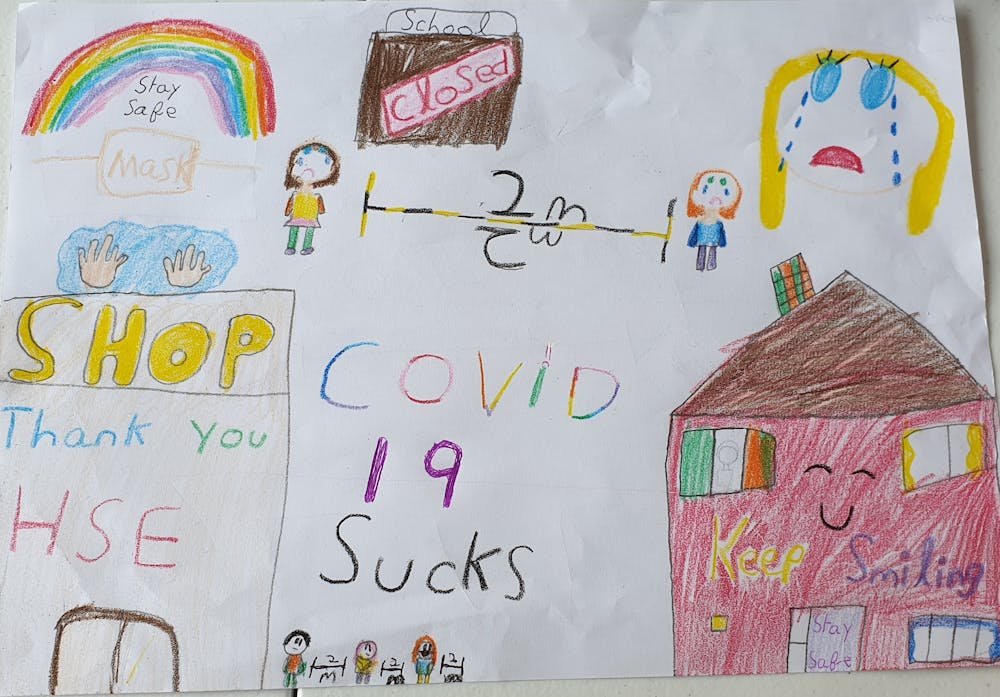 Here’s what 10-year-old Roisin from Ireland thinks of lockdown.
Our COVID-19 Artwork/Children's Artwork Project, CC BY-NC-ND[3][4]
Here’s what 10-year-old Roisin from Ireland thinks of lockdown.
Our COVID-19 Artwork/Children's Artwork Project, CC BY-NC-ND[3][4]
Let your child know COVID tests ensure sick people are cared for and stop them spreading the virus to others.
Point out COVID testing sites when you drive past.
Read more: 8 tips on what to tell your kids about coronavirus[5]
Preparation is the key
Knowledge of what is going to happen is important for children to feel in control and empowered in situations like COVID testing.
Encourage them to watch videos showing kids having a COVID test, like this one.
Encourage questions and be open to answering them honestly. Acknowledge it feels uncomfortable to have something pushed up your nose. But the discomfort will be only temporary.
This Canadian video shows the swab going right up a child’s nose[6]. The video says this feels a bit like what happens when you get water up your nose, or the tingly feeling you get in your nose after a fizzy drink.
The swab goes up your nose, but only for about five seconds. Count them.Children report feeling deceived[7] if they are told a procedure won’t hurt when it does. This can lead them to distrust future medical procedures.
Depending on the age of the child, you could also help prepare with some role play, known as therapeutic play. This type of preparation helps children feel more comfortable[8] and less anxious[9] before medical procedures.
For COVID testing, this can include asking your child to try wearing a mask. Then your child can use a couple of cotton buds taped together to make a long swab, to “test” their teddy or doll.
Read more: Why children and teens with symptoms should get a COVID-19 test, even if you think it's 'just a cough'[10]
Before you go
To help your child feel in control[11] of what is happening to them, think about how they can participate in the process. Give them choices where possible.
Which testing centre would they like to go to? What toy would they like to take with them to hold during the test? There may be a long wait for the test. What fun things could they take with them or do to help pass the time[12]? What snack would they like to take?
During the test
Children are good at picking up on cues from their parents, so stay calm and confident when taking your child for testing. If you are also being tested, they may like to see you go first.
Ask the tester to talk through what they are doing. Avoid distractions and bribes. Offering a bribe can give the child the impression there is something to be worried about, and distractions can leave the child suspicious of why they were distracted.
As with vaccinations[13], some children may like to watch so they know what is happening, rather than shutting their eyes. Give your child the option.
Be fully present with your child during the procedure and put your phone away.
Humour can help keep things light hearted and it reduces stress levels[14]. What do COVID-19 jokes have in common? They’re catchy!
Read more: Needles are nothing to fear: 5 steps to make vaccinations easier on your kids[15]
After the test
You need to go home until you receive a result so brainstorm with your child about some fun things to do while you wait.
Explain their result will come back either positive or negative. Positive means you have COVID-19, negative means you don’t.
Consider how best to help your child deal with a positive result. Some children may have some anxiety around this, even if they have very mild symptoms.
Read more: Kids at home because of coronavirus? Here are 4 ways to keep them happy (without resorting to Netflix)[16]
In a nutshell
Overall, this respectful approach to child-centred health care[17] focuses on developing a cooperative relationship with the child, rather than using authority or incentives.
We have used this approach successfully in our child research projects involving invasive assessments. It helps the child feel in control, helps reduce anxiety around medical procedures and helps them feel empowered[18] by their experiences.
Look at COVID testing as an opportunity for your child to learn more about how health care works. An empowering COVID testing experience can help set up your child for future interactions with the health system.
References
- ^ The symptoms of the Delta variant appear to differ from traditional COVID symptoms. Here's what to look out for (theconversation.com)
- ^ Reflect together on the pandemic so far (raisingchildren.net.au)
- ^ Our COVID-19 Artwork/Children's Artwork Project (incfcc.weebly.com)
- ^ CC BY-NC-ND (creativecommons.org)
- ^ 8 tips on what to tell your kids about coronavirus (theconversation.com)
- ^ right up a child’s nose (www.rch.org.au)
- ^ feeling deceived (dx.doi.org)
- ^ feel more comfortable (pubmed.ncbi.nlm.nih.gov)
- ^ less anxious (www.ncbi.nlm.nih.gov)
- ^ Why children and teens with symptoms should get a COVID-19 test, even if you think it's 'just a cough' (theconversation.com)
- ^ feel in control (www.sciencedirect.com)
- ^ do to help pass the time (kidactivities.net)
- ^ vaccinations (theconversation.com)
- ^ stress levels (hosppeds.aappublications.org)
- ^ Needles are nothing to fear: 5 steps to make vaccinations easier on your kids (theconversation.com)
- ^ Kids at home because of coronavirus? Here are 4 ways to keep them happy (without resorting to Netflix) (theconversation.com)
- ^ child-centred health care (journals.plos.org)
- ^ empowered (journals.sagepub.com)
Read more https://theconversation.com/how-to-prepare-your-child-for-a-covid-test-165248