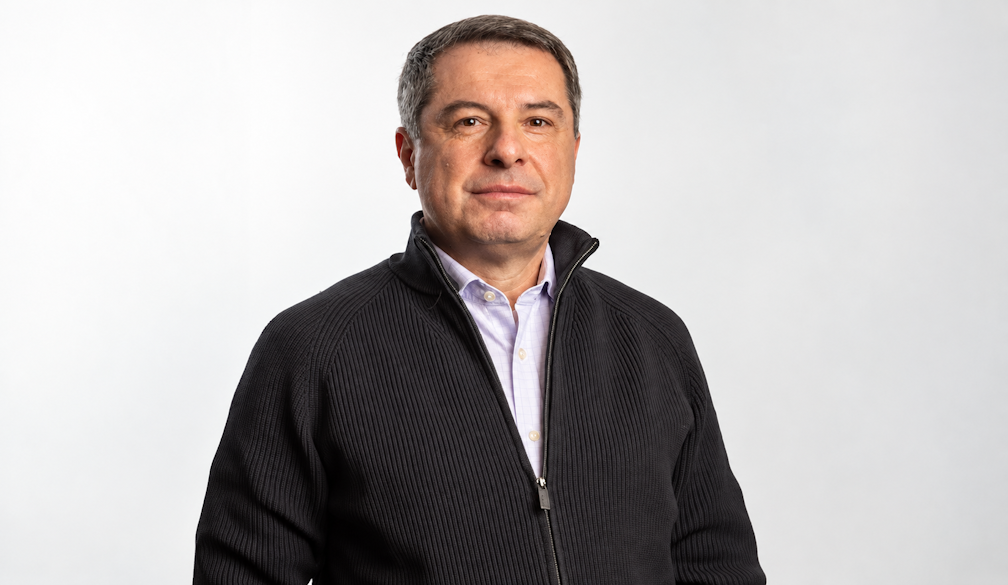
Who is Mullah Hasan Akhund? What does the Taliban's choice of interim prime minister mean for Afghanistan?
- Written by: Ali A. Olomi, Assistant Professor of History, Penn State
The Taliban announced on Sept. 7, 2021, that Mullah Hasan Akhund has been appointed interim prime minister of Afghanistan[1]. The decision comes more than two weeks after the militant Islamist group seized control of much of the country, including the capital, Kabul. The Conversation asked Ali A. Olomi, a historian of the Middle East and Islam[2] at Penn State University, to explain who Mullah Akhund is, and what his appointment may portend for Afghanistan amid concern over human rights in the war-ravaged nation.
Who is Mullah Hasan Akhund?
Mullah Akhund is a fascinating but relatively enigmatic figure in the Taliban. He has been an influential figure in Afghanistan since the inception of the militant group in the 1990s[3].
But unlike other Taliban leaders from that period, he was not involved in the Soviet-Afghan war of the 1980s[4]. While Taliban founder Mullah Mohammad Omar[5] and his deputies fought with the mujahedeen – a loose network of anti-Soviet Afghan fighters – Akhund did not.
Instead, he is seen much more as a religious influence in the Taliban. He served on the Taliban’s shura councils, the traditional decision-making body made up of religious scholars and mullahs – an honorific given to those trained in Islamic theology.
Akhund is probably best known as one of the architects of the destruction of the Buddhas of Bamiyan[6], the giant cliff statues destroyed by the Taliban in 2001.
Initially, Omar had no intention of destroying the statues. But the Taliban founder was angered at seeing conservation money being made available[7] for the UNESCO world heritage site while failing to secure humanitarian aid from the United Nations for Afghanistan. As such, Omar sought out the advice of his shura, and Akhund was part of the council that ordered the destruction of the sixth-century statues.
Akhund held a political role in the Taliban government of the 1990s, serving as foreign minister; however, his importance lies more in the development of the group’s religious identity. He, like Mullah Omar, was schooled in a brand of strict Islamist ideology, known as Deobandism[8].
After the Taliban was ousted from Afghanistan in 2001[9], Akhund remained an influential presence, operating mostly from exile in Pakistan. From there he would give spiritual and religious guidance to the Taliban throughout the 2000s and 2010s. In this role, he provided the ideological justification for the ongoing insurgency against the United States and the U.S.-backed Afghan government.
Today, there are broadly two factions in the Taliban[10] – a military wing that carries out the day-to-day campaigns, and a conservative religious elite grounded in Deobandism that acts as its political wing. Mullah Akhund aligns very much with the religious faction of the Taliban.
What does his appointment tell us about the Taliban?
There appears to be a power struggle behind Akhund’s appointment. Mullah Abdul Ghani Baradar, who served as deputy to Omar during the early years of the Taliban before assuming the position of de facto leader after Omar’s death, had been seen by many experts on Afghanistan as a potential head of state[11]. But there is political tension between Baradar and the powerful Haqqani network[12] – a family-based Islamist group that has become the Taliban’s de facto diplomatic arm in recent years and has been successful in gaining support for the group among other local groups.
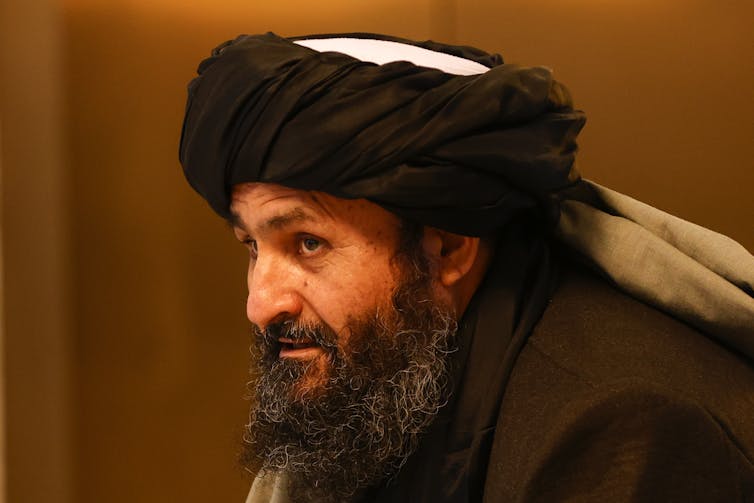 Some had expected Mullah Abdul Ghani Baradar to be appointed the Afghan prime minister.
Sefa Karacan/Anadolu Agency via Getty Images[13]
Some had expected Mullah Abdul Ghani Baradar to be appointed the Afghan prime minister.
Sefa Karacan/Anadolu Agency via Getty Images[13]
The Haqqanis are among the most militant factions of the Taliban. And recent conciliatory language from Baradar[14] on issues such as women’s rights, working with the international community and amnesty for members of the former government runs counter to the ideology of the Haqqani network.
Akhund seems to be a compromise candidate between supporters of Baradar and the Haqqani network. The delay in his appointment – the Taliban repeatedly put off making an announcement – could be an indicator of internal divisions in the Taliban. When the announcement came, it was accompanied by news that Baradar would be his deputy[15], while two members of the Haqqani network would also serve in the Afghan government.
Whether this arrangement is permanent or temporary remains to be seen, but the compromise could be a testing of the waters of the Taliban – to see how effective Akhund is as a unifying figure for the group.
What does Akhund’s appointment mean for Afghanistan?
Akhund is a conservative, religious scholar whose beliefs include restrictions on women and the denial of civil rights for ethic and religious minorities.
His edicts in the 1990s, adopted by the Taliban, included the banning of women’s education, enforcing gender segregation and the adoption of strict religious garb. This could all be an indicator of what is to come. Despite the conciliatory language of the Taliban of late, I believe it is likely that we might see a return to some of the rules in place when the Taliban previously held power, including a ban on women’s education.
We have already seen on Sept. 5 the Taliban order female university students to wear the abaya[16]. The abaya is similar to a burka, but it differs in that the coverings are nearly always black. The abaya is not Afghan, but a style of dress more common in the Gulf states of Saudi Arabia, United Arab Emirates and Qatar.
With this order, I see the Taliban signaling its intention to place Afghanistan within a wider Islamist movement. In the 1990s, the Taliban were very much an insular, nationalist group with the aim of bringing its brand of Islamist rule to Afghanistan. Now, Akhund seems to be looking to position the Taliban alongside international partners – an ambition that can also be seen in the Taliban’s recent diplomatic outreach with the governments of Qatar, the UAE and Pakistan.
[3 media outlets, 1 religion newsletter. Get stories from The Conversation, AP and RNS.[17]]
References
- ^ Mullah Hasan Akhund has been appointed interim prime minister of Afghanistan (apnews.com)
- ^ historian of the Middle East and Islam (www.abington.psu.edu)
- ^ inception of the militant group in the 1990s (theconversation.com)
- ^ Soviet-Afghan war of the 1980s (doi.org)
- ^ Taliban founder Mullah Mohammad Omar (www.theguardian.com)
- ^ destruction of the Buddhas of Bamiyan (www.mei.edu)
- ^ angered at seeing conservation money being made available (www.nytimes.com)
- ^ known as Deobandism (theconversation.com)
- ^ ousted from Afghanistan in 2001 (www.reuters.com)
- ^ two factions in the Taliban (www.washingtonpost.com)
- ^ potential head of state (www.economist.com)
- ^ Haqqani network (www.dni.gov)
- ^ Sefa Karacan/Anadolu Agency via Getty Images (www.gettyimages.com)
- ^ conciliatory language from Baradar (www.washingtonpost.com)
- ^ Baradar would be his deputy (www.cnn.com)
- ^ order female university students to wear the abaya (www.france24.com)
- ^ Get stories from The Conversation, AP and RNS. (theconversation.com)