Nationals break the Coalition, in a major blow to Sussan Ley
- Written by: Michelle Grattan, Professorial Fellow, University of Canberra
The Nationals have broken the Coalition, for the first time in nearly four decades, because new Liberal leader Sussan Ley would not agree to their policy demands being part of a new agreement between the parties.
Ley had hoped an agreement could be reached. The split will make running a strong opposition more difficult and complicated.
The Nationals’ dramatic decision is also likely to risk greater instability within the Liberals, where the numbers between the conservatives on one hand and the moderates and centrists on the other are narrowly balanced.
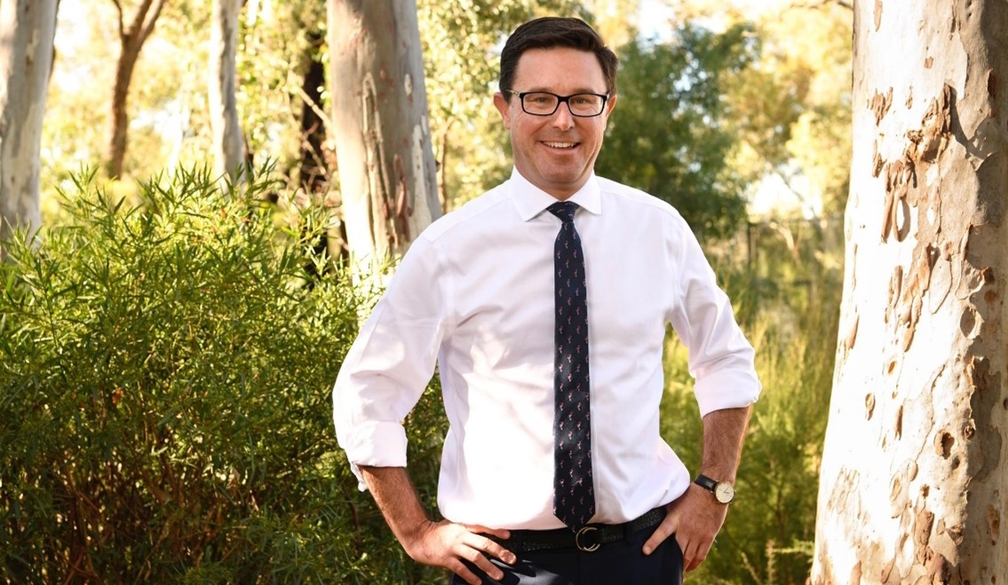
Nationals leader David Littleproud told a news conference on Tuesday morning the party, which met earlier Tuesday morning, had taken a “principled” decision to sit alone.
Littleproud said Ley – who has said all policies are on the table – needed to rebuild the Liberal Party. “They are going on a journey of rediscovery, and this will provide them the opportunity to do that without the spectre of the National Party imposing their will.”
He said the Nationals wanted to look forward, “not having to look back and to try and actually regain important policy pieces that change the lives of the people we represent.
"We wanted to look forward and not have to look back and have to continue to fight for another three years.”
Littleproud said he “made it very clear that we remain committed to having the door open, respecting the position that Sussan has been put in. That she is a leader that needs to rebuild the Liberal Party.”
He said his preference was to bring the Coalition together “hopefully before the next election”. “I’m passionate in the belief that we can bring this back together”. His deputy, Kevin Hogan, said he hoped the parties would come together again “sooner rather than later”.
The minor party demanded the election policies of competition laws including divestiture provisions; nuclear power; a $20 billion proposed regional Australian future fund, and better standards for regional communications be preserved. Ley wanted the agreement to be about the architecture of the Coalition rather than including policy demands.
The Coalition has broken only twice before since 1949. After the 1972 Labor election win, the Liberal Party and the then Country Party separated. They reunited before the May 1974 election. There was another split, under the pressure of the Joh-for-Canberra campaign, for several months in 1987.
The split means the Nationals will lose some extra pay that goes to frontbenchers.
The Nationals’ stand is a victory for the party’s hardliners, although it is notable that the issue of net zero by 2050 was not one of the sticking points nominated by the Nationals.
The party’s position vis-a-vis the Liberals was strengthened because it held almost all its seats, while the Liberals’ numbers were devastated. So far the Australian Electoral Commission has declared 18 seats for the Liberals in the House of Representatives, nine for the Nationals, and 16 for the Liberal National Party of Queensland, where they operate as one party although they separate into their respective parties in Canberra.
The Nationals Senate leader, Bridget McKenzie, claimed, “We have not left the Liberal Party – the Liberal Party left us”.
The Nationals met on the issue on Friday before more talks between Littleproud and Ley. After Tuesday’s meeting, Littleproud spoke to Ley to inform her of the decision. Ley called a “virtual” Liberal Party meeting for Tuesday afternoon.
In comments to The Australian, former prime minister John Howard warned of the danger of the split. “The best interest of the two parties is served by being in Coalition and they are strongest politically and policy-wise when both parties have been together,” he said.
He said there had “always been some policy differences,” between the two parties. “It’s important that the policy differences be resolved or accommodated within the framework of a Coalition. If we go our separate ways, those issues will harden and become greater.”
Treasurer Jim Chalmers said the Coalition was “a smoking ruin” after a “nuclear meltdown”.
In a statement, the four liberal leaders, Sussan Ley, Ted O'Brien, and senator Michaelia Cash and Anne Ruston expressed disappointment at the Nationals’ decision.
“The Liberal Party’s door remains open to The Nationals’ should they wish to rejoin the Coalition before the next election,” the leaders said.
They pointed out the Coalition agreement had “conventionally” focused on the makeup of their executive, anchored in shared values.
“The Nationals’ sought commitments on specific policies.
"As was explained to The Nationals, the Liberal Party’s review of election policies was not an indication that any one of them would be abandoned, nor that every single one would be adopted.
"We offered to work constructively with The Nationals, respecting the party’s deeply held views on these issues. We asked The National Party to work constructively with us, respecting our internal processes.”
The leaders said the Liberals had proposed appointing a joint Coalition shadow ministry now, with separate policy development in each party and then joint policy positions determined as usual.
“Unfortunately, The Nationals determined this was not possible.
"The Liberal Party also insisted that shadow cabinet solidarity be maintained in any Coalition agreement. This was not explicitly agreed to by The Nationals.”
Ley will soon announce an all-Liberal shadow ministry.
Read more https://theconversation.com/nationals-break-the-coalition-in-a-major-blow-to-sussan-ley-256455