


Anthony Albanese beset by disruptors, from Cyclone Alfred to Donald Trump
- Written by: Michelle Grattan, Professorial Fellow, University of Canberra
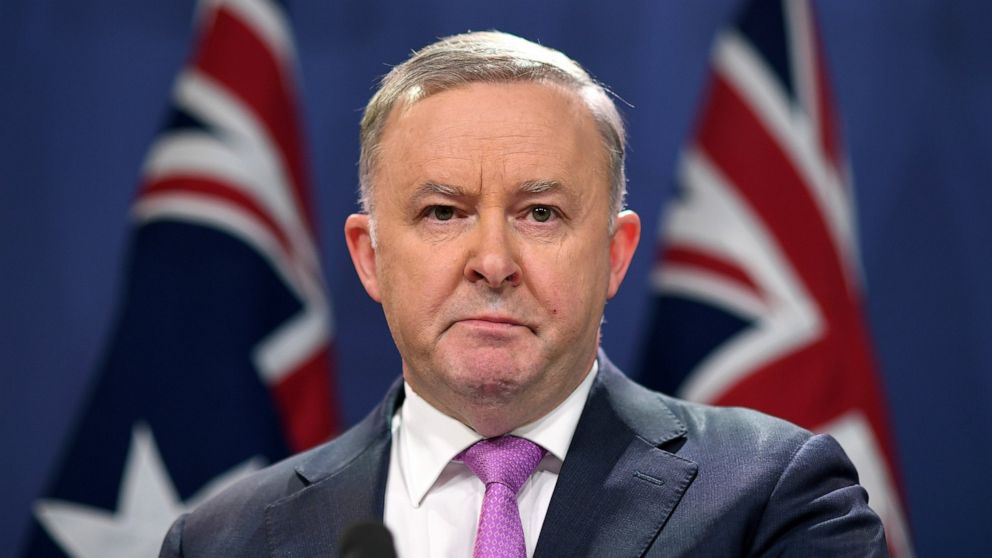
Issues sometimes “come at you”, Anthony Albanese declared on Thursday at the end of a news conference, held at Canberra’s National Situation Room, about Cyclone Alfred.
The cyclone is a disaster for millions of people in its path. For the prime minister, it is a major political disruptor.
Albanese cancelled his visit to Western Australia: he’d wanted to be there when Labor has its anticipated certain win at Saturday’s election.
His own election planning – which seemed headed for an April 12 election called this weekend – has been thrown into some disarray (although this is contested by those involved).
Then there was the good news that was crowded out. Wednesday’s national accounts finally showed some of the much hoped-for positive trends, especially an end to the per capita recession, which had been running for seven consecutive quarters. But with the cyclone naturally dominating attention, who noticed?
Albanese’s response to the new circumstances was to place himself at the centre of the planning for the cyclone. He stood side by side with Queensland Premier David Crisafulli at his news conference on Wednesday and was early to the Situation Room on Thursday morning, promising to give regular updates.
To questions about whether he’d abandoned any thought of calling an election at the weekend, the PM insisted (unconvincingly) that politics was furthest from his mind. Though announcing an election would appear near impossible in the circumstances, and attention had already begun turning to a May date (and a budget beforehand), Albanese on Thursday wouldn’t be drawn. Basically, he was waiting to see what happened with the weather.
The cyclone will be a passing disruptor. The disruption from the Trump administration will be with Australia (and the world) for the foreseeable future.
Next week Australia will know whether its intense lobbying for an exemption from the US tariffs on aluminium and steel has been effective. Those around the government are not optimistic.
More concerning than the immediate impact on Australia if we fail to win the exemption is the effect of US protectionism more generally.
Reserve Bank deputy Governor Andrew Hauser confirmed this week that “from a macroeconomic perspective, Australia’s direct exposure to US tariffs levied on our exports is limited”.
“[But] Australia is heavily integrated into, and reliant on, the global economy more broadly – and particularly China. Hence the bigger macroeconomic risk for us would be if the imposition of US tariffs on third countries triggered a global trade war that impaired our trade and financial linkages more broadly.
"As Australia’s long history has shown, we thrive when trade, labour and assets flow freely in the global economy, but we suffer when countries turn inwards.”
How disruptive this new world will be to the Australian economy can’t be known but it could make things very difficult for a second term Albanese government or a first term Dutton one.
As Trump tries to force a settlement on Ukraine, there’s been increasing attention on the Europeans’ plans to boost their defence expenditure. This week, we started to feel the heat on Australia to do the same.
Trump’s nominee for Under Secretary of Defense for Policy, Elbridge Colby told the US Senate Committee on Armed Services, in a written answer during his confirmation hearing, that “Australia is a core U.S. ally. […] The main concern the United States should press with Australia, consistent with the President’s approach, is higher defense spending. Australia is currently well below the 3% level advocated for by NATO Secretary General Rutte, and Canberra faces a far more powerful challenge in China.”
Presently Australia’s defence spending is about 2% of GDP, projected to increase to 2.4% by 2033–34.The Coalition has said it would spend more than Labor (but has not specified how much more).
Defence Minister Richard Marles said he could “obviously understand the US administration seeking for its friends and allies around the world to do more. That’s a conversation that we will continue to have with the US administration. […] But it’s really important to understand we are increasing that spending right now.”
It’s also important to understand that if Australia must ramp up defence further or faster than present plans, that will suck funds from other priorities, putting another squeeze on future governments.
Trump’s bullying of Ukraine and its leader Volodymyr Zelensky has not weakened the bipartisan support in Australia for Ukraine.
But a difference has emerged over whether Australia should (if asked) take part in any peacekeeping force. Peter Dutton said this role should be left to the Europeans. But Albanese flagged his government would consider it, pointing to the many other peacekeeping operations we have participated in.
Former prime minister Scott Morrison got on well with Trump during the president’s first term and has become even more signed up since. The Morrisons were at Mar-a-Lago for New Year’s eve.
Morrison was distinctly sympathetic to Trump’s approach when talking this week about Ukraine. He told an Australian Financial Review dinner, “Do we just keep fighting this war every day? The alternative is to find a peace that can be secured.
"There was no conversation, no real conversation, about peace in Ukraine up until now.” Zelensky had the “most to gain” from negotiating to end the war, he said.
Morrison is affiliated with lobbying firm American Global Strategies, which has links to the Trump administration. Colby is listed as a senior adviser. The chairman and founder of the group, Robert C. O'Brien, was formerly a national security adviser to Trump.
Morrison is one of a number of former senior Australian political figures who have a current professional or commercial lock-in to Washington politics.
Former Liberal treasurer Joe Hockey, who was close to the Trump White House when Hockey was ambassador in 2016-20, is founder and global president of Bondi Partners, a lobbying firm that operates between the US and Australia.
Another former Australian ambassador to Washington, Arthur Sinodinos, is based in Washington as a partner in the Asia Group, a strategic advisory firm.
Meanwhile former PM Kevin Rudd, as Australian ambassador in Washington, is trying to amplify Australia’s official voice with the administration.
Speculation continues about Rudd’s future if the government changed. Dutton says that would depend on how effective Rudd was, saying his present instinct would be leave him in the job.
Others are sceptical this would happen, and raise Morrison’s name as a possible replacement. Morrison has reportedly told people he would not want the post. But you couldn’t rule it out.









