


Trump’s 25% tariffs on Canada and Mexico amp up the risk of a broader trade war
- Written by: Markus Wagner, Professor of Law and Director of the UOW Transnational Law and Policy Centre, University of Wollongong
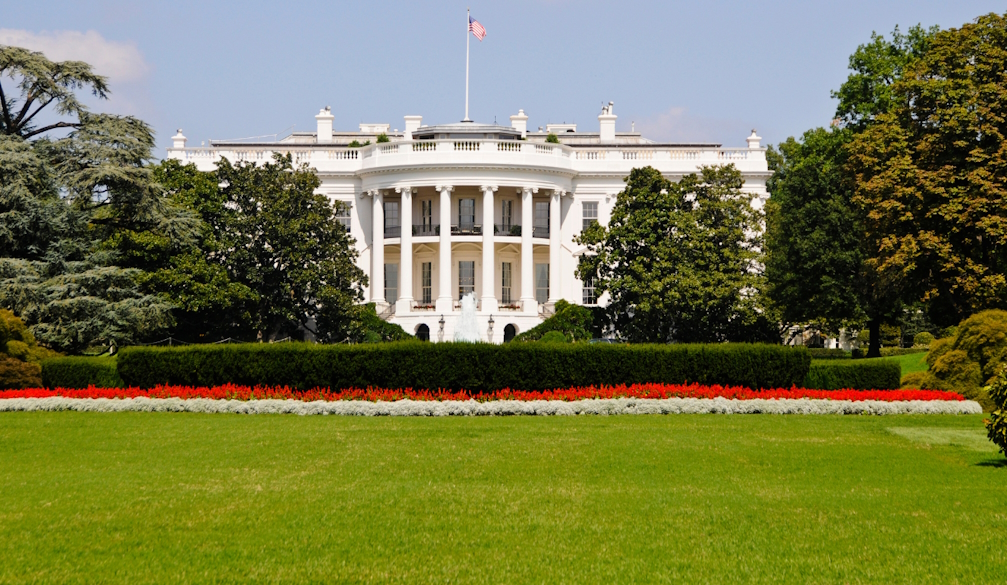
It’s official. On February 1, US President Donald Trump will introduce[1] a sweeping set of new 25% tariffs on imports from Canada and Mexico. China will also face new tariffs of 10%.
During the presidential campaign, Trump threatened tariffs[2] against all three countries, claiming they weren’t doing enough to prevent an influx of “drugs, in particular fentanyl” into the US, while also accusing Canada and Mexico of not doing enough to stop “illegal aliens”.
There will be some nuance. On Friday, Trump said[3] tariffs on oil and gas would come into effect later, on February 18, and that Canadian oil would likely face a lower tariff of 10%.
This may only be the first move against China. Trump has previously threatened the country with 60% tariffs[4], asserting this will bring jobs back to America.
But the US’ move against its neighbours will have an almost immediate impact on the three countries involved and the landscape of North American trade. It marks the beginning of what could be a radical reshaping of international trade and political governance around the world.
What Trump wants from Canada and Mexico
While border security and drug trade concerns are the official rationale[5] for this move, Trump’s tariffs have broader motivations.
The first one is protectionist. In all his presidential campaigning, Trump portrayed himself as a champion of US workers. Back in October, he said[6] tariff was “the most beautiful word in the dictionary”.
Trump hasn’t hidden his fondness for protectionist trade measures.This reflects the ongoing scepticism toward international trade that Trump – and politicians more generally on both ends of the political spectrum in the US – have held for some time.
It’s a significant shift in the close trade links between these neighbours. The US, Mexico and Canada are parties to the successor of the North American Free Trade Agreement (NAFTA): the United States-Mexico-Canada Agreement[7] (USMCA).
Trump has not hidden his willingness to use tariffs as a weapon to pressure other countries to achieve unrelated geopolitical goals. This is the epitome of what a research project team I co-lead calls “Weaponised Trade[8]”.
This was on full display in late January. When the president of Colombia prohibited US military airplanes carrying Colombian nationals deported from the US to land, Trump successfully used the threat of tariffs[9] to force Colombia to reverse course.
Read more: What are tariffs?[10]
The economic stakes
The volume of trade between the US, Canada, and Mexico is enormous, encompassing a wide range of goods and services. Some of the biggest sectors are automotive manufacturing, energy, agriculture, and consumer goods.
In 2022, the value of all goods and services traded between the US and Canada came to about US$909 billion[11] (A$1.46 trillion). Between the US and Mexico that same year, it came to more than US$855 billion[12] (A$1.37 trillion).
One of the hardest hit industries will be the automotive industry, which depends on cross-border trade. A car assembled in Canada, Mexico or the US relies heavily on a supply of parts from throughout North America.
Tariffs will raise costs throughout this supply chain, which could lead to higher prices for consumers and make US-based manufacturers less competitive.
There could also be ripple effects for agriculture. The US exports billions of dollars in corn, soybeans, and meat to Canada[14] and Mexico[15], while importing fresh produce such as avocados and tomatoes from Mexico.
Tariffs may provoke retaliatory measures, putting farmers and food suppliers in all three countries at risk.
Trump’s decision to delay and reduce[16] tariffs on oil was somewhat predictable. US imports of Canadian oil have increased[17] steadily over recent decades, meaning tariffs would immediately bite US consumers at the fuel pump.
We’ve been here before
This isn’t the first time the world has dealt with Trump’s tariff-heavy approach to trade policy. Looking back to his first term may provide some clues about what we might expect.
In 2018, the US levied duties on steel and aluminium[18]. Both Canada and Mexico are both major exporters of steel to the US.
Canada[20] and Mexico[21] imposed retaliatory tariffs. Ultimately, all countries removed tariffs on steel and aluminium in the process of finalising the United States-Mexico-Canada Agreement.
Notably, though, many of Trump’s trade policies remained in place even after President Joe Biden took office[22].
This signalled a bipartisan scepticism of unfettered trade and a shift toward on-shoring or re-shoring in US policy circles.
The options for Canada and Mexico
This time, Canada and Mexico’s have again responded with threats of retaliatory[23] tariffs[24].
But they’ve also made attempts to mollify[25] Trump – such as Canada launching a “crackdown” on fentanyl trade.
Generally speaking, responses to these tariffs could range from measured diplomacy to aggressive retaliation. Canada and Mexico may target politically sensitive industries such as agriculture or gasoline, where Trump’s base could feel the pinch.
There are legal options, too. Canada and Mexico could pursue legal action through the United States-Mexico-Canada Agreement’s dispute resolution mechanisms or the World Trade Organization (WTO).
Both venues provide pathways for challenging unfair trade practices. But these practices can be slow-moving, uncertain in their outcomes and are susceptible to being ignored.
A more long-term option for businesses in Canada and Mexico is to diversify their trade relationships to reduce reliance on the US market. However, the facts of geography, and the large base of consumers in the US mean that’s easier said than done.
The looming threat of a global trade war
Trump’s latest tariffs underscore a broader trend: the widening of the so-called “Overton window[26]” to achieve unrelated geopolitical goals.
The Overton Window refers to the range of policy options politicians have because they are accepted among the general public.
Arguments for bringing critical industries back to the US, protecting domestic jobs, and reducing reliance on foreign supply chains gained traction after the ascent of China as a geopolitical and geoeconomic rival.
These arguments picked up steam during the COVID-19 pandemic and have increasingly been turned into actual policy.
The potential for a broader trade war looms large. Trump’s short-term goal may be to leverage tariffs as a tool to secure concessions from other jurisdictions.
Trump’s threats against Denmark – in his quest to obtain control over Greenland[27] – are a prime example. The European Union (EU), a far more potent economic player, has pledged its support[28] for Denmark.
A North American trade war – foreshadowed by the Canadian and Mexican governments – might then only be harbinger of things to come: significant economic harm, the erosion of trust among trading partners, and increased volatility in global markets.
References
- ^ will introduce (www.bbc.com)
- ^ threatened tariffs (edition.cnn.com)
- ^ said (www.reuters.com)
- ^ 60% tariffs (www.cnbc.com)
- ^ official rationale (www.youtube.com)
- ^ said (www.youtube.com)
- ^ United States-Mexico-Canada Agreement (www.international.gc.ca)
- ^ Weaponised Trade (economiccoercion.com)
- ^ used the threat of tariffs (www.nytimes.com)
- ^ What are tariffs? (theconversation.com)
- ^ US$909 billion (ustr.gov)
- ^ US$855 billion (ustr.gov)
- ^ Around the World Photos/Shutterstock (www.shutterstock.com)
- ^ Canada (www.ers.usda.gov)
- ^ Mexico (www.ers.usda.gov)
- ^ delay and reduce (www.reuters.com)
- ^ increased (www.eia.gov)
- ^ levied duties on steel and aluminium (www.nytimes.com)
- ^ ABCDstock/Shutterstock (www.shutterstock.com)
- ^ Canada (www.bbc.com)
- ^ Mexico (www.npr.org)
- ^ after President Joe Biden took office (foreignpolicy.com)
- ^ retaliatory (apnews.com)
- ^ tariffs (www.reuters.com)
- ^ mollify (www.cbc.ca)
- ^ Overton window (www.mackinac.org)
- ^ obtain control over Greenland (theconversation.com)
- ^ pledged its support (www.politico.eu)









