


The prime minister started his unofficial re-election campaign in Queensland. It’s a telling political calculation
- Written by: Paul Williams, Associate Professor, Griffith University, Griffith University
Queensland’s Bruce Highway is a bit like a 1980s family sedan: dated, worn in places, and often more than a little dangerous. But it’s also a necessary part of life for people just trying to get from A to B.
Indeed, the Bruce remains the sunshine state’s most vital road artery. Running 1,700 kilometres along the eastern seaboard, it connects and keeps alive cities and towns between Brisbane and Cairns – a distance farther than Brisbane to Melbourne.
Little wonder, then, that the Bruce Highway perennially features in state and federal election campaigns. In 2020, for example, the Liberal National Party state opposition boldly promised[1] $33 billion – without prior federal agreement – to upgrade the beleaguered Bruce over 15 years.
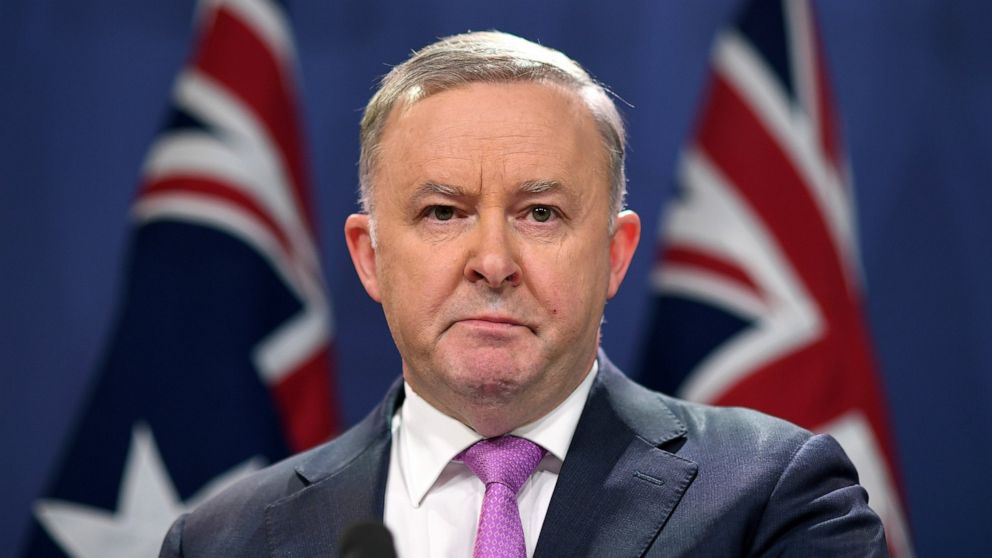
It’s also no surprise an increasingly unpopular prime minister, with a tiny parliamentary majority and facing an election within months, should weigh in with his own road commitment. Anthony Albanese pledged $7.2 billion[2] after the freshly minted Queensland LNP state government demanded action.
But what does Albanese’s cash splash tell us about the coming federal election?
Election anxiety
First, it suggests the Clayton’s campaign is genuinely underway.
Australians in a digital (and social) media age are well accustomed to the permanent campaign, in which every politician’s word and deed is a calculated ploy for re-election. But the fact Albanese has come out swinging in early January (usually a holiday-period taboo for politics) underscores Labor’s anxiety at what looks increasingly like a looming hung parliament.
The anxiety is well-founded. Last week’s Roy Morgan poll[3] saw the Coalition lead Labor 53% to 47% – the opposition’s biggest lead in more than three years.
That constitutes a 5% after-preference swing to the Coalition, or enough to secure 15 of the 21 seats Peter Dutton needs to form majority government.
In short, while majority (or even minority) Coalition government seemed impossible just a few months ago, a minority Dutton government is now a real possibility.
The government’s only good news is that Labor’s primary vote is up 3.5 points since early December.
But that news is tempered by the fact Greens voters are souring on Labor, with just 55% intending to preference the government, compared with the 85%[4] who would have done so in December.
Albanese has restored the 80/20 federal-state funding model, overturning Roads Minister Catherine King’s 2024 edict[5] to the states to fund local infrastructure projects on a 50/50 basis. We can only assume Labor is genuinely fearful of cranky regional voters everywhere deserting the Labor ship.
No low-hanging fruit
But the Bruce announcement sends a cryptic message that’s not easily decoded.
Superficially, it appears to be some old-fashioned pork-barrelling designed to win back LNP seats in Queensland or, at worst, to prevent Labor losses.
But a closer look at the electoral pendulum suggests neither is Labor’s principal aim.
Put bluntly, the electoral tide is out for Labor everywhere north of the Tweed River, even in Brisbane. Federal Labor will win no new seats in Queensland, regardless of largesse.
At the 2024 Brisbane City Council election[6], Labor suffered a 6% primary swing across the city and, at last October’s state election, a 7% after-preference swing across the state.
Given the LNP’s most vulnerable seat is Dickson[7] (held by an Opposition leader, Peter Dutton, well regarded in his home state), there is no low-hanging fruit for Labor in Queensland.
The only exception is the remote possibility of Labor recapturing Griffith, in inner Brisbane, from the Greens. Indeed, Labor has organised a “Get Max” committee [8] to unseat Greens Housing spokesman Max Chandler-Mather.

Should the LNP, which finished second on primary votes in Griffith in 2022, finish third behind Labor in 2025, Labor will retake the seat on LNP preferences.
That scenario played out in the state seat of South Brisbane (which overlaps with Griffith) in 2024 and saw Labor recapture the Greens’ seat.
Interestingly, the LNP is also in with a (again, only remote) chance of recapturing the Green-held seats of Brisbane and Ryan should a Melbourne Cup field of independents preference the LNP over the Greens.
Conversely, Labor is in no real danger of losing any of its five seats (out of Queensland’s 30) to the LNP.
Even Labor’s most vulnerable seat, Blair – technically a “provincial” seat home to voters with volatile regional sympathies – is held by a healthy 5.2% and, therefore, probably secure.
So why bother with Queensland?
Labor’s Queensland pitch, then, is about maintaining Labor’s primary vote floor.
With the Australian Electoral Commission refunding $3.38[10] for each primary vote, Labor has a lot to gain by defending its base.
It’s also about defending the party’s Senate vote. In 2019, Queenslanders elected just one[11] Labor Senator and, in 2022, two[12]. Labor simply cannot afford to see its upper house representation fall.
Labor’s Bruce Highway commitment is also about drawing a strong contrast between the Albanese government’s “big picture” policies – from tax reform to housing to clean energy to four-year parliaments – and the opposition’s hitherto “small target” of nuclear power and “anti-wokeism”.
The Albanese government has a strong record to defend, including in job creation[13]. Labor will happily remind voters of it.
Last, Albanese’s early strike is clearly an attempt to catch a small-target opposition napping on the beach.
But the fact Dutton quickly matched Labor’s Bruce Highway funding – with the added proviso of excluding the controversial CFMEU from the project – and his weekend announcement to allow Australians to access up to $50,000[14] from their superannuation to purchase a home suggests any early Labor advantage has already been neutralised.
Labor’s ultimate risk is that financially stressed voters across Queensland and elsewhere already perceive the Albanese government as that ageing family sedan.
Eager to trade up to a shiny new Coalition model, working and middle Australia could still take Labor off the road.
References
- ^ boldly promised (www.abc.net.au)
- ^ $7.2 billion (www.abc.net.au)
- ^ Roy Morgan poll (www.roymorgan.com)
- ^ the 85% (www.roymorgan.com)
- ^ 2024 edict (www.abc.net.au)
- ^ election (results.elections.qld.gov.au)
- ^ Dickson (www.abc.net.au)
- ^ “Get Max” committee (www.theaustralian.com.au)
- ^ Lukas Coch/AAP (photos.aap.com.au)
- ^ refunding $3.38 (www.aec.gov.au)
- ^ just one (results.aec.gov.au)
- ^ two (results.aec.gov.au)
- ^ job creation (www.couriermail.com.au)
- ^ up to $50,000 (www.theguardian.com)









