The NT and ACT might have small populations but their economies are growing faster than the bigger states
- Written by: John Hawkins, Senior Lecturer, Canberra School of Politics, Economics and Society, University of Canberra
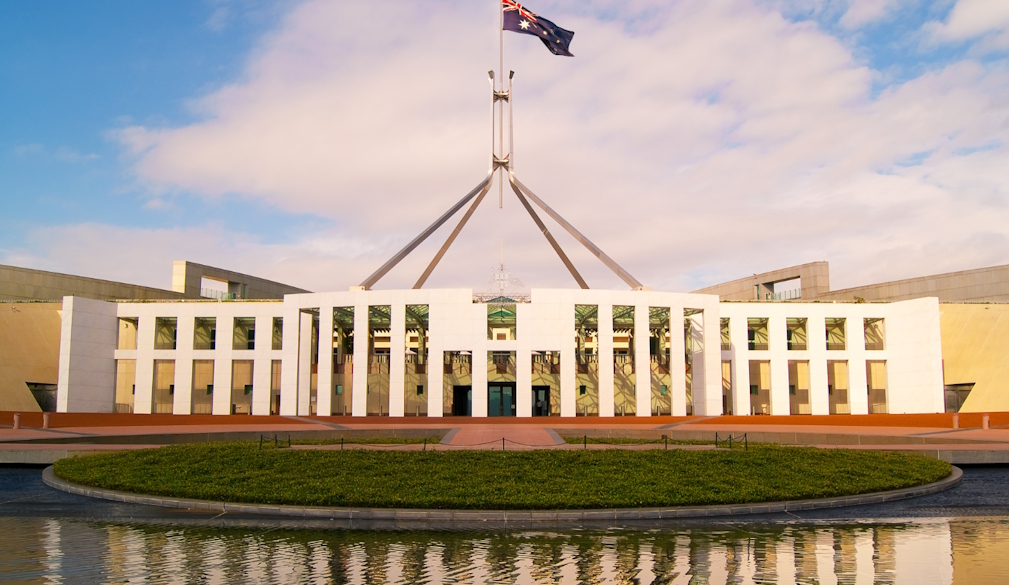
The Northern Territory and Australian Capital Territory have won bragging rights for having the fastest growing economies within Australia.
Their growth was highlighted in annual data on gross state product[1], released by the Australian Bureau of Statistics on Wednesday.
The ABS defines[2] GSP as the total market value of goods and services produced in a state or territory after the costs of goods and services used in production are deducted.
It is the state and territory equivalent of gross domestic product[3].
Unsurprisingly, New South Wales and Victoria, the most populous states, have the largest GSP. They account for 31% and 23% of our national economy.
But the Australian Capital Territory, with a population of 473,000, has a larger GSP than Tasmania despite the Apple Isle’s bigger population of 576,000.
Where the growth occurred
The fastest growing economy in 2023-2024 was the NT, which expanded by 4.6% followed by the ACT, whose GSP was up by 4.0%. These figures, given in real terms, exclude the impact of inflation. Unlike many recent years, the figures are not distorted by the impact of the COVID lockdowns.
The ABS attributes the NT’s strong growth in 2023-24 to
a bounce back in mining production which was hampered by maintenance work and plant shutdowns in 2022-23.
The ACT economy was boosted by “the expansion of government agencies”.
The bronze medal went to Queensland, but it was well behind the territories. Its economy grew by 2.1%, helped by increased coal production[4].
The laggard was Western Australia, whose economy grew by only 0.5%. Mining and oil and gas production fell due to weather disruptions.
Tasmania’s economy expanded by the national average of 1.4%. But given population growth has been much less there, Tasmania was the only state (along with the territories) whose economy expanded in per person terms.
The recession-proof economy?
Collection of the GSP data started in 1989-1990. Since then the fastest average growth has been recorded by Queensland and the ACT, an annual average of 3.6%.
Last year, the ACT could claim the unique status of being the only state or territory never to have economic activity contract in any of these years. The statisticians have now revised the 1995-96 number (the year the Howard government came in with plans to cut the public service) to a minuscule -0.1% contraction.
But it is still the case that being more services-based makes the ACT economy less volatile.
Growth is down but WA still the wealthiest
The state with the highest level of real GSP per person is Western Australia. It has led in every year the data have been compiled. Real GSP per person has been lowest every year in Tasmania.
WA’s GSP per person is more than double that in Tasmania. This means WA has GSP per person higher than global leaders such as Norway and Switzerland.
Tasmania’s is more like that in Poland. To put it another way, the real GSP per person in Tasmania is only now where the rest of Australia was in 1999.
What causes the differences?
One important cause of these differences is the different structure of industry in the various states.
WA (and the Northern Territory) benefits from its mineral resources. Mining accounts for almost half of WA’s income. Mining is no longer the labour intensive activity it was when men were swinging a pick “down the pit”. It now takes few people to generate a lot of mining revenue.
Tasmania has the smallest proportion of its population working [5](58% compared to a national average of 64%). One reason is that more than a fifth of Tasmanians are aged over 65. This is the highest proportion of any state.
Furthermore, only a quarter of Tasmanians hold a university degree[6] compared to almost half of Canberrans.
These data on economic performance do not mean the quality of life or wellbeing[7] is lower in Tasmania.
GSP does not reflect factors like the world’s cleanest air[8] being found in Tasmania, for example.
References
- ^ gross state product (www.abs.gov.au)
- ^ ABS defines (www.abs.gov.au)
- ^ gross domestic product (www.abs.gov.au)
- ^ increased coal production (www.australianresourcesandinvestment.com.au)
- ^ proportion of its population working (www.abs.gov.au)
- ^ hold a university degree (www.abs.gov.au)
- ^ wellbeing (theconversation.com)
- ^ world’s cleanest air (www.abc.net.au)