


Qatar Airways is set to acquire 25% of Virgin Australia. Who will be the winners?
- Written by: Dr Rico Merkert, Professor in Transport and Supply Chain Management and Deputy Director, Institute of Transport and Logistics Studies (ITLS), University of Sydney Business School, University of Sydney
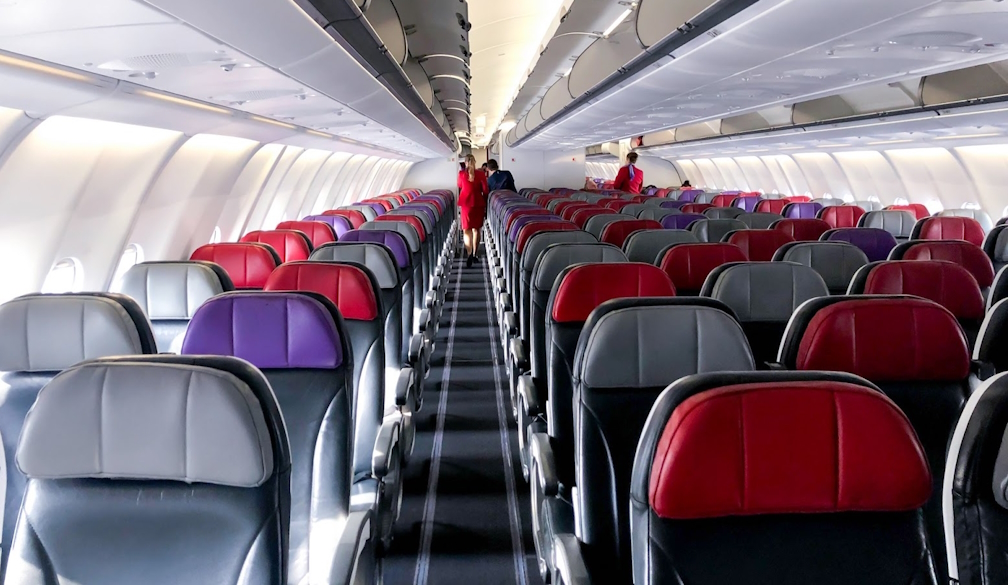
Qatar Airways has announced plans to buy a 25% minority stake in Virgin Australia from its owner, US private equity firm Bain Capital.
The two airlines have already had a strong relationship as “codeshare partners[1]” since 2022. Codesharing is where airlines agree to sell seats on each other’s flights. This new announcement, however, is a big step up.
All of this will, of course, be subject to approval from both Australia’s Foreign Investment Review Board and the Australian Competition and Consumer Commission (ACCC). But there could be a range of winners if it goes ahead.
Perhaps most importantly for Australian travellers, the move means Virgin Australia will be able to compete as it once did on long-haul international routes.
This is because a proposed “wet lease[2]” agreement – in which one airline provides full aircraft, crew and relevant services to another – could see Virgin Australia start operating its own flights from Brisbane, Melbourne, Perth and Sydney to Doha as early as mid-2025.
It’s also a win for Bain Capital, which had been trying to offload some of its stake in the airline after acquiring it[3] in crisis in 2020.
So with the prospect of a renewed international foothold for Virgin Australia, could we soon see more competition – and real consumer benefits – on the “Kangaroo Route” between Australia and Europe?
Clearer skies for Qatar?
As you might remember, Qatar Airways’ previous attempts to expand in Australia haven’t always gone smoothly.
Today’s announcement comes little more than a year after Transport Minister Catherine King controversially blocked[5] a request by Qatar to double the number of flights its state-owned airline Qatar Airways was allowed to fly into major Australian airports.
Given the intense public backlash[6] to this decision, it’s possible a renewed application by Qatar would have been more successful. A large expansion of flights by Turkish Airlines was later quietly approved[7].
But this new deal may diminish the need to try again. By wet-leasing wide-body aircraft so Virgin Australia can operate its “own” long-haul routes to Doha (connecting into Europe), Qatar will effectively bypass the need to get government approval for the additional flights.
Read more: What will putting the interests of Qantas ahead of Qatar Airways cost? $1 billion per year and a new wave of protectionism of legacy carriers[8]
The ‘Kangaroo Route’ still needs more flights
Back in 2023, my calculations[9] suggested Qatar’s application to expand should have been approved. Capacity on the Kangaroo Route was only back to 70% of pre-COVID levels. That meant the major players operating flights – including the Qantas–Emirates alliance – could charge significantly more than before the pandemic.
Using the latest flight schedule data, we can show that the capacity between Australia and the Middle East is still 17% below what it was before the pandemic. If Virgin Australia’s proposed long-haul re-entry goes ahead, we could see much more capacity on these routes, and a formidable challenger to the Emirates–Qantas arrangement.
Read more: What will putting the interests of Qantas ahead of Qatar Airways cost? $1 billion per year and a new wave of protectionism of legacy carriers[10]
Likely a win for Virgin and Qatar
It’s easy to see why Virgin and Qatar might be excited. The deal will extend Virgin Australia’s reach – and that of its frequent flyers – into Europe and other destinations via Doha. But this goes both ways, and could also mean more demand on its domestic network.
Similarly, the additional flights into Doha will feed Qatar Airways’ network, an airline that seems to be going from strength to strength.
Despite historical troubles[11] at Doha’s main airport, Qatar Airways is now one of the world’s largest airlines. It has once again been ranked[12] as the world’s best airline by the independent air transport rating organisation Skytrax.
Both airlines were also keen to point out[13] benefits of the partnership they said would go beyond additional services and increasing competition in the Australian market.
These include the potential to work together towards various sustainability initiatives and on developing Western Sydney’s aviation ecosystem, providing exciting new opportunities for employment and training.
Not yet a done deal
However, they’re still a long way from the finishing line. Whether this deal will actually materialise remains to be seen.
It is worth noting this is not the first time Virgin Australia has been part-owned by an airline in the Middle East. Before Virgin Australia’s collapse into administration in April 2020, Etihad held a 21% equity stake.
Further, it remains to be seen what aircraft Virgin Australia will actually get access to and how the service will be perceived. Qatar Airways is guaranteed a transaction win through the wet-lease, without taking on the brand and profit risks of operating these services.
How much concern this will stir at Qantas also remains to be seen, but one thing is clear. Project Sunrise[14] – Qantas’ plan to bypass the Middle Eastern hubs and connect Australia directly with Europe – could soon become much more important.
Emirates is unlikely to emerge as the winner of this move, now set to face increased competition not only on services connecting Australia with the Middle East, but also across its broader network through Dubai.
Qatar Airways acquiring a stake in Virgin Australia will also create interesting dynamics within the Oneworld Alliance, in which both Qantas and Qatar Airways are key partners. There are certainly interesting times ahead.
References
- ^ codeshare partners (www.qatarairways.com)
- ^ wet lease (www.oag.com)
- ^ acquiring it (www.afr.com)
- ^ AAP (photos.aap.com.au)
- ^ blocked (www.afr.com)
- ^ public backlash (theconversation.com)
- ^ approved (www.abc.net.au)
- ^ What will putting the interests of Qantas ahead of Qatar Airways cost? $1 billion per year and a new wave of protectionism of legacy carriers (theconversation.com)
- ^ calculations (theconversation.com)
- ^ What will putting the interests of Qantas ahead of Qatar Airways cost? $1 billion per year and a new wave of protectionism of legacy carriers (theconversation.com)
- ^ historical troubles (theconversation.com)
- ^ ranked (www.worldairlineawards.com)
- ^ point out (newsroom.virginaustralia.com)
- ^ Project Sunrise (www.qantas.com)
- ^ Bianca De Marchi/AAP (photos.aap.com.au)









