Australians Aren’t Escaping — We Just Love Going Somewhere
- Written by: The Times
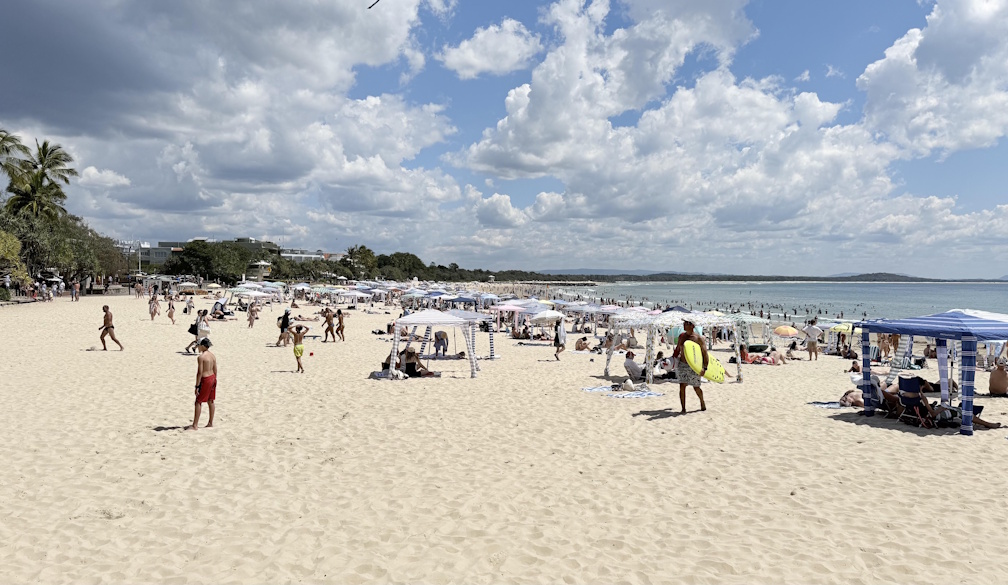
We call it an escape, a getaway or a break. Perhaps Australians simply like going places.
There is something slightly dramatic about the language of holidays.
We “escape” to the coast. We “get away” for the weekend. Travel advertisements invite us to “leave it all behind”.
Escape from what?
For millions of Australians, taking a holiday isn't necessarily an attempt to flee an unhappy existence. It is something much simpler and rather more positive.
We like going somewhere.
A beach we haven't visited. A country we haven't seen. A caravan park where the children can disappear towards the swimming pool while the adults sit outside a cabin or caravan.
Sometimes the destination hardly matters.
The attraction is that tomorrow morning will be different from this morning.
Australians still travel when life becomes expensive
There is plenty that might persuade Australians to stay home.
Interest rates remain a concern. Housing costs consume an enormous part of household incomes. Petrol can make a long drive considerably more expensive than expected.
Property prices generate anxiety. Politics provides a seemingly endless sequence of arguments about immigration, leadership, taxation and the economy.
Yet the suitcases still come out.
The Australian Bureau of Statistics recorded 12.7 million short-term resident returns from overseas during 2025–26, 3.7 per cent more than the previous year.
Holidaymaking accounted for about three out of every five overseas trips.
Indonesia was the largest destination, followed by New Zealand and Japan. Japan is particularly interesting: Australian travel there was more than double its pre-pandemic 2018–19 level.
Asia has become an enormously attractive playground for Australian travellers.
Bali remains readily accessible. Japan offers something completely different. Thailand and Vietnam combine food, beaches, cities and experiences with prices that can appear attractive to Australians once they arrive.
Europe remains irresistible to many, but distance, airfares and accommodation can turn a European holiday into a substantial financial undertaking.
The comparatively short flight into Asia changes the equation.
Or just hitch up the caravan
Then there are Australians who don't need a passport at all.
They hitch something to the back of the car.
Australia recorded 17.3 million caravan and camping trips during 2025, according to Tourism Research Australia.
Travellers spent $12.6 billion.
There were almost 938,000 registered caravans and campervans across the country.
These aren't insignificant numbers. They describe an industry.
Drive along Australia's major highways during school holidays and the statistics become visible.
Caravans head north. Caravans head south. Motorhomes occupy supermarket car parks while their owners replenish supplies. Four-wheel-drives tow increasingly elaborate homes on wheels towards beaches, national parks and regional towns.
And 87 per cent of caravan and camping nights during 2025 were spent in regional Australia.
That means the holiday dollar travels as well.
It reaches fuel stations, bakeries, pubs, supermarkets, cafes, tour operators and small businesses hundreds or thousands of kilometres from the traveller's home.
Try finding a cabin when everyone has the same idea
Holiday parks have changed considerably.
The traditional caravan park might once have meant a powered site, an amenities block and perhaps a children's playground.
Many contemporary parks are destinations themselves.
There are cabins, villas, pools, jumping pillows, water parks, camp kitchens, barbecues and organised children's activities.
For families who don't own caravans, the cabin has become an important part of the Australian road holiday.
And then comes the long weekend.
Suddenly thousands of people have exactly the same idea.
Drive to the coast.
Northern New South Wales is a classic example for Queensland travellers. From the Tweed Coast through Byron Bay and further south, proximity to South East Queensland makes the region an obvious destination whenever Queenslanders acquire an extra day off.
The difficult part can be finding somewhere desirable to stay.
Then comes the school-holiday price
There is, however, one part of the Australian holiday ritual that generates rather less affection.
The price.
A room, cabin or holiday apartment that looks reasonably priced one week can suddenly become considerably more expensive when school holidays arrive.
Airfares can behave similarly.
Consumers understand supply and demand. There are only so many rooms, cabins and airline seats available when enormous numbers of people want them simultaneously.
Understanding it doesn't necessarily mean liking it.
A family paying substantially more for exactly the same accommodation because the school calendar has changed may arrive at its destination carrying a little resentment with the luggage.
For tourism businesses, peak-period pricing can produce an important burst of revenue that helps support operations across quieter periods.
But there is a longer-term calculation too.
Tourism is partly a business of memories.
A customer who believes a holiday represented good value may remember the destination fondly.
A customer who believes they were exploited may remember the price.
The short-term revenue gain therefore has to be weighed against something less easily measured: goodwill.
Petrol hurts. We still fill the tank
Fuel presents another test of Australia's enthusiasm for going somewhere.
A caravan increases consumption. A large four-wheel-drive towing one can make every service-station stop noticeable.
Petrol and diesel prices don't merely affect transport companies and businesses. They arrive directly in the family holiday budget.
Yet Australians continue travelling.
Tourism Research Australia recorded $2.7 billion spent on petrol during domestic overnight trips in the June quarter of 2026 alone.
The cost hurts.
Apparently, the beach still wins.
Leisure is serious business
It is easy to dismiss holidays as discretionary spending.
Economically, however, leisure is an industry.
Accommodation, airlines, caravan manufacturers, caravan parks, restaurants, attractions, tour operators, hire-car businesses, cruise companies and travel agencies all depend to varying degrees upon Australians deciding that staying home isn't quite as interesting as going somewhere else.
In the June quarter of 2026 Australians spent $25.7 billion on domestic overnight travel.
They spent $7.3 billion on accommodation, $3.8 billion on domestic airfares and another $3.8 billion eating in restaurants and buying takeaway food.
Australians also made 74.2 million domestic day trips during the quarter.
Going somewhere is big business.
Perhaps “escape” is the wrong word
There is something important hidden beneath all those numbers.
People don't travel only because they dislike where they are.
They travel because human beings enjoy anticipation.
There is pleasure in packing the car on Friday afternoon.
There is something satisfying about seeing the city disappear in the rear-view mirror.
Children remember swimming pools, beaches and caravan parks. Adults remember meals, conversations, places and people.
Friends travel together. Families reconnect. Couples discover somewhere new.
Sometimes the supposedly important problems of the week simply become less important for a couple of days.
That isn't necessarily escaping reality.
It is another part of reality.
The Times View
Australians worry about mortgages, inflation, politics, property prices and the cost of filling the car.
Then a long weekend arrives.
The caravan is hitched up, the airport terminal fills, the holiday parks become busy and thousands of cars point towards the coast.
Leisure is one of Australia's great consumer industries because Australians aren't merely buying accommodation, airline seats or tanks of petrol.
They are buying something to look forward to.
And despite everything becoming more expensive, it remains remarkably difficult to stop an Australian who has decided it is time to go to the beach.