Post-Trump China: The New Reality Facing the Chinese Economy
- Written by: The Times
For years the global conversation about China focused on unstoppable growth. Factories expanded endlessly, apartment towers rose across entire cities, exports flooded world markets and hundreds of millions of people entered the middle class.
China became the manufacturing engine of the modern world.
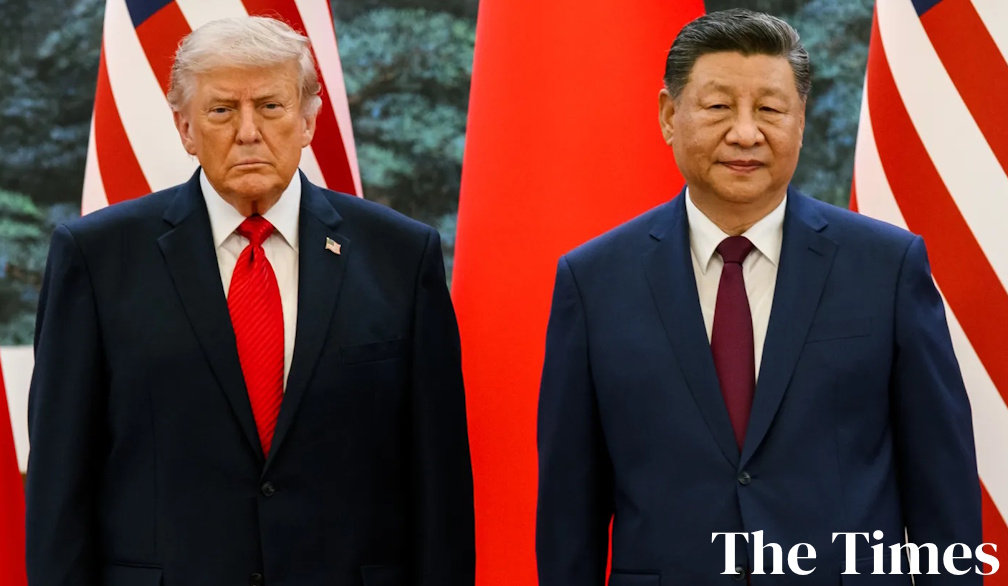
Now, in the aftermath of Donald Trump’s return to aggressive economic diplomacy and America’s renewed focus on strategic competition with Beijing, China faces a very different reality.
The Chinese economy remains enormous, influential and deeply integrated into global trade, but the assumptions that once defined its rise are being challenged simultaneously by geopolitics, demographics, debt, property market weakness and changing global supply chains.
The post-Trump era does not mean the collapse of China. Far from it. China remains too large, too industrialised and too technologically advanced to simply disappear as an economic power.
But it does mean the Chinese economy is entering a new and more complicated chapter.
China Is Still an Economic Superpower
Despite constant predictions of crisis from some western commentators, China remains an economic giant.
It is:
- One of the world’s largest manufacturing nations
- A dominant exporter
- A critical buyer of commodities
- A leader in electric vehicle production
- A major force in solar technology and battery manufacturing
- Central to global supply chains
For Australia alone, China remains vital.
Australian iron ore, LNG, agricultural exports, education services and tourism sectors have all depended heavily on Chinese demand. Even businesses that never directly trade with China often rely on Chinese manufacturing somewhere in their supply chain.
The reality is simple: the modern world economy still runs through China.
That fact has not changed.
What has changed is the political and strategic environment surrounding it.
Trump Changed the Relationship Forever
Donald Trump fundamentally altered the way America approaches China.
Before Trump, many western governments largely believed that economic integration would gradually liberalise China politically and economically. The theory was straightforward: trade would create cooperation, prosperity and eventually convergence with western economic norms.
Trump rejected that assumption entirely.
Instead, he framed China not merely as a trading partner but as a strategic competitor that America had allowed to become too powerful economically.
Tariffs, sanctions, technology restrictions and supply chain diversification became central features of American policy.
Importantly, those policies did not disappear after Trump’s presidency. In many ways they intensified.
That is one of the most important realities facing China today:
America’s political establishment — across both major parties — now broadly agrees that dependence on China carries strategic risk.
The relationship has changed structurally.
The Chinese Property Market Problem
One of the greatest challenges facing China today is its property sector.
For decades, Chinese real estate acted as both an economic engine and a household savings vehicle. Property development fuelled employment, local government revenue and infrastructure expansion.
But cracks have emerged.
Major developers accumulated enormous debt. Oversupply appeared in some regions. Consumer confidence weakened. Some unfinished developments became symbols of deeper financial instability.
China’s property market slowdown matters enormously because property has traditionally represented a major portion of household wealth.
When property values stop rising rapidly, consumer confidence can weaken.
This creates several risks:
- Reduced consumer spending
- Lower construction activity
- Financial pressure on local governments
- Banking sector exposure
- Slower economic growth
The Chinese government has responded with selective stimulus measures, but authorities are also trying to avoid creating another unsustainable debt boom.
That balancing act is difficult.
Manufacturing Remains China’s Great Strength
While headlines often focus on economic weakness, China’s industrial capability remains extraordinary.
In many sectors China is becoming stronger, not weaker.
Chinese manufacturers now dominate or heavily influence:
- Solar panels
- Battery production
- Electric vehicles
- Consumer electronics
- Rare earth processing
- Industrial machinery
- Drone technology
China is no longer simply a producer of cheap low-end goods.
Increasingly, it competes in advanced manufacturing and high-technology industries.
This is one reason western governments remain concerned about industrial dependency.
The world discovered during the pandemic how difficult it is to rapidly replace Chinese manufacturing capacity.
Even companies attempting to diversify production into Vietnam, India or Mexico often still rely heavily on Chinese components and industrial inputs.
The Demographic Challenge
Another major issue facing China is demographics.
For decades China benefited from a huge working-age population that helped fuel industrial expansion. That era is now changing.
China faces:
- A declining birth rate
- An ageing population
- Rising pension and healthcare pressures
- A shrinking workforce over time
Demographic decline creates long-term economic headwinds because fewer workers eventually support larger retired populations.
This is not a uniquely Chinese problem — many advanced economies face similar challenges — but China’s situation is particularly significant due to the scale of its population and the speed of demographic change.
The era of seemingly endless labour supply is ending.
Youth Unemployment and Social Expectations
Youth unemployment has become another sensitive issue.
China’s younger generation grew up during decades of rapid economic expansion. Many expected rising prosperity, strong career opportunities and improving living standards.
But slower growth and changing economic conditions have made employment more competitive.
University graduates increasingly face:
- Intense job competition
- Lower wage growth
- Reduced property affordability
- Greater economic uncertainty
This creates pressure on policymakers because social stability has long been closely tied to economic progress.
China’s leadership understands that maintaining public confidence is critical.
China and the Global Supply Chain Shift
Many multinational corporations are now pursuing a “China plus one” strategy.
This does not mean abandoning China entirely. Instead, companies seek additional manufacturing bases in countries such as:
- Vietnam
- India
- Indonesia
- Mexico
- Thailand
The goal is diversification rather than total withdrawal.
Businesses learned during trade disputes and the pandemic that over-concentration in one country creates risk.
However, replacing China completely remains extremely difficult.
China offers:
- Massive infrastructure
- Skilled industrial labour
- Integrated supplier networks
- Port capacity
- Logistics sophistication
- Manufacturing scale unmatched globally
Many countries can supplement China, but few can fully replicate it.
Australia’s Delicate Position
Australia occupies a uniquely delicate position in this evolving landscape.
Economically, China remains critically important to Australia’s prosperity.
Strategically, Australia remains closely aligned with the United States.
This balancing act creates ongoing tension.
Australian businesses understand that Chinese demand supports enormous sectors of the domestic economy, particularly mining, agriculture, universities and tourism.
At the same time, geopolitical uncertainty forces Australia to consider supply chain resilience, strategic industries and national security concerns.
The post-Trump environment means Australia must increasingly navigate both economic pragmatism and strategic caution simultaneously.
Is China in Decline?
The more realistic question may not be whether China is “declining,” but whether it is transitioning.
China is moving from:
- Hyper-growth to slower growth
- Property-led expansion to advanced manufacturing
- Export dominance to greater domestic consumption
- Cheap labour advantage to technological competition
That transition will not be smooth.
Economic transformations of this scale never are.
But predictions of imminent collapse have repeatedly proven wrong.
China still possesses:
- Enormous industrial capability
- Strong state capacity
- Vast infrastructure
- Technological ambition
- Deep integration into global trade
The country’s challenge is not survival. It is adaptation.
Conclusion
The post-Trump reality for the Chinese economy is more complex than either triumphalist optimism or catastrophic decline narratives suggest.
China remains one of the world’s central economic powers, but it now operates in a world where geopolitical rivalry, supply chain diversification and strategic distrust shape international commerce more than at any time in recent decades.
The Chinese economy faces genuine challenges:
- Property sector instability
- Demographic decline
- Slower growth
- Youth unemployment
- International strategic pressure
Yet it also retains enormous strengths:
- Manufacturing dominance
- Technological capability
- Export power
- Infrastructure scale
- Global trade integration
For Australia and the wider world, the future relationship with China will likely be defined neither by total partnership nor total separation.
Instead, it may become a long-term reality of cooperation, competition, dependence and caution all at once.
That is the new economic landscape of the post-Trump era.