Can Israel and Hezbollah both claim success after weekend strikes? And what could happen next?
- Written by: Ian Parmeter, Research Scholar, Centre for Arab and Islamic Studies, Australian National University
For weeks, Israel had been anticipating a major attack from Hezbollah in retaliation for its killing of Hezbollah commander Fuad Shukr[1] in Lebanon at the end of July.
In the early hours of Sunday, that attack finally came – and Israel was apparently ready. The Israelis claim to have thwarted[2] what could have been a large-scale Hezbollah assault. At the same time, Hezbollah also claimed success[3].
So, what can we make of the latest tit-for-tat between the two sides, and where does the region go from here?
How both sides are seeing things
Clearly, both Israel and Hezbollah have stepped back at this stage from any further action. Hezbollah has qualified this by saying this is only the first phase of its response to Shukr’s assassination, and that it reserves the right to strike further after evaluating the success of Sunday’s operation.
Israel claimed to have seen preparations for perhaps a thousand rockets to be launched across the border, and it preemptively sent around 100 aircraft into southern Lebanon and hit 270 targets, including rocket launchers. Hezbollah is believed to be capable of launching 3,000 missiles a day[4] if a full-scale war were to break out.
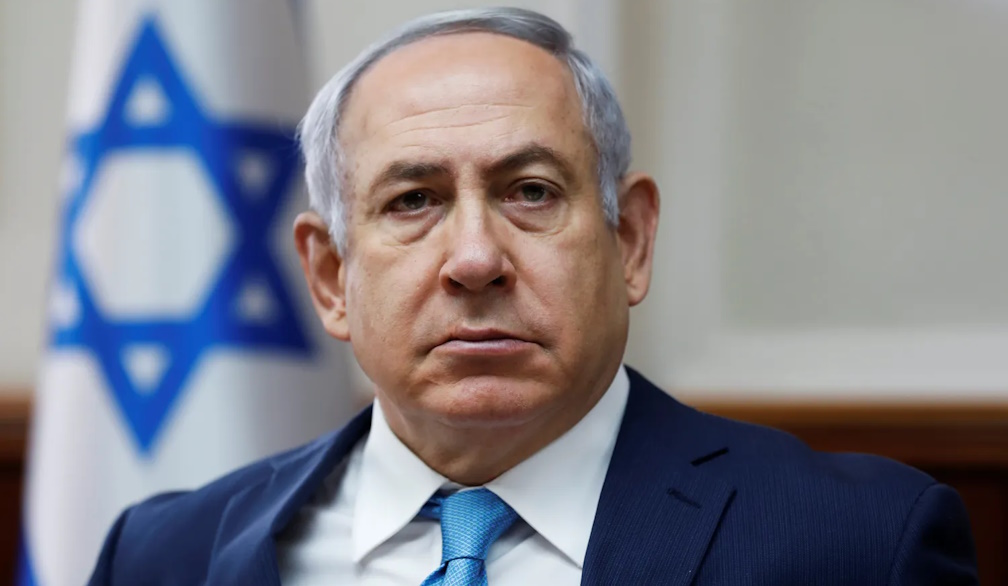
Israeli Prime Minister Benjamin Netanyahu claimed the operation as a success, but said it’s not the end of the story and Israel will strike further if need be.
Hezbollah denies Israel’s strikes did much damage, saying it merely fired into “empty valleys[5]”.
At the same time, Hezbollah retaliated by sending a large number of Katyusha rockets into northern Israel. These are not the biggest rockets in its arsenal – they have a limited range[6] of up to 40 kilometres – so they can only hit targets in northern Israel. Hezbollah said the rockets were meant to make way for a wave of drones to go into Israel. One Israeli Navy sailor was killed[7] in the attack.
In his speech by video on Sunday, Hassan Nasrallah, the leader of Hezbollah, seemed to be apologising[8] to the Lebanese people for putting them in this position. And that’s possibly not surprising, because Hezbollah is both a political and military actor, and it needs to make sure it continues to win votes in the Lebanese political system.
But Nasrallah said Hezbollah had achieved its objectives and the group was encouraging Lebanese who had moved away from the border to go back. However, that may be a bit premature, because it is still unclear how this will all play out.
What is Iran thinking?
Most analysts had been assuming there might be a coordinated revenge attack for both the killing of Shukr in Beirut and the assassination of Hamas leader Ismail Haniyeh[9] in Tehran in July. This may have included missiles and rockets from Iran, Hezbollah in Lebanon, and possibly also the Houthi rebels in Yemen and Shi'a militant groups in Syria and Iraq.
But that didn’t happen. And that could mean a few things.
First, Iran at this stage is likely trying to work out the best way of responding to Haniyeh’s killing. In April, it sent[10] over 300 missiles, drones and rockets into Israel in retaliation for the bombing of an Iranian diplomatic building in Damascus in which several Islamic Revolutionary Guard Corps (IRGC) members were killed. But virtually all of them were shot down and there was no serious damage.
A repeat of that would indicate Iran really doesn’t have the capacity to take serious action against Israel.
At the same time, Iran would also not want to launch a bigger retaliatory strike because that could spark a wider war. And Tehran doesn’t want to give the Americans or Israelis an excuse to launch a concerted attack on its nuclear facilities.
So, Iran is likely trying to work out some mid-point between its April strike and a slightly stronger response. This is clearly taking time.
It may also indicate there’s a debate going inside Iran between those around the newly elected president, Masoud Pezeshkian[11], who is known to be something of a moderate (in Iranian terms ), and the IRGC, which has been threatening a very hard-line response to Israel for some time.
Iran may have simply decided it will only respond to Israel through its proxies – limited attacks by Hezbollah and the Houthis are all it is willing to do at this stage. But this doesn’t mean the danger is over because the scope for messages to be misunderstood between such hostile antagonists is always there.
Netanyahu under pressure
Netanyahu is also under continued pressure from the right wing of his cabinet, which has long advocated for taking out the Hezbollah threat on Israel’s northern border, even though this is a very difficult task. Israel tried it once before[12] in 2006 and essentially failed.
In addition, about 60,000 Israelis[13] have had to evacuate their homes in northern Israel and are living in temporary accommodation due to the Hezbollah threat. They want Netanyahu to make it safer for them to return.
Responding to military threats on two fronts is difficult for Israel to sustain. Israel’s military has now been been fighting Hamas in Gaza, and to some extent, protecting northern Israel from Hezbollah attacks for nearly 11 months.
The permanent Israeli army is also not that large. It only has about 169,000 regular troops[14], meaning it must rely on up to 300,000 reservists to meet its current needs.
And the problem with bringing reservists into service: this affects the economy[15] because they leave their jobs. In just the last couple of weeks, the Fitch Ratings agency downgraded Israel’s rating[16] from A to A minus, reflecting the fact the economy is not functioning as well as it should be, in addition to the heightened geopolitical risks. The country is on a perpetual war footing, and the military wants to have a break.
However, Netanyahu is wary of any sort of a pause in the fighting because that could upset his coalition and spark an election, which he would probably lose.
His entire strategy since the October 7 Hamas assault has been to reestablish his security credentials. He needs to be able to show he can counter any threat to Israel to restore the public’s faith in him. To do that, he must re-establish the confidence of those who live in northern Israel and stop the attacks from Hezbollah.
It seems this could go on for quite some time, but Hezbollah has also said it will halt its attacks if there’s a ceasefire in Gaza. So in that sense, we’re stuck in a loop that’s not going to stop until there’s a breakthrough in the ceasefire negotiations between Israel and Hamas.
And given the obstacles that remain on both sides, it’s hard to see that happening any time soon.
References
- ^ killing of Hezbollah commander Fuad Shukr (www.aljazeera.com)
- ^ thwarted (www.france24.com)
- ^ claimed success (www.aljazeera.com)
- ^ 3,000 missiles a day (www.theguardian.com)
- ^ empty valleys (www.abc.net.au)
- ^ limited range (missilethreat.csis.org)
- ^ killed (edition.cnn.com)
- ^ apologising (www.abc.net.au)
- ^ Hamas leader Ismail Haniyeh (www.aljazeera.com)
- ^ sent (theconversation.com)
- ^ Masoud Pezeshkian (theconversation.com)
- ^ tried it once before (theconversation.com)
- ^ 60,000 Israelis (apnews.com)
- ^ 169,000 regular troops (www.abc.net.au)
- ^ affects the economy (www.npr.org)
- ^ downgraded Israel’s rating (www.reuters.com)