Investigation reveals global fisheries are in far worse shape than we thought – and many have already collapsed
- Written by: Graham Edgar, Senior Marine Ecologist, Institute for Marine and Antarctic Studies, University of Tasmania
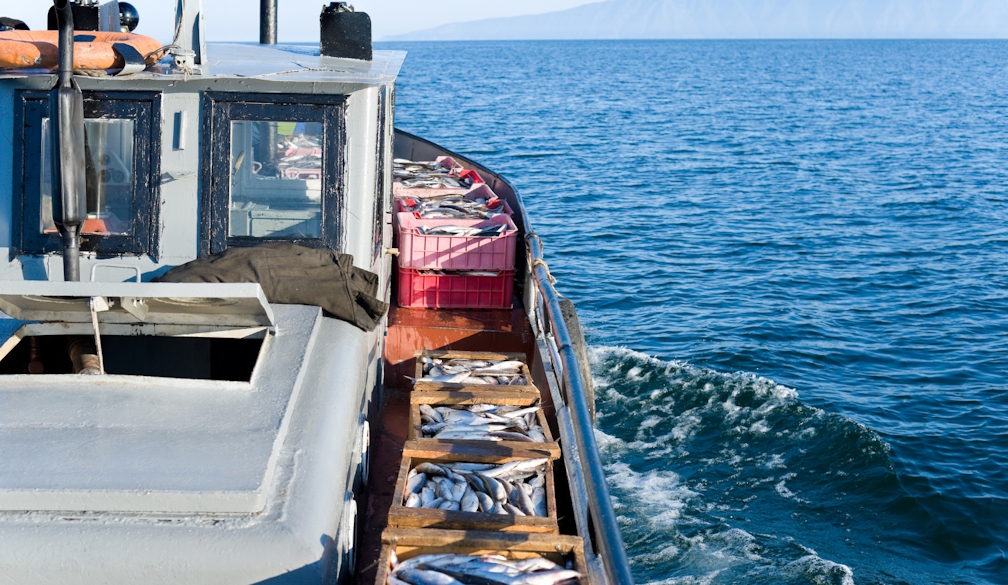
When fish are taken from our oceans faster than they can reproduce, their population numbers decline. This over-fishing upsets marine ecosystems. It’s also bad for human populations that rely on fish for protein in their diets.
To manage fishing areas sustainably, we need accurate data on how many fish exist and how abundant they will be in future. Fisheries scientists use complex mathematical models to determine this.
But an investigation by my colleagues and I, published today in the journal Science[1], casts serious doubt on the accuracy of these models.
We studied 230 fisheries around the world. We found populations of many overfished species are in far worse condition than has been reported, and the sustainability of fisheries was overstated. Urgent action is needed to ensure our oceans are not fished below their capacity to recover.
Alarming findings
A sustainable fishing operation would ensure the numbers of fish caught does not outstrip the capacity of a fish population to reproduce. In cases where an area has been overfished, stocks should be given time to rebuild.
To determine appropriate catch rates, computer models are used to assess fish stocks. The models are fed data such as fish biology, catch history, and rates of fish breeding, growth and death.
Our investigation tested how accurate estimates of fish stocks actually are. It involved examining data from 230 of the world’s largest fisheries, spanning 128 fish species. They include fishing areas off Australia, New Zealand, the United States, Europe, the United Kingdom, Canada, Argentina and South Africa.
We focused on the depletion in the “biomass”, or total weight, of fish stocks. When fish catch falls to below 10% of its biomass when fishing began, the fish stock is widely said to have collapsed.
For each fish stock, we took data that provided the best estimate of stock depletion at a given year in the past. The data was produced by scientists and reported to fisheries managers and databases.
We compared this historical data to updated modelling produced years later. The updated data was the most recent assessment of that fish stock, but was also “backdated” to the same year as the historical data. The more recent estimates should be more accurate because they are based on data collected over a longer period, and after improvements in the modelling process.
So what did we find? The earlier stock assessments were often too optimistic about the number of fish in the ocean.
For sustainably fished stocks, the earlier estimates were generally accurate. But for stocks that were overfished, most earlier data turned out to be substantially overestimated. In many cases, fish stocks were regarded at the time to be recovering when they were in fact declining.
Among over-fished stocks, we estimated the number of collapsed stocks was likely 85% larger than currently recognised.
How has this discrepancy come about? The models used to make stock assessments are complex and involve many inputs. This can lead to uncertain or inaccurate results – a problem that accumulates each time a value is entered into the model.
As I outline below, the consequences can be devastating.
The case of the jackass morwong
The jackass morwong (also known as deep sea perch) is found off southern Australia and New Zealand. In 2009, models estimated the total stock size for south-eastern Australia at 4,680 tonnes – 22% of the 21,200 tonnes that existed when fishing began. This estimate informed decisions by fisheries managers about how many fish could sustainably be caught in future years.
But modelling in 2014 indicated stock size in 2009 was more likely to have been 3,330 tonnes, and the initial stock size was probably about 28,800 tonnes. That means in 2009, stocks were likely to have depleted to 12% of original levels, not 22%.
The inaccurate estimates mean the “total allowable fish catch” set by the Australian Fisheries Management Authority for jackass morwong is likely to have been unsustainable. Fishing continued with little constraint and the morwong population continued to decline for a decade.
By 2022, however, the declining fish numbers were clear. That year, the authority announced five ocean areas would close to trawl fishers[2], in a bid to protect the jackass morwong and other fish species. The federal government also allocated about A$24 million to buy back fishing vessel permits.
This probably could have been avoided if accurate stock models had been applied and the full extent of depletion recognised a decade earlier.
Fundamental change is needed
Our research shows the global problem of overfishing is far worse than currently recognised. So what should be done?
Clearly, scientists should try to improve the accuracy of models used to assess fish stocks.
And management of fisheries should be far more cautious, to protect fish stocks around the world. This is vital for sustainable fisheries, healthy oceans, and our own food security.
References
- ^ published today in the journal Science (www.science.org)
- ^ close to trawl fishers (www.abc.net.au)
- ^ CC BY (creativecommons.org)