Oil keeps flowing — but the crisis keeps deepening
- Written by: The Times
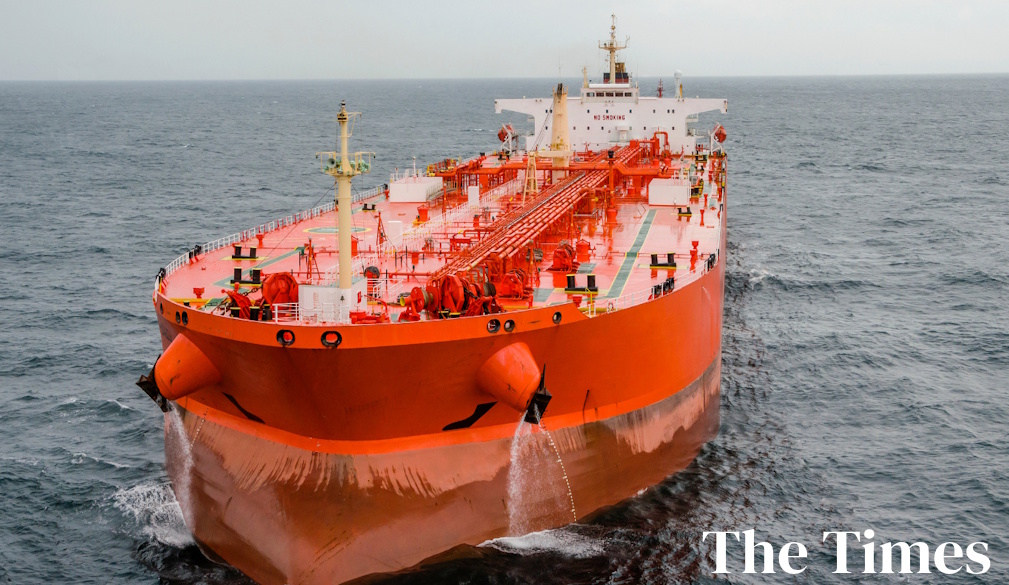
Ships are still being attacked, Saudi export routes remain vulnerable and Washington is turning to Russian diesel. For Australia, continued fuel deliveries offer reassurance, but little protection from the cost.
The uncomfortable question hanging over the oil crisis is straightforward: if Iran’s military has been so severely damaged, how can commercial ships still be attacked and sunk?
The answer lies in the difference between weakening a country’s armed forces and removing its ability to disrupt trade.
The International Maritime Organization’s register, updated on October 19, records 114 confirmed maritime incidents across the Middle East conflict and 24 seafarer fatalities. It lists the container ship GFS Pride as sunk in the Strait of Hormuz on October 13, alongside numerous other damaged vessels. These are consequences that claims of military success cannot explain away.
For Australians, the implications extend well beyond distant shipping lanes. The fuel can keep arriving while the economic damage keeps accumulating.
How can Iran still threaten ships?
A country does not need an intact conventional navy to make a commercial shipping route dangerous.
As a general military principle, scattered weapons and small operating units can remain a threat after major bases, warships and command facilities have been destroyed. Protecting commercial traffic requires sustained security across the route; disrupting it requires a much smaller number of successful attacks.
That does not establish which weapon caused every recent incident. Accounts remain contested.
Reuters reported that two commercial vessels sank near Hormuz following projectile strikes. Iran has attributed some recent incidents to mines, while the United States has disputed Iranian explanations of particular attacks. The sinking of a ship and the claimed mechanism behind it must be treated as separate questions.
The practical conclusion is that damage to Iran’s military has not produced dependable commercial passage.
A military campaign can destroy substantial assets without delivering the condition that matters most to an oil importer: ships moving safely, routinely and at an affordable cost.
Saudi Arabia has oil. Getting it to customers is harder.
Saudi Arabia’s position illustrates why oil production alone cannot solve this crisis.
Its East–West pipeline provides an alternative route to the Red Sea, bypassing Hormuz. But September attacks interrupted that route and contributed to cancelled cargoes. Operations subsequently restarted, with Red Sea exports reported to have resumed later that month. It would therefore be misleading to suggest Saudi exports have simply stopped.
The more accurate concern is that alternative routes are themselves vulnerable.
On October 19, Reuters reported fresh Houthi claims of attacks on Saudi infrastructure, including an Aramco facility at Yanbu. Those claims remained unverified. The same report described a sharp recent fall in oil moving through Hormuz, despite a recovery in regional production during September.
This is the distinction between having oil available underground and delivering usable fuel to a customer. Production, pipelines, terminals, shipping and refining must all function.
A disruption at any one point can restrict the benefit of improvements elsewhere.
Why is America turning to Russian fuel?
The reported American arrangement with Russia is particularly difficult to reconcile with Washington’s efforts to constrain Moscow’s energy revenues.
Associated Press reported an agreement to import more than 300,000 tonnes of Russian diesel, with further shipments envisaged, supported by a six-month Treasury licence. Important commercial details remained unclear.
That is a diesel arrangement. It should not be described as evidence that the United States has exhausted its crude oil reserves.
Crude oil, refinery capacity and finished diesel are different things. A country can produce substantial quantities of crude while still facing pressure in a particular fuel market.
The Times’ assessment is that the arrangement signals the political importance Washington attaches to fuel availability and prices. It does not, by itself, establish a hidden reserve emergency.
It also exposes a difficult policy compromise. Buying fuel from Russia may help address immediate market pressures while weakening the economic isolation intended to constrain Russia.
The contradiction is real, even without assuming a secret bargain beyond the information publicly available.
Is there a crisis the public cannot see?
There are unanswered questions. That is different from proof of a concealed crisis.
Military claims, incomplete incident reporting and undisclosed commercial terms leave gaps in public understanding. Those gaps justify scrutiny, but they do not establish that governments are hiding an imminent collapse in supply.
The visible evidence is serious enough: confirmed shipping casualties, disrupted export infrastructure and extraordinary changes in fuel policy.
A prolonged energy shock can also become less prominent in daily coverage while remaining deeply damaging. Once high prices become familiar, they risk being treated as normal.
For a household or business paying the bill, familiarity provides no relief.
Australia has supply — at a painful price
The Australian Government’s published position offers an important counterweight to fears of an immediate national shortage.
Its fuel dashboard states that deliveries continue at expected volumes and frequency, with sufficient forward orders scheduled for the following four weeks. Reported stock coverage on October 13 was 41 days for petrol, 33 for diesel and 28 for jet fuel. These are stock measures, not a countdown to exhaustion, because imports and domestic production continue.
Availability, however, is only part of energy security.
The same dashboard puts average retail prices across Australia’s five largest cities on October 14 at $2.42 a litre for petrol and $2.79 for diesel. Local prices vary, but the figures show the continuing burden even while deliveries remain adequate.
Australia’s dependence on imported transport fuels connects domestic prices to international refined-fuel markets, particularly Singapore benchmarks. Continued deliveries do not insulate motorists or businesses from overseas price pressures.
The inflation problem reaches beyond the bowser
Higher fuel costs work through the economy in several directions.
They directly increase household transport spending. They also raise operating costs for freight, agriculture and other fuel-intensive businesses. Businesses may absorb some of that pressure through lower margins, pass some on through prices, or reduce activity.
The Reserve Bank has outlined how an international energy shock can both increase inflation and weaken economic activity. Households lose spending power while businesses face higher costs.
That creates a difficult policy problem. Higher interest rates cannot repair a pipeline or secure a shipping lane. They can restrain domestic demand, but doing so adds pressure to borrowers already paying more for transport and essential goods.
Persistent fuel inflation therefore matters even when Australia avoids a physical shortage.
What would an end look like?
A credible improvement would require more than another announcement that an opponent’s military capability has been destroyed.
It would mean sustained safe passage, reliable export infrastructure and greater confidence that purchased cargoes will reach their destinations.
Prices could fall before every political dispute is resolved. Equally, a temporary improvement in shipments would not guarantee that disruption had ended.
There is no sound basis for declaring high fuel prices permanent. There is also no dependable timetable for a return to normal.
The Times View
Australians deserve clear reporting on fuel deliveries, stockholdings, prices and the assumptions behind official assurances.
Governments should explain what is known, what remains uncertain and what would trigger a change in their assessment. Military success should be measured partly against its practical consequences: whether essential trade can move safely.
Australia’s immediate position is more reassuring on supply than on affordability. That distinction matters, because an economy can remain supplied while its households and businesses become steadily poorer.
A country does not have to run out of fuel to suffer an energy crisis. It only has to keep paying more than its people and businesses can comfortably afford.