Bipartisan support for US attack on Iran, but Greens says it is ‘abhorrent’
- Written by: Michelle Grattan, Professorial Fellow, University of Canberra
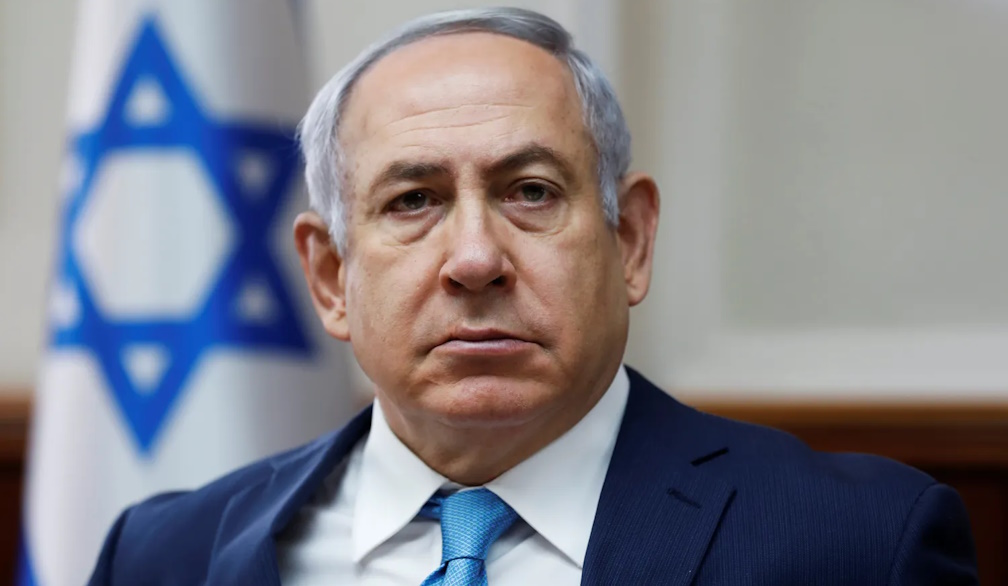
The Albanese government has backed the American strike on Iran, while confirming Australia was not given prior warning.
Federal cabinet’s national security committee met early Sunday. Although supporting what has been done, the government is emphasising Australia is not a central player in Middle East issues.
Prime Minister Anthony Albanese said after the death of Ayatollah Khamenei was confirmed that “his passing will not be mourned.”
In a joint statement, Albanese, Defence Minister Richard Marles and Foreign Minister Penny Wong said: “It has long been recognised that Iran’s nuclear program is a threat to global peace and security.
"The international community has been clear that the Iranian regime can never be allowed to develop a nuclear weapon.
"We support the United States acting to prevent Iran from obtaining a nuclear weapon and to prevent Iran continuing to threaten international peace and security.”
Shadow treasurer Tim Wilson told the ABC: “A coordinated attack to address what has been an ongoing build-up of their nuclear programme is something that’s very good for international peace and security. Of course, we hope the situation is contained.”
Shadow foreign minister Ted O'Brien said: “Our position is clear: Israel has the right to defend itself and Iranians have the right to live free of oppression.”
But Greens leader, Larissa Waters, said: “The Greens condemn these illegal, abhorrent and unilateral attacks. Australians do not want to be dragged into another US-Israeli war.
"Australia’s support of Trump and Netanyahu’s illegal attack last night was disgraceful. We cannot bomb our way to peace.”
A sceptical note from within the Coalition came from Nationals senator Matt Canavan. He told The Conversation “not a single regime change war has left the world a better place in my lifetime – not sure why this would be any different”.
Canavan said it was great to see the Ayatollah gone. “But it was great to see Saddam and Gaddafi gone too. Now things are much worse for those countries and the region. Add the Taliban to that list too.”
Shadow industry minister Andrew Hastie, an Afghanistan veteran, said: “As a veteran of the so-called forever wars, I’m very suspicious about regime change by force. But Iran has a terrible regime – they’re a proxy, they’re underwritten by Chinese and Russian tech,” he told Sky News.
The Iranians orchestrated two attacks in Australia in 2024, one of them the firebombing of the Adass Synagogue in Melbourne. Iran’s ambassador was later expelled.
Asked whether the weekend attack was legal and whether he was concerned this might erode further the international rules-based order, Albanese said those judgements were for the US and those involved directly.
He said he hoped the actions taken would lead to a “swift resolution”.
Wong said Australia did not want to see the situation escalate into a wider regional war. “We seek the resumption of dialogue and diplomacy”, she said. “We join our partners in calling on all parties to adhere to international humanitarian law.”
On whether Australia had any prior warning, Wong said: “We weren’t told in advance. You wouldn’t expect us to be.
"We are not at the centre of the issues in the Middle East but we obviously play a role in the international community.”
Quizzed on whether Australia supported regime change, Wong said, “We stand with the people of Iran in fighting against an oppressive regime. Ultimately, Iran’s future must be determined by the people of Iran.”
Australians in Iran continue to be advised to leave if it is safe to do so, which is difficult given the air space is closed.
The government said its ability to provide consular assistance in Iran was “extremely limited”. The Australian embassy is closed.
As well as being advised not to travel to Iran Australians are also advised not to travel to Israel, Lebanon, United Arab Emirates, Qatar, Kuwait and Bahrain, among other countries in the region.
Australians requiring urgent consular assistance can contact the Consular Emergency Centre 24/7 on 1300 555 135 in Australia or +61 2 6261 3305 from outside Australia.
The local Iranian community in Australia numbers some 50,000, with many anxiously trying to contact family and friends in Iran.