Hormuz has weakened OPEC — China is becoming the world’s oil-market swing power
- Written by: The Times
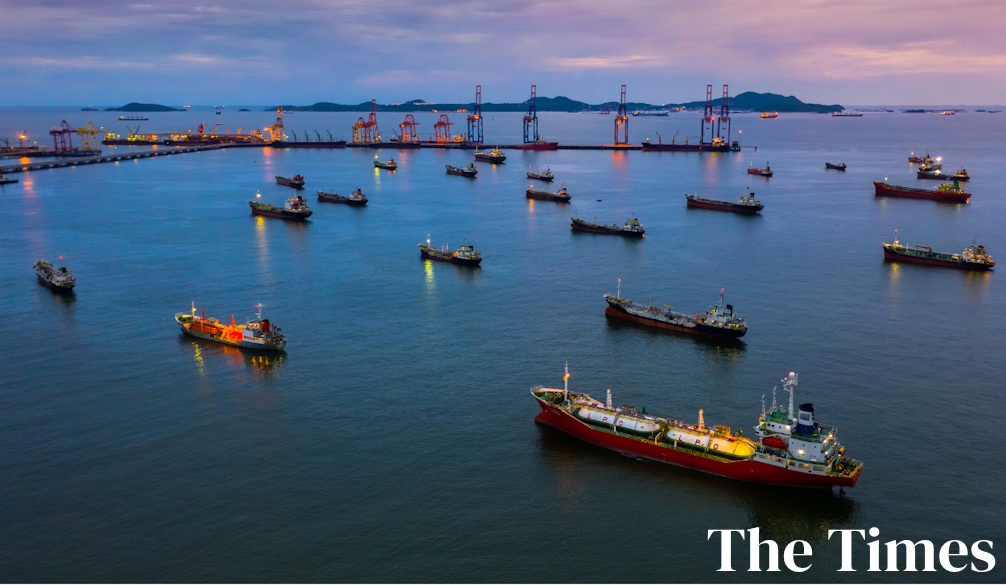
For decades, OPEC’s great power came from its ability to add or remove oil from the global market. The Iran war and disruption through the Strait of Hormuz have exposed a fundamental weakness in that model: announcing more production means little if the barrels cannot reliably reach customers. Meanwhile, China is increasingly influencing the other side of the equation — demand.
For generations, one organisation has occupied a uniquely powerful position in the global oil market.
OPEC.
Later, with Russia and other producers cooperating through OPEC+, that influence became even broader.
When oil prices became too high, producers could increase output.
When prices became too low, they could reduce it.
The mechanism was never perfect, and members did not always comply with agreed quotas.
But the underlying power was unmistakable.
OPEC controlled enough of the world's readily adjustable oil production to influence the balance between supply and demand.
The 2026 Iran war and disruption through the Strait of Hormuz are now challenging that model.
Reuters reports that OPEC+'s share of global oil production has fallen from more than 48 per cent before the conflict to around 40 per cent in July.
The core group of seven producers, including Saudi Arabia and Russia, now represents only about a quarter of world production.
That is a significant shift.
And on the other side of the market, another country is becoming increasingly influential.
China.
OPEC has not stopped producing oil
This distinction is important.
OPEC has not suddenly become irrelevant.
Saudi Arabia remains one of the world's most important oil producers.
Other Gulf countries possess enormous reserves.
Russia remains a major producer.
Collectively, OPEC+ still accounts for a formidable share of global supply.
But producing oil and delivering oil are two different things.
That is the lesson Hormuz has imposed upon the market.
A producer can have oil underground.
It can have wells capable of producing it.
It can announce a higher production target.
But ultimately that barrel has to reach a customer.
If the tanker cannot get through, the theoretical production increase does little to relieve the shortage.
OPEC+ has announced six production increases
According to Reuters, OPEC+ has announced six production increases since March.
Under normal circumstances that would be powerful market information.
More OPEC+ oil should mean greater global supply.
Greater supply should place downward pressure on prices.
But the normal mechanism has been disrupted.
War damage, shipping constraints and the severe reduction in normal Hormuz traffic mean additional production cannot necessarily translate into equivalent additional exports.
The market therefore confronts an unusual situation.
OPEC can open the tap.
But opening the tap achieves relatively little if the pipe leading to the customer is constrained.
Hormuz has changed the meaning of spare capacity
This is particularly important because OPEC's spare production capacity has traditionally acted as one of the world's great energy shock absorbers.
If another producer suddenly loses output, Saudi Arabia and other members can potentially increase production.
That spare capacity reassures markets.
But spare capacity is only useful if the resulting oil can be exported.
Hormuz has demonstrated that there are really two forms of spare capacity:
the ability to produce another barrel;
and
the ability to deliver another barrel.
During this crisis, the second has become at least as important as the first.
Saudi Arabia is adapting
That does not mean Gulf producers are helpless.
Quite the opposite.
Saudi Arabia has been increasing the amount of oil it can move without relying on conventional passage through Hormuz.
Saudi Aramco has sold cargoes using ship-to-ship transfers outside the Strait, including millions of barrels destined for Chinese refiners.
Saudi Arabia also possesses its East-West pipeline towards the Red Sea.
The UAE has pipeline capacity reaching Fujairah outside Hormuz.
These alternatives matter enormously.
But they cannot instantly reproduce the enormous volume of energy that previously flowed through the Strait.
Before the war, Hormuz carried oil and natural gas equivalent to about one-fifth of global consumption. Current flows are around one-quarter of pre-war levels.
That is an extraordinary amount of disrupted energy trade.
Then there is China
While OPEC's ability to influence supply has weakened, China's ability to influence demand has become increasingly obvious.
Reuters estimates China has imported approximately 400 million fewer barrels of oil since the war began than during the corresponding period last year.
That reduction has performed an enormously important function.
Imagine what might have happened if China had continued buying crude at its previous rate while millions of barrels of normal Middle Eastern supply were simultaneously disrupted.
The competition for available oil would have been considerably greater.
Prices would almost certainly have faced additional upward pressure.
Instead, China reduced demand.
The world's largest crude importer effectively created breathing room for everyone else.
China helped put out the oil-price fire
Earlier Reuters analysis showed just how dramatic the adjustment became.
Chinese crude imports fell from an average of about 12 million barrels a day in February to around 7 million barrels a day by June.
That reduction helped absorb a substantial portion of the supply shock caused by the conflict.
It is one reason the loss of so much Middle Eastern supply did not produce permanently catastrophic crude prices.
Emergency reserves helped.
Alternative production helped.
Gulf bypass routes helped.
But reduced Chinese demand helped enormously too.
Why did China consume less?
There is no single explanation.
Lower refinery activity has played a role.
Domestic petroleum demand has weakened.
Infrastructure activity has changed.
China's enormous transition towards electric vehicles is increasingly relevant.
Petrochemical businesses have adapted.
And Beijing has considerable ability to influence economic activity and energy policy.
China therefore possesses something approaching an enormous demand-side shock absorber.
If conditions become unfavourable, Chinese consumption can fall substantially.
When the world's largest importer reduces purchases by millions of barrels a day, everyone notices.
This reverses the traditional oil-market equation
Traditionally, analysts looked towards Riyadh when the oil market became seriously disrupted.
The question was:
How much more can Saudi Arabia produce?
Increasingly there is another question:
How much does China want to buy?
Those questions operate on opposite sides of the same equation.
Saudi Arabia influences supply.
China influences demand.
If supply falls by two million barrels a day but Chinese demand simultaneously falls by two million barrels a day, the market can remain surprisingly balanced.
That is an oversimplification of an extraordinarily complicated global market.
But it illustrates the fundamental change.
China is becoming the swing demand centre
This is why analysts cited by Reuters increasingly describe China as the world's swing demand centre.
Historically the phrase "swing producer" described a producer capable of adjusting output to stabilise markets.
Saudi Arabia has been the classic example.
China is demonstrating something approaching the inverse.
Its enormous scale means changes in Chinese purchasing can significantly alter global demand.
That gives Beijing influence without requiring it to control a single foreign oilfield.
There is another reason China has flexibility
China has accumulated enormous petroleum inventories.
Reuters previously estimated the country had around 1.4 billion barrels in above-ground reserves, providing considerable flexibility in managing imports and domestic consumption.
That matters during a crisis.
A country with substantial inventories does not need to buy every barrel it consumes today from today's market.
It can draw upon yesterday's purchases.
That allows China to reduce imports precisely when global supply is under greatest pressure.
Again, that helps suppress competition for available crude.
But China's restraint cannot be assumed forever
This is where the story becomes particularly important for Australia.
China's reduced demand has helped restrain international crude prices.
But what happens if Chinese demand recovers?
Suppose Chinese refineries increase production.
Suppose economic activity strengthens.
Suppose Beijing decides oil prices have become attractive enough to rebuild inventories aggressively.
Suddenly millions of barrels of demand could return to the international market.
If Hormuz has normalised by then, the market may absorb that comfortably.
If Hormuz remains constrained, the result could be very different.
The world's buffer could disappear quickly
This is why China's behaviour has become one of the indicators worth watching alongside Hormuz itself.
The world has already consumed substantial emergency petroleum reserves during this crisis.
Commercial inventories have fallen.
Refining capacity is tight.
Shipping remains expensive.
Alternative Gulf export routes are being pushed hard.
Meanwhile, the International Energy Agency has forecast a significant 2026 global oil supply decline because of Middle Eastern disruption.
Reduced Chinese demand has helped make that situation manageable.
If that demand returns before supply does, the arithmetic changes.
Today's oil price reflects optimism
Interestingly, crude prices are currently moving down rather than up.
Brent has fallen through several consecutive sessions as markets become increasingly hopeful that negotiations involving Iran, Oman and Qatar could eventually restore more normal Hormuz traffic.
Brent was around US$86.77 a barrel on Thursday, with West Texas Intermediate around US$81.10.
That tells us markets are assigning increasing probability to improvement.
But markets trade expectations.
Physical energy systems operate on actual barrels.
Until tanker flows materially recover, the distinction remains important.
Australia should watch Beijing as closely as Riyadh
For Australia, this shift changes the way we should think about international fuel prices.
When Australians wonder what might happen to petrol and diesel, attention naturally turns towards the Middle East.
That remains entirely appropriate.
But China deserves equal attention.
Australia buys petroleum products into the broader Asian market.
If Chinese crude demand rises sharply, Asian refiners compete for more crude.
If Chinese refiners increase diesel production and exports, they can conversely help relieve regional product shortages.
China therefore influences both crude demand and refined-fuel availability.
What happens in Chinese refineries can eventually matter at an Australian service station.
There is an interesting diesel twist
China potentially possesses another form of leverage.
Its refineries have been operating significantly below capacity.
Recent analysis estimates Chinese refining operations are around 2.3 million barrels a day below potential capacity.
In theory, China could process more crude and export additional diesel into a world desperately short of middle distillates.
But doing so would require buying more crude.
That could push crude prices higher even while additional Chinese diesel production helped reduce refining margins.
This illustrates how complicated the current market has become.
China could simultaneously increase the price of the raw material and reduce the scarcity of the finished product.
OPEC still matters enormously
None of this means the age of OPEC is over.
That would be an exaggeration.
OPEC members possess extraordinary petroleum reserves.
Saudi Arabia retains immense strategic importance.
OPEC+ still controls around 40 per cent of global production.
Few organisations could regard that as irrelevance.
But its power is constrained by circumstances.
A production quota cannot clear mines.
It cannot insure a tanker.
It cannot eliminate missile risk.
It cannot make a shipowner sail.
It cannot repair damaged infrastructure.
And it cannot force China to consume oil.
The Iran war has exposed those limitations with unusual clarity.
Geography has temporarily beaten geology
The Gulf still possesses the oil.
That has never really been the problem.
The problem is getting it out.
That distinction may ultimately become one of the defining economic lessons of the Hormuz crisis.
For decades energy security was often measured by reserves:
Who possesses the oil?
How much do they have?
How quickly can they produce it?
The events of 2026 suggest another set of questions is equally important:
Can it reach a port?
Can it reach a tanker?
Can the tanker obtain insurance?
Can it leave the Gulf?
Can the refinery process it?
Can the finished fuel reach the customer?
Oil underground has economic value.
Oil that can reliably reach a customer has considerably more.
The balance of power may change again
If Hormuz genuinely reopens, some of OPEC+'s lost influence could return remarkably quickly.
Saudi and other Gulf production would again have easier access to international markets.
Shipping costs could fall.
Export volumes could recover.
The traditional mechanism through which OPEC adjusts supply would begin functioning more normally.
China's influence would not disappear.
But the extraordinary circumstances that have magnified it would ease.
That makes the emerging Hormuz negotiations important for something larger than today's crude price.
They could help determine where power in the global oil market sits after this war.
What should Australia watch?
We have learned throughout this crisis to look beyond headline crude prices.
The indicators now include:
- actual Hormuz tanker movements;
- Chinese crude imports;
- Chinese refinery utilisation;
- Chinese diesel and petrol exports;
- Saudi and UAE bypass volumes;
- OPEC+ actual exports rather than announced production;
- global petroleum inventories;
- refining margins;
- and tanker freight and insurance.
Together, those numbers provide a much better picture of Australian fuel risk than Brent alone.
The Times View
OPEC's power has always rested on a simple proposition.
Control enough oil supply and you can influence the market.
The Hormuz crisis has exposed the missing qualification.
You must also be able to deliver it.
OPEC+ can announce additional production, but barrels trapped behind disrupted shipping routes cannot stabilise the world market as effectively as barrels arriving at refineries.
That has weakened the organisation's influence.
At the same time, China has demonstrated the extraordinary power of demand.
By importing roughly 400 million fewer barrels since the conflict began than during the comparable period last year, China has helped prevent an already historic supply disruption from producing an even larger price shock.
That makes Beijing's next move increasingly important.
If Chinese demand remains subdued while Hormuz gradually reopens, oil prices could face further downward pressure.
If Chinese demand returns strongly before Gulf supply normalises, one of the biggest cushions protecting the world from higher crude prices disappears.
For Australian motorists and businesses, the lesson is straightforward.
We still need to watch Riyadh.
We still need to watch Tehran.
We still need to watch the tankers passing through Hormuz.
But increasingly, we also need to watch Beijing.
The next big move in the oil price may be determined as much by the barrels China decides to buy as the barrels OPEC decides to produce.