Trump’s Gaza peace plan faces a pivotal UN Security Council vote. Can it get across the line?
- Written by: Michelle Burgis-Kasthala, Professor of International Law, La Trobe University
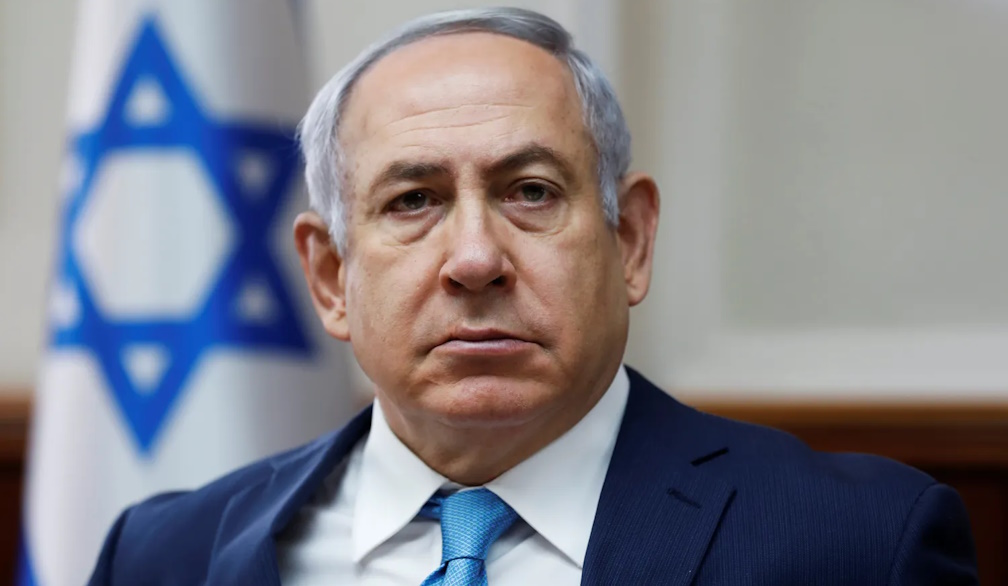
The UN Security Council is set to vote on a US-proposed draft resolution[1] in New York on Monday that sets the groundwork for the next stage of President Donald Trump’s 20-point peace plan for Gaza to be put into force.
Over the last few weeks, Russia, China and various regional states have been pushing for amendments[2] to a draft that was first circulated in early November. The key contention has centred on a proposed transitional authority – the so-called Board of Peace, chaired by Trump himself – with sweeping governance powers devoid of any Palestinian participation or endorsement.
The latest draft now at least includes notional recognition of Palestinian self-determination, which may be enough to deter a veto by either China or Russia.
While many countries continue to be concerned about the details (or lack thereof) in the resolution, support from a broad coalition of regional[3] states will probably push it over the line.
Neither the Israelis nor Palestinians have been formally included in the negotiations, but Israel has presumably worked closely to shape the text. It has pushed back strongly[4] on language supporting Palestinian statehood and will continue to do so[5].
The Palestinian Authority leader, Mahmoud Abbas, has given his broad support[6] to the plan.
What’s in the proposed resolution?
While Trump revelled in the success of his ceasefire and peace deal in October, the efforts by his administration to push for UN Security Council resolution since then underscore how fragile the situation is.
The United States has ignored, shunned or actively obstructed the UN’s work in Gaza over the last two years. It has imposed sanctions on Special Rapporteur Francesca Albanese[7], defunded[8] the UN Relief and Works Agency for Palestine (UNRWA) and vetoed[9] numerous previous resolutions calling for ceasefires in Gaza.
Now, it seems the US is willing to concede a role to the UN. But it envisions this role to be minimal at best and perhaps stretches the limits of standard Security Council mandates to their breaking point.
The draft resolution seeks to build on Trump’s 20-point plan[10] in fundamental ways. One of the key points is the establishment of a transitional authority (the Board of Peace) to oversee the provision of aid and start of reconstruction in Gaza; and an International Stabilisation Force (ISF) to disarm Hamas and oversee security in Gaza for the next two years.
The Board of Peace would include Palestinian technocrats. It would eventually transfer power to the Palestinian Authority, but only once the board is satisfied it is capable of ruling autonomously. Palestinian self-determination is mentioned, but as a platitude without any guarantees.
The ISF would likely comprise troops from Muslim states – such as Indonesia, Egypt, Azerbaijan and Turkey – under the guidance of special forces from Western states. It would maintain border security for Egypt and Israel, though questions remain about how and where[11] it would maintain security within Gaza itself. Disarming Hamas could bring it into direct military confrontation with the group.
Financial details appear at the end of the text. The World Bank and donor states are called on to supply various forms of support, but again, without any concrete policies or parameters.
What’s problematic about it?
It is clear the US is seeking a Chapter 7 mandate under the UN Charter, which authorises the Security Council to take enforcement measures, including military action, to maintain international peace and security. For example, Chapter 7 resolutions authorised action against Iraq[12] in 1990 and Libya[13] in 2011.
While the UN Charter gives the Security Council this power, it still must operate within the framework of international law.
In the absence of explicit Palestinian agreement, the Board of Peace and International Stabilisation Force would likely be classified, in the eyes of legal experts, as occupying powers. And the UN’s highest court, the International Court of Justice, has already declared[14] Israel’s occupation of Palestinian territories as illegal under international law.
As such, any foreign entity governing Gaza and exercising force would also be considered illegal without Palestinian consent, were it to seek to transform the domestic laws in place.
The crux here is Palestinian self-rule. There is no getting around this problem in the long term.
Is there a path forward?
Palestinian buy-in is not only mandatory from a legal sense, it’s also crucial for the Board of Peace to have sufficient legitimacy to address the extremely complex and pressing needs of the Palestinians in Gaza.
Accountability is also vital to ensure the path to peace is genuine and achievable. Yet, the draft resolution ignores the overwhelming evidence put forth by a UN Commission of Inquiry of Israel’s genocidal conduct in Gaza[15] and overlooks the responsibility and accountability of the ISF altogether.
Ultimately, then, the Security Council resolution is reminiscent of the Oslo Peace Accords[16] in the early 1990s. The agreements also promised eventual Palestinian statehood in some vague form, along with a partial Israeli military withdrawal.
However, they did so by abandoning[17] key international legal protections for Palestinians, centred on their right to self-determination and the territorial integrity of the post-1967 occupied Palestinian territories.
If it passes, the UN resolution might provide cover for some semblance of peace, but it won’t have had the direct formal involvement of the Palestinians or Israelis themselves. And it will likely be a peace that only secures Israel’s borders, while dangling the paltry promise of Palestinian statehood to a population already on its knees.
References
- ^ draft resolution (x.com)
- ^ pushing for amendments (www.nytimes.com)
- ^ regional (usun.usmission.gov)
- ^ strongly (www.i24news.tv)
- ^ continue to do so (www.sbs.com.au)
- ^ support (x.com)
- ^ Special Rapporteur Francesca Albanese (www.un.org)
- ^ defunded (www.aljazeera.com)
- ^ vetoed (news.un.org)
- ^ 20-point plan (www.bbc.com)
- ^ how and where (www.theguardian.com)
- ^ Iraq (digitallibrary.un.org)
- ^ Libya (docs.un.org)
- ^ declared (www.ohchr.org)
- ^ genocidal conduct in Gaza (docs.un.org)
- ^ Oslo Peace Accords (www.un.org)
- ^ abandoning (www.tandfonline.com)