With eyes on re-election, Netanyahu’s fights with world leaders aim to distract from many political problems
- Written by: Ran Porat, Affiliate Researcher, The Australian Centre for Jewish Civilisation, Monash University
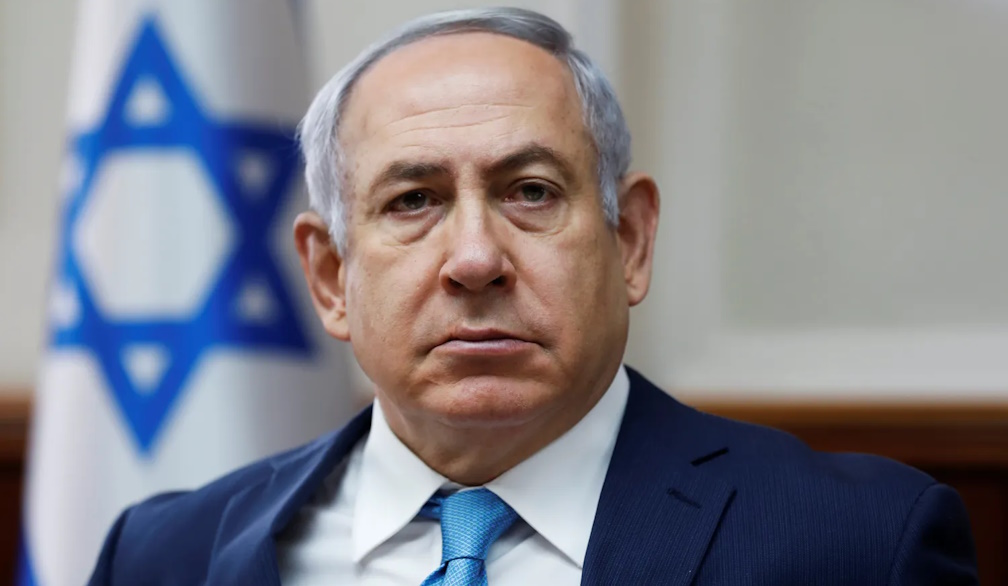
As the longest-serving Israeli prime minister (17 years), Benjamin Netanyahu is famous for his political wizardry and survival skills. But he is also a highly controversial figure with questionable moral standards and legacy.
His latest term in office, beginning in late 2022, has been particularly challenging, thanks to the far-right radical elements of his governing coalition and the unprecedented national disaster Israel experienced at the hands of Hamas on October 7 2023[1].
Yet, Netanyahu has managed to neutralise almost all immediate domestic threats to his power. At times, he has done this by manoeuvring rivals and partners into postponing moves that could topple his government. Other times, he has reshuffled his Likud Party ranks or realigned with bitter foes.
Netanyahu is also facing increased criticism[2] from the Israeli public, with hundreds of thousands of people taking part in marches in support of a hostage deal, as well as from former senior politicians and ex-security officials[3].
And he has clashed[4] with Eyal Zamir, the Israel Defence Force’s (IDF) chief of staff, who argued against the plan to expand the war into Gaza City. Zamir received clear messages[5] to fold or resign, and chose to stay.
Yet, Netanyahu chooses to ignore all of this noise, sending his entourage and loyalists to attack anyone with dissenting views. This week’s spray[6] at Australian Prime Minister Anthony Albanese is just one example.
As a long term political survivor, he does all of this with an eye on the next Israeli elections, due at the end of 2026.
Propping up his far-right coalition
Over the past two and a half years, Israel has faced unprecedented crises that have left society deeply divided.
Under Netanyahu’s leadership, the government introduced a highly controversial judicial reform plan[7] in early 2023, clashing[8] with the Supreme Court and attorney general. This resulted in mass street protests against it.
Then came the Hamas attack of October 7, 2023, which triggered an ongoing multi-front war with severe long-term social, economic and humanitarian consequences.
Netanyahu has claimed credit for successes during this time, such as the 12-day war against Iran[9] in June, while deflecting responsibility for any failures.
Though stretched in many directions, Netanyahu is at his best in such conditions, pitting the conflicting sides around him against each other and playing them.
His coalition relies on hard-right partners, especially National Security Minister Itamar Ben Gvir and Finance Minister Bezalel Smotrich[10]. Despite the massive protests to agree to a hostage deal and international demands to end the war, Netanyahu has chosen to prioritise ensuring the stability of his coalition.
He has acceded to Ben Gvir and Smotrich’s demands to reject ceasefire agreements with Hamas, and instead ordered[11] increased military action against the terrorist group to try to achieve what he has called a “total victory”.
Netanyahu has also indulged Ben Gvir and Smotrich’s talk of resettling Gaza[12] and has enabled their moves to gradually expand Israeli settlements deeper into the West Bank and block[13] any geographically feasible Palestinian state.
Proving Henry Kissinger’s famous observation[14] that “Israel has no foreign policy, only domestic politics,” Netanyahu has also angrily rebuked the wave of Western countries recognising, or preparing to recognise, a Palestinian state.
His defiant letters to French President Emmanuel Macron[15] and social media outbursts about Albanese[16] are aimed less at diplomacy and more at cultivating his image as “a strong leader for Israel” among his base.
Supported by the Trump administration’s sanctions[17] against the International Criminal Court (ICC), Netanayhu has also felt confident attacking it for issuing warrants[18] against him.
Neutralising challenges from ultra-religious parties
The government’s biggest domestic challenge has been passing a draft law[19] addressing the decades-long exemption of tens of thousands of ultra-Orthodox (Haredi) men from army service.
Following a Supreme Court ruling that the previous exemptions could not continue, religious parties in Netanyahu’s coalition demanded[20] a bill to formally exempt the men from army service or they would bring down the government.
In response, Netanyahu enticed old rival Gideon Sa’ar from the opposition into joining[21] his government, shoring up the coalition’s previously tiny majority.
Since then, he has bought time through broken promises, successfully persuading the ultra-Orthodox parties to wait until parliament’s return in October of this year. Meanwhile, he replaced[22] Yuli Edelstein, the committee chair who had sought a strong bill with personal sanctions for draft evaders, with a more pliant loyalist, Boaz Bismuth.
Eyes on re-election
Now Netanyahu has his eye on the next general elections, officially set for late 2026 — though he would prefer they take place before the third anniversary of the October 7 attacks.
For two years, polls have consistently predicted his defeat. As such, he is working to reshape his image. He wants Israelis to forget his central role in the October 7 catastrophe, as well as the questions surrounding the war’s management.
He also hopes to continue diverting attention from his ongoing trial[23] on bribery and breach of trust charges.
But Netanyahu faces a dramatic dilemma over the war. On the one hand, he may decide to sign a ceasefire deal with Hamas and secure the release of the hostages. This would win the cheers of most Israelis, but risk the loss of his government, given the far-right ministers’ threats[24] to dissolve the coalition if he accepts any deal without fully conquering the strip.
On the other hand, he could proceed with the military operation in Gaza City, which may well result in the killing of the remaining hostages – either by Hamas or as a consequence of IDF attacks.
A third option would be to continue negotiations while escalating preparations[25] for the attack, in the hope of achieving a better deal. We will soon know what direction he will take – and what it will mean for his political future.
References
- ^ October 7 2023 (www.october7.org)
- ^ increased criticism (www.theguardian.com)
- ^ senior politicians and ex-security officials (www.independent.co.uk)
- ^ clashed (www.timesofisrael.com)
- ^ clear messages (www.timesofisrael.com)
- ^ spray (www.theguardian.com)
- ^ judicial reform plan (lens.monash.edu)
- ^ clashing (apnews.com)
- ^ 12-day war against Iran (www.timesofisrael.com)
- ^ National Security Minister Itamar Ben Gvir and Finance Minister Bezalel Smotrich (www.sbs.com.au)
- ^ ordered (www.nytimes.com)
- ^ resettling Gaza (www.timesofisrael.com)
- ^ block (www.afr.com)
- ^ famous observation (blogs.timesofisrael.com)
- ^ Emmanuel Macron (www.politico.eu)
- ^ Albanese (www.jpost.com)
- ^ sanctions (www.theguardian.com)
- ^ warrants (news.un.org)
- ^ draft law (unpacked.media)
- ^ demanded (www.jpost.com)
- ^ joining (www.jpost.com)
- ^ replaced (www.timesofisrael.com)
- ^ trial (www.timesofisrael.com)
- ^ threats (www.timesofisrael.com)
- ^ escalating preparations (www.israelhayom.co.il)