Want to know how far your new EV can actually go? Take 10–20% off its claimed range
- Written by: Hussein Dia, Professor of Transport Technology and Sustainability, Swinburne University of Technology
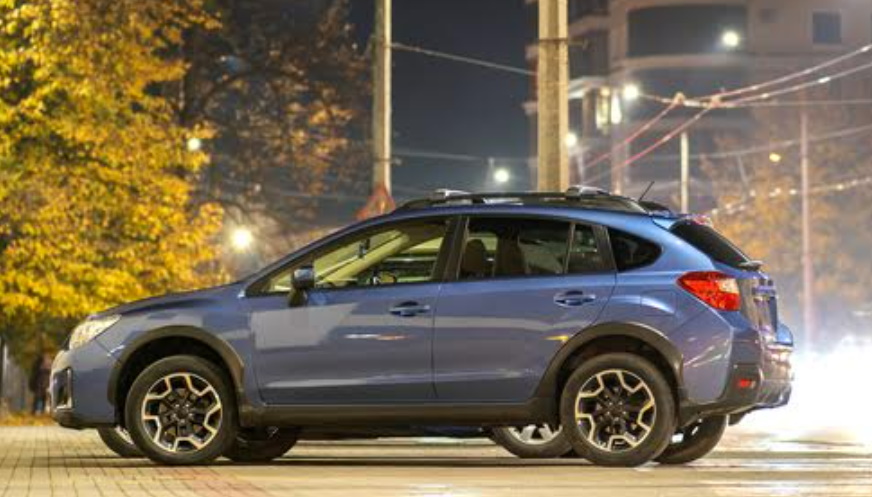
Many electric vehicles (EVs) now come with range estimates of 400–500 kilometres[1], while some premium models claim ranges of more than 600km[2].
Drivers new to EVs may look at the range figures given by the manufacturer and think that’s how far their new car will go on a single battery charge.
But this isn’t quite accurate. In reality, an EV’s actual range is usually less. Recent real-world testing[3] of five popular EV models by the Australian Automobile Association showed the real range was an average of 11.6% less than the official figures. There was wide variation: BYD’s Atto 3 had 23% less range, while the Smart #3 had just 5% less.
This is because official figures come from a standardised laboratory test done in idealised conditions different to the way people actually drive.
The problem is not confined to EVs. When the same testing was done on popular petrol cars, some were found to use up to 35%[4] more fuel than official figures claim.
Real-world testing is an important public service. Drivers looking for a new EV could knock off 10–20% from official ranges as a rule of thumb. But it’s worth looking for testing of the exact model to see what the true difference is.
How are official range figures produced?
To produce official range estimates, new EVs are run through a standardised test.
This test, the Worldwide Harmonised Light Vehicle Test Procedure[5], is used to estimate the distance an EV can drive on a full battery as well as a combustion engine car’s fuel consumption.
Vehicles are tested on a dynamometer[6] – a treadmill for cars – in a controlled laboratory environment on a 30-minute driving cycle[7]. During the cycle, the cars are driven at four levels of intensity[8]: low (up to 60km per hour), medium (up to 80km/h), high (up to 100km/h) and extra high (above 130km/h), with a set sequence of accelerations, steady speeds and decelerations.
Testing is done at an ambient temperature of 23°C, with no passengers, accessories, or use of heating or air conditioning. The EV is driven by computer through repeats of the 30‑minute cycle until the battery is fully depleted. The total distance covered becomes the official range used by the manufacturer.
This testing regime is very useful, as it offers a single consistent way to compare cars worldwide. But the test doesn’t take conditions such as congestion, driving style and weather variations into account.
That means drivers should take the official range figures as a benchmark, not a guarantee[9].
How EVs perform in real-world driving
Testing the realistic range of EVs requires real-world testing. To get these figures, testers drove the EVs on a 93km circuit[10] in and around Geelong, including a mix of urban, rural and highway driving conditions.
Their findings are similar to international results[11]. European testing suggests everyday use cuts between 10% and 30%[12] off the official range. If an EV is driven hard during winter, the range can drop as much as 40%[13].
Under Australian conditions, drivers can reasonably expect the real range to be 10–20% less.
What real world conditions affect range?
Real-world ranges can be less for several reasons[14], such as driving style, weather and extra weight.
Driving style is important[15]. High speeds increase wind resistance and energy use. Driving in hilly terrain uses more energy, though some of this is returned to the battery through regenerative braking[16], where EVs convert the kinetic energy of braking back into electricity.
Temperature and weather can also have an impact[17]. Very cold conditions can temporarily reduce range, while very hot conditions force the car to use some power to keep battery packs cool. Using air conditioning and heating[18] can also reduce range, particularly in extreme temperatures.
How temperature and weather impact electric vehicle range.Adding weight (passengers, cargo) can reduce range, as can roof racks[19] or roof boxes.
Trip planning is key
The average Australian commute is around 35km per day[20] – well within the capabilities of even the shortest-range EVs.
But range becomes important when doing longer trips.
Most EVs display[21] real-time consumption[22] and estimated remaining range[23], which adjusts as you drive. This makes it easier to plan ahead[24], especially on longer trips.
Some EV owners use route planning[25] tools such as A Better Route[26]. These tools estimate how much energy you’ll use on a given journey, taking into account elevation, speed and temperature.
Setting EVs to eco-driving mode and reducing the use of energy hungry air-conditioning will help get more range[27]. Keeping tyres[28] properly inflated and avoiding unnecessary weight or roof racks where possible will also help.
Cooling or heating your EV before departure — known as preconditioning[29] — can be done while plugged in or running off the battery. Doing it while plugged in is preferable, as it uses grid power rather than draining the battery, helping preserve range.
EV preconditioning explained.Petrol and diesel cars use more fuel in the real world
There’s nothing new[30] about the gap between lab-testing and real-world performance.
Combustion engine cars are sold with official figures for their fuel consumption. But they can use significantly more fuel in the real world.
Real-world tests in Europe[31] found fuel consumption and carbon dioxide emissions from diesel and petrol vehicles were around 20% higher than under lab testing.
Range doesn’t have to be a guessing game
While countries such as Norway[32] and China[33] have streaked ahead in taking up EVs, Australia is still at the early stages. Clear, independent information is essential to help people make informed choices and encourage EV uptake.
Real-world testing helps bridge the gap between marketing promises and the reality on the road, giving drivers the confidence to plan their trips.
Lower real world ranges aren’t a deal breaker. Savvy drivers can use this data together with trip planning and an understanding of conditions to travel with confidence.
References
- ^ 400–500 kilometres (www.whichcar.com.au)
- ^ more than 600km (www.carexpert.com.au)
- ^ real-world testing (www.aaa.asn.au)
- ^ up to 35% (realworld.org.au)
- ^ Worldwide Harmonised Light Vehicle Test Procedure (www.drive.com.au)
- ^ dynamometer (www.youtube.com)
- ^ 30-minute driving cycle (evdb.nz)
- ^ four levels of intensity (www.drive.com.au)
- ^ not a guarantee (www.youtube.com)
- ^ 93km circuit (realworld.org.au)
- ^ international results (blog.chargemap.com)
- ^ 10% and 30% (go-e.com)
- ^ 40% (blog.chargemap.com)
- ^ several reasons (www.sciencedirect.com)
- ^ is important (www.forbes.com)
- ^ regenerative braking (www.youtube.com)
- ^ have an impact (electricvehiclecouncil.com.au)
- ^ air conditioning and heating (afsdirect.com.au)
- ^ roof racks (fleetworld.co.uk)
- ^ 35km per day (www.nrspp.org.au)
- ^ display (www.allego.eu)
- ^ consumption (www.youtube.com)
- ^ remaining range (www.youtube.com)
- ^ plan ahead (www.mynrma.com.au)
- ^ route planning (www.drive-electric.com.au)
- ^ A Better Route (abetterrouteplanner.com)
- ^ get more range (www.motorama.com.au)
- ^ tyres (www.tyresafe.org)
- ^ preconditioning (www.motoringelectric.com)
- ^ nothing new (theicct.org)
- ^ in Europe (climate.ec.europa.eu)
- ^ Norway (elbil.no)
- ^ China (carnewschina.com)