Do countries have a duty to prevent climate harm? The world’s highest court is about to answer this crucial question
- Written by: Nathan Cooper, Associate Professor of Law, University of Waikato
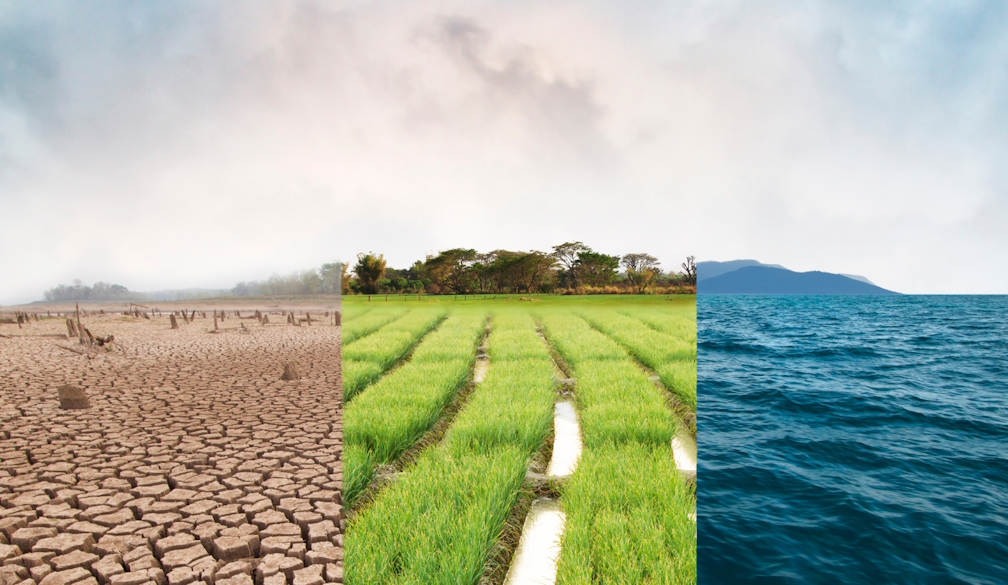
The International Court of Justice (ICJ[1]) will issue a highly anticipated advisory opinion[2] overnight to clarify state obligations related to climate change.
It will answer two urgent questions: what are the obligations of states under international law to protect the climate and environment from greenhouse gas emissions, and what are the legal consequences for states that have caused significant harm to Earth’s atmosphere and environment?
ICJ advisory opinions are not legally binding[3]. But coming from the world’s highest court, they provide an authoritative opinion on serious issues that can be highly persuasive.
This advisory opinion marks the culmination of a campaign that began in 2019 when students and youth organisations in Vanuatu[4] – one of the most vulnerable nations to climate-related impacts – persuaded their government to seek clarification on what states should be doing to protect them.
Led by Vanuatu and co-sponsored by 132 member states[5], including New Zealand and Australia, the United Nations General Assembly formally requested the advisory opinion in March 2023.
More than two years of public consultation and deliberation ensued, leading to this week’s announcement.
What to expect
Looking at the specific questions to be addressed, at least three aspects stand out.
First, the sources and areas of international law under scrutiny are not confined to the UN’s climate change framework. This invites the ICJ to consider a broad range of law – including trans-boundary environmental law, human rights law, international investment law, humanitarian law, trade law and beyond – and to draw on both treaty-related obligations and customary international law.
Such an encyclopaedic examination could produce a complex and integrated opinion on states’ obligations to protect the environment and climate system.
Second, the opinion will address what obligations exist, not just to those present today, but to future generations. This follows acknowledgement of the so-called “intertemporal characteristics” of climate change in recent climate-related court decisions[6] and the need to respond effectively to both the current climate crisis and its likely ongoing consequences.
Third, the opinion won’t just address what obligations states have, but also what the consequences should be for nations[7]:
where they, by their acts and omissions have caused significant harm to the climate system and other parts of the environment.
Addressing consequences as well as obligations should cause states to pay closer attention and make the ICJ’s advisory more relevant to domestic climate litigation and policy discussions.
Global judicial direction
Two recent court findings may offer clues as to the potential scope of the ICJ’s findings.
Earlier this month, the Inter-American Court of Human Rights published its own advisory opinion on state obligations in response to climate change.
Explicitly connecting fundamental human rights with a healthy ecosystem, this opinion[8] affirmed states have an imperative duty to prevent irreversible harm to the climate system. Moreover, the duty to safeguard the common ecosystem must be understood as a fundamental principle of international law to which states must adhere.
Meanwhile last week, an Australian federal court dismissed a landmark climate case, determining that the Australian government does not owe a duty of care to Torres Strait Islanders to protect them from the consequences of climate change.
The court accepted the claimants face significant loss and damage from climate impacts and that previous Australian government policies on greenhouse gas emissions were not aligned with the best science to limit climate change. But it nevertheless determined that “matters of high or core government policy[9]” are not subject to common law duties of care.
Whether the ICJ will complement the Inter-American court’s bold approach or opt for a more constrained and conservative response is not certain. But now is the time for clear and ambitious judicial direction with global scope.
Implications for New Zealand
Aotearoa New Zealand aspires to climate leadership[10] through its Climate Change Response (Zero Carbon) Amendment Act 2019[11]. This set 2050 targets of reducing emissions of long-lived greenhouse gases (carbon dioxide and nitrous oxide) to net zero, and biogenic methane by 25-47%.
However, actions to date are likely insufficient to meet this target[12]. Transport emissions continue to rise[13] and agriculture[14] – responsible for nearly half of the country’s emissions – is lightly regulated.
Although the government plans to double renewable energy by 2050[15], it is also in the process of lifting a 2018 ban[16] on offshore gas exploration and has pledged $200 million to co-invest in the development of new fields[17].
Critics also point out the government has made little progress[18] towards its promise to install 10,000 EV charging stations by 2030[19] while axing a clean-investment fund[20].
Although a final decision is yet to be made, the government is also considering to lower the target for cuts to methane emissions from livestock, against advice[21] from the Climate Change Commission.
With the next global climate summit[22] coming up in November, the ICJ opinion may offer timely encouragement for states to reconsider their emissions targets and the ambition of climate policies.
Most countries have yet to submit their latest emissions reduction pledges (known as nationally determined contributions) under the Paris Agreement. New Zealand has made its pledge, but it has been described as “underwhelming[23]”. This may present a chance to adjust ambition upwards.
If the ICJ affirms that states have binding obligations to prevent climate harm, including trans-boundary impacts, New Zealand’s climate change policies and progress to date could face increased legal scrutiny.
References
- ^ ICJ (www.icj-cij.org)
- ^ advisory opinion (www.icj-cij.org)
- ^ not legally binding (www.icj-cij.org)
- ^ students and youth organisations in Vanuatu (climateknowledgeportal.worldbank.org)
- ^ co-sponsored by 132 member states (www.spc.int)
- ^ recent climate-related court decisions (climatecasechart.com)
- ^ consequences should be for nations (climatecasechart.com)
- ^ this opinion (aida-americas.org)
- ^ matters of high or core government policy (www.judgments.fedcourt.gov.au)
- ^ aspires to climate leadership (environment.govt.nz)
- ^ Climate Change Response (Zero Carbon) Amendment Act 2019 (www.iea.org)
- ^ insufficient to meet this target (climateactiontracker.org)
- ^ continue to rise (www.nzta.govt.nz)
- ^ agriculture (environment.govt.nz)
- ^ double renewable energy by 2050 (environment.govt.nz)
- ^ process of lifting a 2018 ban (newsroom.co.nz)
- ^ pledged $200 million to co-invest in the development of new fields (www.beehive.govt.nz)
- ^ little progress (newsroom.co.nz)
- ^ 10,000 EV charging stations by 2030 (www.beehive.govt.nz)
- ^ axing a clean-investment fund (www.beehive.govt.nz)
- ^ against advice (environment.govt.nz)
- ^ the next global climate summit (cop30.br)
- ^ underwhelming (theconversation.com)