Albanese’s China mission - managing a complex relationship in a world of shifting alliances
- Written by: James Laurenceson, Director and Professor, Australia-China Relations Institute (UTS:ACRI), University of Technology Sydney
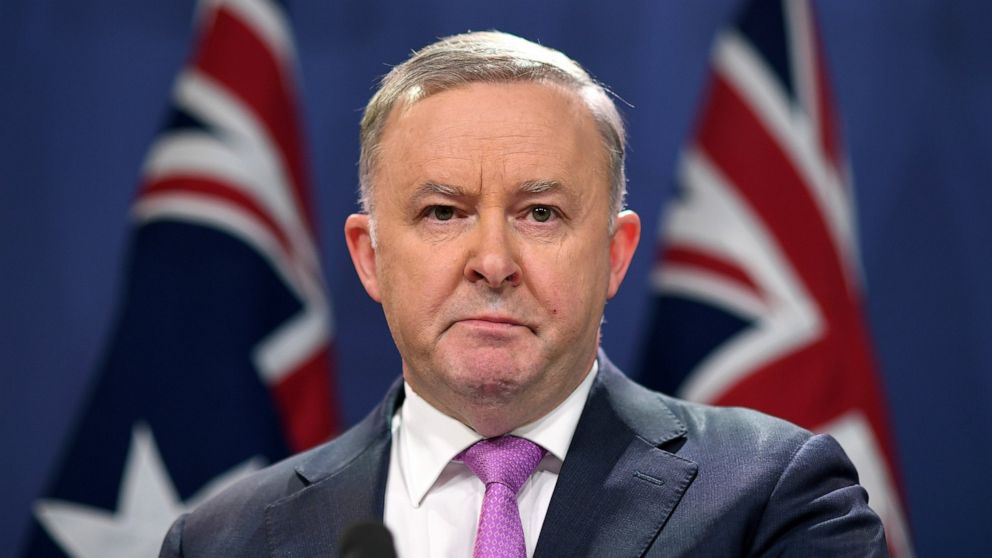
Prime Minister Anthony Albanese leaves for China on Saturday, confident most Australians back the government’s handling of relations with our most important economic partner and the leading strategic power in Asia.
Albanese’s domestic critics have lambasted him[1] for meeting Chinese leader Xi Jinping before United States President Donald Trump. They are also aggrieved at his refusal to label China a security threat[2].
But neither criticism really stacks up.
An Albanese-Trump meeting would have happened last month on the sidelines of a G7 gathering in Canada. It was Trump who left early[3], standing up more leaders than just Albanese.
Nor is Albanese the first Australian prime minister to meet a Chinese president before an American[4] one. His predecessor Tony Abbott caught up with Xi a few weeks after coming to office in 2013, before he had a chance to meet President Barack Obama.
‘Friends, not foes’
Meanwhile, polling indicates just one in five Australians see the relationship with China first and foremost as “a threat to be confronted[5]”. Rather, a clear two-thirds majority see it as “a complex relationship to be managed”.
Albanese is also regarded as more competent[6] than his opposition counterpart in handling Australia’s foreign policy generally – and better at managing the China relationship specifically.

The prime minister’s Chinese hosts also have an incentive to ensure his visit is a successful one.
In the past fortnight, China’s ambassador in Canberra, Xiao Qian[8], has penned opinion pieces in two of Australia’s biggest media outlets, insisting Australia and China are “friends, not foes[9]” and touting the “comprehensive turnaround[10]” in bilateral ties since Labor won government in May 2022.
Beijing and Washington view each other as their geopolitical priority. Beijing can make it harder for Washington to enlist security allies such as Canberra in this rivalry by maintaining its own strong and constructive bilateral ties with Australia.
And quite apart from the competition with the US, China relied on Australia last year as its fifth largest import source[11].
Plenty of complaints
None of this is to say Albanese’s visit will be easy, because Australia-China relations are rarely smooth.
Canberra continues to have many complaints about China’s international behaviour.
For example, Foreign Minister Penny Wong recently signed a joint statement[12] with her counterparts in Washington, Tokyo and New Delhi expressing “serious concerns regarding dangerous and provocative actions” by China in the East and South China Seas, and the “abrupt constriction […] of key supply chains”.
Wong has also said the government remains “appalled[13]” by the treatment of Australians imprisoned in China, including Dr Yang Jun, who is facing espionage charges[14] he strongly denies.
Defence Minister Richard Marles has voiced Canberra’s alarm at Beijing’s “no limits agreement[15]” with Moscow, and claimed China[16] has
engaged in the biggest conventional military build-up since the end of the second world war.
However, this assessment is contested[17] by independent Australian analysts.
Beijing also has plenty of complaints. They include Canberra’s ongoing pursuit of closer military cooperation with the US and UK through the AUKUS pact[18].
There is also the commitment to forcing the sale of the lease to operate the Port of Darwin[19] that is currently held by a Chinese company.
Reliable trading partner
Albanese has already made clear his visit to China will have a strong economic focus.
While grappling with security challenges, any Australian government, Labor or Coalition, must face the reality that last year, local companies sold more[20] to China – worth A$196 billion – than our next four largest markets combined.
China is also, by far, Australia’s biggest supplier, putting downward pressure on the cost of living.

Research produced by Curtin University, commissioned by[22] the Australia-China Business Council, finds trade with China increases disposable income of the average Australian household by $2,600, or 4.6% per person.
In an ideal world, Australia would have a more diversified trading mix.
But again, any Australian government or business must grapple with the reality that obvious major alternative markets, like the US, are not only less interested in local goods and services, but are walking away from their past trade commitments.
Under the Australia-US Free Trade Agreement[23] signed two decades ago, Australian exporters selling to the US faced an average tariff of just 0.1%[24]. But nowadays Washington applies a baseline tariff of 10%[25] on most Australian imports.
Meanwhile, owing to the China-Australia Free Trade Agreement struck in 2015, Beijing applies an average tariff of just 1.1%[26].
No wonder more Australians now say China is a more reliable trading partner than the US[27].
This also explains Alabese’s response when he was asked in April if he would support Trump’s trade war[28] against China:
It would be extraordinary if the Australian response was “thank you” and we will help to further hurt our economy
Likewise, Trade Minister Don Farrell is adamant Australia’s interests[29] will determine the Albanese government’s choices, not “what the Americans may or may not want”.
We don’t want to do less business with China, we want to do more business with China.
Deeper trade ties with Asia, including China, are not just about making a buck. Wong has stressed the national security[30] implications of a strong economic relationship:
[It is] an investment in our security. Stability and prosperity are mutually reinforcing.
All of this means Albanese’s six-day visit to China is shaping up to be time well spent.
References
- ^ lambasted him (www.theaustralian.com.au)
- ^ security threat (www.theaustralian.com.au)
- ^ Trump who left early (www.abc.net.au)
- ^ before an American (www.lowyinstitute.org)
- ^ a threat to be confronted (essentialreport.com.au)
- ^ more competent (poll.lowyinstitute.org)
- ^ Lukas Coch/AAP (photos.aap.com.au)
- ^ Xiao Qian (en.wikipedia.org)
- ^ friends, not foes (www.theaustralian.com.au)
- ^ comprehensive turnaround (www.afr.com)
- ^ fifth largest import source (www.dfat.gov.au)
- ^ joint statement (www.foreignminister.gov.au)
- ^ appalled (www.foreignminister.gov.au)
- ^ espionage charges (hongkongfp.com)
- ^ no limits agreement (www.minister.defence.gov.au)
- ^ claimed China (www.minister.defence.gov.au)
- ^ is contested (www.internationalaffairs.org.au)
- ^ through the AUKUS pact (www.fmprc.gov.cn)
- ^ Port of Darwin (theconversation.com)
- ^ sold more (www.abs.gov.au)
- ^ Lucas Coch/AAP (photos.aap.com.au)
- ^ commissioned by (acbc.com.au)
- ^ Australia-US Free Trade Agreement (www.dfat.gov.au)
- ^ faced an average tariff of just 0.1% (ttd.wto.org)
- ^ baseline tariff of 10% (export.business.gov.au)
- ^ an average tariff of just 1.1% (ttd.wto.org)
- ^ China is a more reliable trading partner than the US (secnewgate.com.au)
- ^ trade war (www.theaustralian.com.au)
- ^ Australia’s interests (www.afr.com)
- ^ national security (www.foreignminister.gov.au)