Albanese government hasn’t walked its talk about accountability and integrity
- Written by: Michelle Grattan, Professorial Fellow, University of Canberra
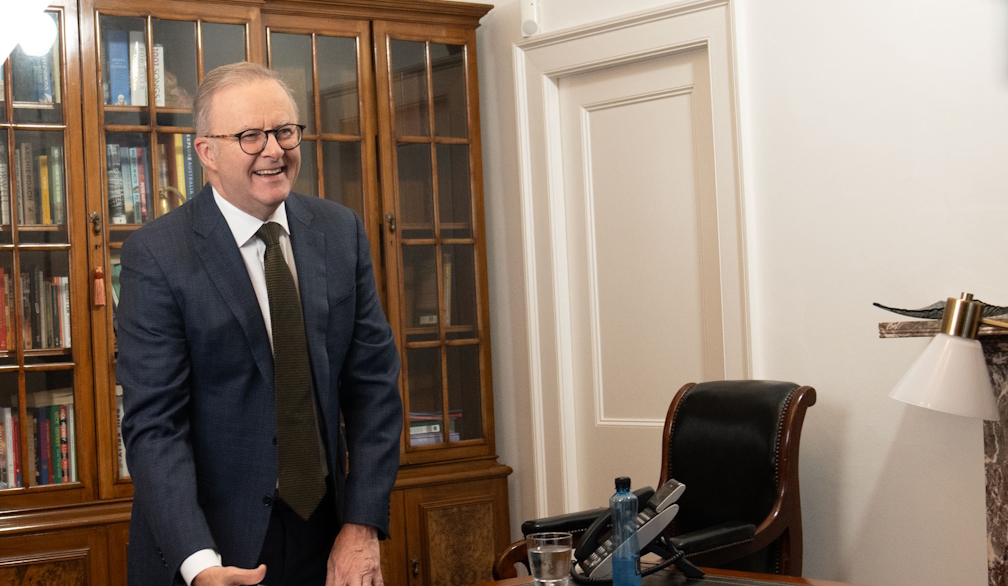
The government used to be quite cosy with independent ACT senator David Pocock. That was back at the start, when it needed his vote.
In its second term, Labor only requires the Greens or the Coalition to pass contested legislation in the upper house. Now Pocock has become an irritant for Labor, as he and other crossbenchers need to demonstrate their relevance in changed circumstances.
Pocock is calling out the government’s gross lack of transparency. “When the numbers were crunched on the last parliament they were more secretive than the Morrison government,” he says, describing this as “one of the most secretive governments in the last 30 years”.
On Wednesday Pocock led a spectacular revolt that united, in a rare display, the Coalition, Greens and other crossbenchers.
The immediate trigger issue was the government’s refusal to release a report by former public service commissioner Lynelle Briggs into jobs for mates. The government commissioned the report in 2023 – spurred by the fact one of the “teals”, Sophie Scamps, was planning a private member’s bill.
The report, titled Review of Public Sector Board Appointments Processes, was completed the same year. But it has been sat on ever since, presumably because it is embarrassing for Labor. Finance Minister Katy Gallagher says, improbably, that the government is still working on the report. If it is, it must have started the work very late and presumably will be accelerating it.
On Wednesday the non-government senators passed a motion to extend the Senate’s hour-long question time, until the issue is resolved, by about half an hour, with the additional questions all to be asked by non-Labor senators. (In a chaotic Thursday afternoon, question time ran three and a half hours.)
Liberal frontbencher James Paterson said “the government’s response is more like that of a petty authoritarian government than a democratic one”.
Environment Minister Murray Watt lashed Pocock, on Thursday accusing him of “a dummy spit”. “David Pocock was always in here lecturing the rest of us about the importance of Senate tradition and Senate convention, and he’s just gone and chucked the toys out of the cot yesterday. So he should have a good, hard think about that.”
This incident is not just a bit of byplay. It’s a test of strength between the Senate and the executive. Politically it is important because it highlights a concerning feature of the Albanese government – its penchant for secrecy. While governments generally have secrecy as their default position, Labor came in promising to behave differently.
Observers believe Anthony Albanese is the main driver of limiting information. We know for certain he is not a fan of freedom of information – the current bill for changes to FOI that the government has before parliament would (further) inhibit access to information about what is happening at senior levels of government.
The inclination to secrecy is part of the government’s disappointing record more generally on integrity issues, highlighted this week by the Centre for Public Integrity, an independent research institute chaired by Anthony Whealy, a respected legal figure.
The CPI issued “The Albanese Government’s Integrity Report Card”, which showed poor results on various fronts.
The centre urges the government to “reset course – to honour its commitments to transparency, respect for parliament, robust checks and balances, and action to stamp out corruption and undue influence”.
The CPI accuses the government of “leaning into a culture of secrecy”, highlighting the flawed freedom of information bill.
It says the government has failed to rein in the power of lobbyists. One big thing that compromises both sides of politics is how political parties sell access to their senior figures, for large sums. Labor has its Federal Labor Business Forum; the Liberals their Australian Business Network. Companies sign up for meetings at party conferences and other events to get into decision-makers ears. It is surely a distortion of democracy.
For an opposition to hold a government to account requires resources. The CPI report criticises the government’s cut in the staff allocation it has provided to the opposition.
Albanese has been particularly arbitrary when it has come to resources for Senate crossbenchers. Instead of a general rule, some crossbenchers (including Pocock) have received more staff than others, according to prime ministerial preference. Labor defector Senator Fatima Payman was given minimal staff.
The CPI criticises that the scrutiny of Indigenous Affairs has been reduced by removing the previous dedicated day at Senate estimates to examine this area. The government also “continues to exempt major executive instruments from parliamentary review”.
On the issue of “frank and fearless advice” from the public service, the CPI points to the government ignoring key recommendations from the Thodey review, which reported under the Morrison government – notably recommending changes to the appointment and tenure of departmental secretaries. These would strengthen the independence of the public service, the CPI says.
And what of jobs for mates? The CPI says the government has made little progress on, and has little appetite for, “one of Australia’s most pressing integrity reforms”.
It quotes Gallagher’s words when she announced the Briggs inquiry – she said it was “all about putting an end to the jobs for mates culture that defined the previous Morrison government’s public sector appointments”.
Under the Albanese government “appointments continue to be made without sufficient guardrails”, the CPI says. It points to the recent choice of the new head of the Office of National Intelligence, Kathy Klugman, who went straight from the Prime Minister’s Office. (The government is enraged by this, seeing it as a slur, because she was a deputy secretary in the Department of Foreign Affairs seconded to the Prime Mnister’s Office.)
The CPI also notes legislation for the Australian Centre for Disease Control “establishes a major public office with no provision for merit-based appointment”.
The CPI calls for the release of the Briggs report and for the government to “legislate transparent, merit-based appointment processes across the public sector”.
The ball’s in the government’s court.