Why Australia’s trade deal with Europe hinges on a forgotten promise
- Written by: Nathan Howard Gray, Senior Research Fellow, Institute for International Trade, Adelaide University
Australian Trade Minister Don Farrell is in Brussels this week, trying to close a trade deal that has been nearly a decade in the making. The EU–Australia Free Trade Agreement is tantalisingly close, although EU Commission President Ursula Von der Leyen has yet to confirm a visit to Australia to seal the deal.
Both parties are keen to diversify their trading partners in the wake of US President Donald Trump’s assault on the global trading system[1].
The European Union and Australia face an increasingly hostile global trade environment, driven by US tariff volatility[2] and China’s assertive trade practices[3]. The EU–Australia Free Trade Agreement represents exactly the kind of initiative needed to reduce dependence on both and build strategic resilience.
European farmer protests
For the EU, despite the overwhelmingly positive benefits on offer, closing the deal is a tough proposition, facing strong opposition from some EU member states’ farming communities[4].
The EU–Mercosur Free Trade Agreement with the South American trade bloc was signed last month but only after a bruising battle, and mass tractor protests[5] in Brussels and Paris. The European Parliament then referred the deal to the EU Court of Justice, delaying its ratification, which is far from assured.
Clearly, agricultural market access is politically toxic for the EU.

What gains are on offer from the Free Trade Agreement?
An EU–Australia agreement could boost Australia’s economy by up to $A7.4 billion by 2030[7], eliminating around 98% of tariffs between the two economies.
One of the most visible changes would be the removal of the 5% tariff on European cars and potentially the luxury car tax[8], which could cut the price of a BMW, Audi, Alfa Romeo or Renault by up to A$10,000.
The EU has long viewed Australia’s luxury car tax as an irritating trade barrier[9], and its removal would open the Australian market to more competitively priced European vehicles.
More broadly, the benefits would unlock opportunities across[10] critical minerals, worker mobility, investment, carbon market cooperation, and digital trade.
One of the most exciting elements is a proposed labour mobility scheme that would allow Australians to live and work in EU countries[11], and vice versa.
This is designed for genuine career moves, mutual recognition of professional qualifications[12], and long-term economic integration. For young Australians dreaming of working in Berlin, Barcelona or Bologna, this could be transformative.
The EU desperately needs to diversify its supply of critical minerals, lithium and other materials away from China[13], and Australia has them in abundance. An EU–Australia agreement on critical minerals[14] is already delivering results, with Australian companies securing projects.
The last sticking point is beef, and a handshake
Australia and the EU are close to agreement, having seemingly resolved issues such as naming rights for many foods. However, the sticking point is beef.
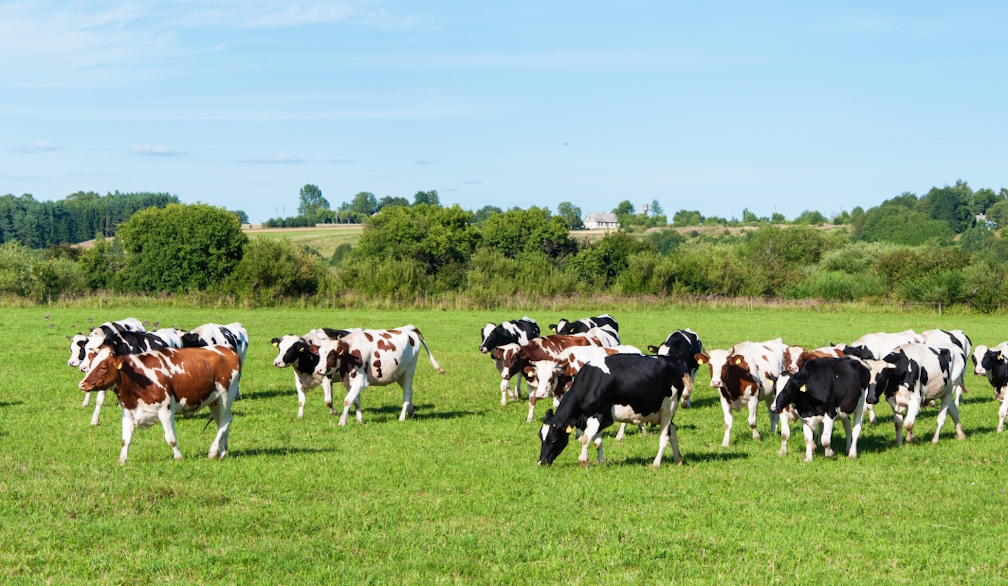
Australian beef exporters access the EU market through a high-quality beef quota at a 20% tariff[15]. This quota was not created for Australia.
It originated from a trade dispute in which the United States successfully challenged the EU’s ban on hormone-treated beef imports[16]. Under the resulting 2009 agreement, the EU established the quota for hormone-free, high-quality beef[17].
Crucially, under World Trade Organization rules, this quota had to be available to all eligible suppliers, not just the US. Australia qualified from 2010 and quickly built up a significant share, exporting up to 17,000 tonnes annually to Europe[18].
Then came the twist. In 2018, Trump threatened to impose punitive tariffs on European cars; the threat had BMW, Volkswagen and Mercedes in a cold sweat[19].
Fighting for the scraps
To fend off that tariff threat, the EU agreed to carve out a dedicated US share of the 45,000-tonne beef quota. The US would receive an initial 18,500 tonnes, rising to 35,000 tonnes over seven years[20].
But that left just 10,000 tonnes for Australia, Uruguay, Argentina and New Zealand to fight over[21]. Australia alone had been shipping 17,000 tonnes.
Australia reluctantly accepted. But the understanding (a handshake deal) was that in future trade negotiations, particularly the Australia–EU FTA, Australia would receive an increased quota in compensation.
Perhaps that understanding has been forgotten by EU negotiators.
Securing improved market access for beef[22] remains a priority for the Australian government, and the shifting global context has not made domestic politics any easier.
Today, the EU wants to cap Australian beef imports at around 30,000 tonnes per year, while Australia is pushing for 40,000 tonnes[23]. The EU’s offer is a big increase on our current quota access, but the higher rate would lift Australia’s quota share to be commensurate with the quota access of similarly sized beef exporters, Brazil (50,000) and the US (35,000).
Farrell, the trade minister, has been blunt, warning he will walk away from the table as he did in free-trade talks with Japan in 2023, if the agricultural offer is not improved[24]. The National Farmers’ Federation[25] has backed him, declaring “no deal is better than a bad deal for Australian agriculture.”
The strategic case
A trade deal that would strengthen the rules-based trading system, deepen cooperation on critical minerals, boost worker mobility, and deliver billions in diversified economic growth is being held hostage by a beef quota arising from EU appeasement of Trump in his first presidency.
In a world of growing trade disruption, the strategic case for this agreement has never been stronger.
The momentum is real. The question is whether Brussels can look beyond the paddock and see the bigger picture, before someone else fills the strategic gap that this deal was designed to close.
References
- ^ assault on the global trading system (economictimes.indiatimes.com)
- ^ US tariff volatility (www.bbc.com)
- ^ China’s assertive trade practices (www.ussc.edu.au)
- ^ EU member states’ farming communities (www.france24.com)
- ^ mass tractor protests (www.aljazeera.com)
- ^ Telmo Pinto/NurPhoto via Getty Images (www.gettyimages.com.au)
- ^ $A7.4 billion by 2030 (go8.edu.au)
- ^ 5% tariff on European cars and potentially the luxury car tax (www.dfat.gov.au)
- ^ irritating trade barrier (www.eeas.europa.eu)
- ^ unlock opportunities across (circabc.europa.eu)
- ^ live and work in EU countries (www.news.com.au)
- ^ professional qualifications (www.aicd.com.au)
- ^ away from China (www.reuters.com)
- ^ agreement on critical minerals (www.industry.gov.au)
- ^ high-quality beef quota at a 20% tariff (www.agriculture.gov.au)
- ^ ban on hormone-treated beef imports (www.wto.org)
- ^ hormone-free, high-quality beef (www.lexology.com)
- ^ up to 17,000 tonnes annually to Europe (cattleproducers.com.au)
- ^ had BMW, Volkswagen and Mercedes in a cold sweat (www.bloomberg.com)
- ^ 35,000 tonnes over seven years (www.beefcentral.com)
- ^ to fight over (www.agriculture.gov.au)
- ^ improved market access for beef (www.mla.com.au)
- ^ while Australia is pushing for 40,000 tonnes (au.news.yahoo.com)
- ^ agricultural offer is not improved (www.bloomberg.com)
- ^ National Farmers’ Federation (nff.org.au)