How delays in Australia’s switch to clean energy are hurting workers
- Written by: Darryn Snell, Associate professor, School of Management, RMIT University
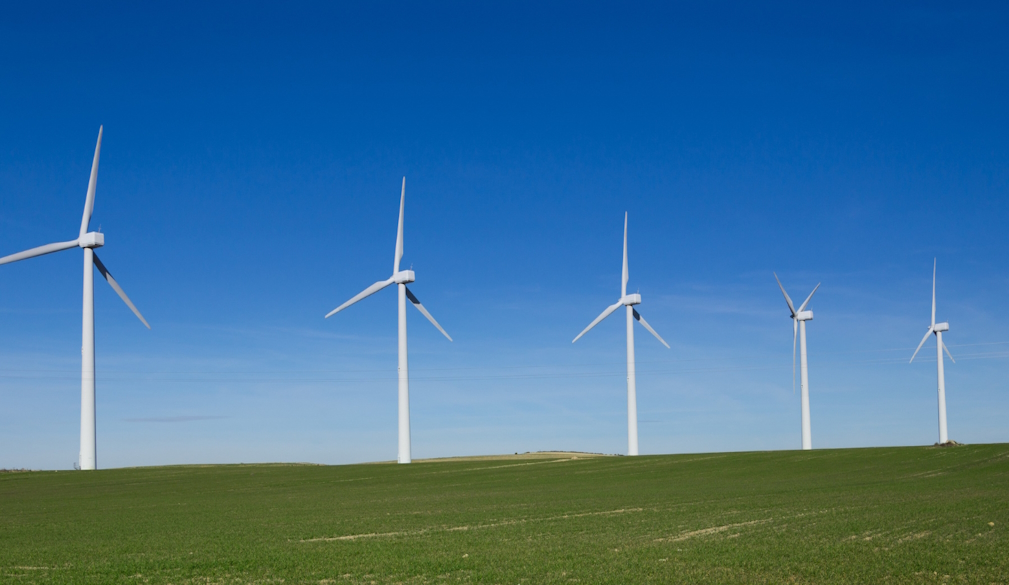
Australia is still dragging its feet on decarbonising the economy. Last September, the Albanese government committed to[1] a 62–70% reduction in carbon emissions by 2035 and net zero by 2050. However, only one month later[2], the government conceded it would fall just shy of its 2030 target and likely miss net zero without significant changes.
Delays to the construction of renewable energy projects around the country means coal-fired power stations scheduled for closure have had their operations extended[3]. The many reasons for Australia’s slow progress on decarbonisation are well documented[4], and include a lack of transmission lines, poor federal coordination, and uncertainty over the lifetime of coal-fired power stations. But the implications of these delays for workers has been largely overlooked.
In our recent book[5], we analyse numerous reports[6] and studies that forecast the clean energy transition will stimulate a jobs boom. In these predictions, new green career opportunities will mean workers who lose their jobs in fossil fuel sectors can take advantage[7] of new job opportunities in a “just transition” — one in which no-one is left behind.
But are these claims true? Our research shows many of new renewable energy jobs are short-term and insecure[8]: they are heavily focused on the construction and installation phase of projects, rather than long-term operations. The delays in the energy transition presents additional challenges for workers and their communities.
Old coal power plants are becoming unsafe
Coal-fired power generation still contributes 45% of Australia’s total electricity generation[9]. Many of the roughly 15 remaining coal-fired power stations are ageing and becoming increasingly unreliable.
Recent research published by Reliability Watch[10] found these power plants have suffered a combined 119 breakdowns over the six months to September 2025, and were unable to meet their generation commitments 22% of the time. For workers employed in these power stations it means their workplaces are becoming less safe to work in.
Queensland’s Callide Power Stations[11] has suffered a series of serious incidents in recent years, including a generator unit explosion and cooling tower collapse in which workers’ lives were put at serious risk[12].
Similarly, Victoria’s 1970s-era Yallourn W[13] Power Station has suffered a series of major breakdowns. In June 2025[14], a large section of an air duct crashed down onto scaffolding used for ongoing maintenance work. Luckily no workers were in the vicinity at the time. The plant is scheduled to close in 2028.
With delays in renewable energy coming online, state governments have had to extend[15] the operational life of some ageing generators, such as the Eraring plant in New South Wales. Unions[16], quite rightly, are raising concerns about how worker safety can be maintained until closure.
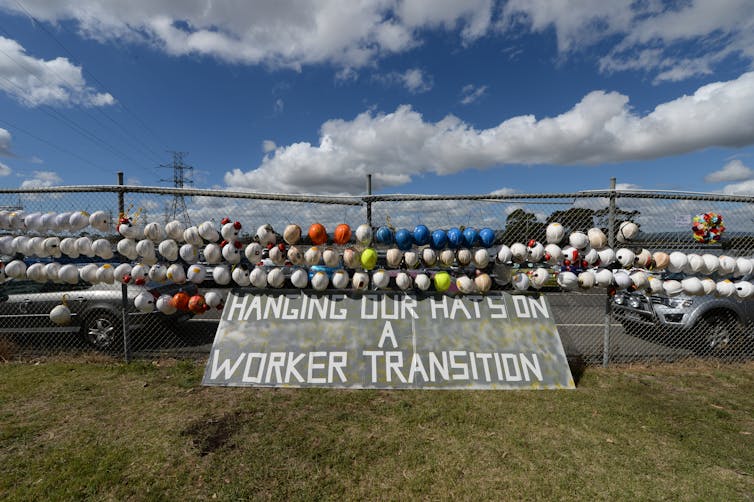
Promised careers put on hold
To remain competitive in the job market, workers at coal plants slated to close have been encouraged to become more employable by gaining sustainability and environmental skills. Authorities have encouraged[18] education and training providers to meet the workforce needs of the new “green” economy.
Universities and TAFE institutes have responded by developing new programs to provide qualifications in emerging occupations such as green construction, battery manufacturing, green steel, hydrogen production and offshore wind. The Clean Energy Council has even developed a careers guide[19] for people interested in new clean energy jobs.
The problem is, the new jobs may not arrive in time. Workers who will lose their jobs when Yallourn closes have been encouraged to reskill[20] to work in the offshore wind industry.
Unfortunately, ongoing delays[21] in offshore wind developments means it’s unlikely there will be any local jobs in offshore wind when the power station closes in two years’ time. For energy regions, the uncertainty surrounding new renewable energy projects places them at risk of becoming “left-behind places[22]” with high unemployment and socio-economic disadvantage.
In an earlier Conversation article[23], we pointed out workers in offshore oil and gas are also facing uncertainty, but decommissioning work could provide important job opportunities. Coordination of transition strategies at federal and state level will be vital in assisting both these groups of workers.
The environmental justification for accelerating Australia’s decarbonisation efforts is unquestionable. However, the tens of thousands of workers who will be relied on to deliver this transition must not be overlooked. They must be a primary consideration in any real “just” transition.
References
- ^ committed to (theconversation.com)
- ^ one month later (www.abc.net.au)
- ^ operations extended (theconversation.com)
- ^ well documented (theconversation.com)
- ^ book (www.routledge.com)
- ^ reports (www.superpowerinstitute.com.au)
- ^ take advantage (unece.org)
- ^ short-term and insecure (www.routledge.com)
- ^ total electricity generation (www.energy.gov.au)
- ^ Reliability Watch (www.reliabilitywatch.org.au)
- ^ Callide Power Stations (www.abc.net.au)
- ^ serious risk (www.facebook.com)
- ^ Yallourn W (en.wikipedia.org)
- ^ June 2025 (www.abc.net.au)
- ^ extend (www.abc.net.au)
- ^ Unions (www.abc.net.au)
- ^ Mal Fairclough/AAP (photos.aap.com.au)
- ^ have encouraged (www.jobsandskills.gov.au)
- ^ careers guide (cleanenergycouncil.org.au)
- ^ reskill (www.energy.vic.gov.au)
- ^ delays (reneweconomy.com.au)
- ^ left-behind places (doi.org)
- ^ Conversation article (theconversation.com)