US strikes Iran at Hormuz as new mine threat puts global oil route back in danger
- Written by: The Times
The United States has attacked Iranian military positions beside the Strait of Hormuz after US officials said Revolutionary Guard forces were preparing to launch rockets carrying sea mines into the strategic waterway. Iran has vowed retaliation. For Australia, the confrontation is a warning that hopes of steadily restoring one of the world's most important energy routes may once again be giving way to military escalation.
Just when the Strait of Hormuz appeared to be moving slowly towards something resembling recovery, the war has returned directly to its shores.
US forces struck two Iranian launchers on Larak Island on Sunday, according to a US official.
Larak sits in the Strait of Hormuz itself, giving the island obvious strategic significance to anyone seeking to control, protect or disrupt shipping through the waterway.
The United States says Islamic Revolutionary Guard Corps forces were observed preparing to launch rockets carrying sea mines into the Strait of Hormuz.
Washington responded militarily.
Iran says the attack killed and wounded Iranian fighters and civilians.
The Revolutionary Guards have vowed a response and punishment for those responsible.
It is the first known American strike inside Iran since late July.
That makes this considerably more than another incident involving a commercial ship.
Military confrontation has returned directly to Hormuz.
The mines had only just been cleared
The timing is extraordinary.
Only days ago, US President Donald Trump announced that mines had been cleared from the international waters of the Strait.
The United States said it was monitoring the waterway and warned Iran against laying more mines.
The intention was obvious.
If the physical mine threat could be removed, commercial ships could eventually regain confidence in using the Strait.
That was important because the global petroleum system desperately needs Hormuz to function.
Before the war, more than 20 million barrels of oil a day passed through the waterway — roughly one in every five barrels consumed globally.
Recent movements have been nowhere near that level.
Vortexa provisional data reported last week put flows at approximately 5 million barrels a day.
The US military's mine-clearing operation therefore represented an important step towards restoring confidence.
Now Washington says Iranian forces were preparing to put mines back.
If the US account is correct, the conflict has returned to precisely the problem the mine-clearing operation was intended to solve.
Why sea mines matter so much
A sea mine is comparatively inexpensive.
The ship it can damage may be worth tens or hundreds of millions of dollars.
Its cargo can be worth considerably more.
But the economic consequences extend well beyond the vessel that actually strikes one.
The mere possibility of mines changes the commercial calculation.
Shipowners must consider whether to enter the area.
Crews must accept the risk.
Insurers must decide whether they will cover the voyage.
Charterers must pay whatever additional premium is necessary to secure a vessel.
Navies have to find and remove the mines.
Every part of that process costs money.
And every additional cost eventually becomes part of the price of moving energy out of the Gulf.
That is why mines are such an effective weapon against international commerce.
They do not need to sink every tanker.
They merely need to convince enough tanker owners that the voyage is not worth the risk.
Iran has promised retaliation
The next question is what Iran does.
The Revolutionary Guards say the American attack will be answered.
That statement should not automatically be interpreted as evidence that Iran will attack commercial shipping.
There are many ways Tehran could respond.
But after six months of conflict, the possibility of further escalation around Hormuz cannot be dismissed.
Iran could target US military interests.
It could attempt further mining.
It could intensify pressure on commercial shipping.
It could tighten the conditions under which vessels are permitted to transit.
Or retaliation could occur elsewhere in the region.
For petroleum markets, however, the location of Sunday's US strike is particularly important.
This happened on Larak Island beside Hormuz.
The world's energy chokepoint is once again an active military front.
Australia should watch what the tankers do next
For Australians, the most useful immediate indicator will not necessarily be another statement from Washington or Tehran.
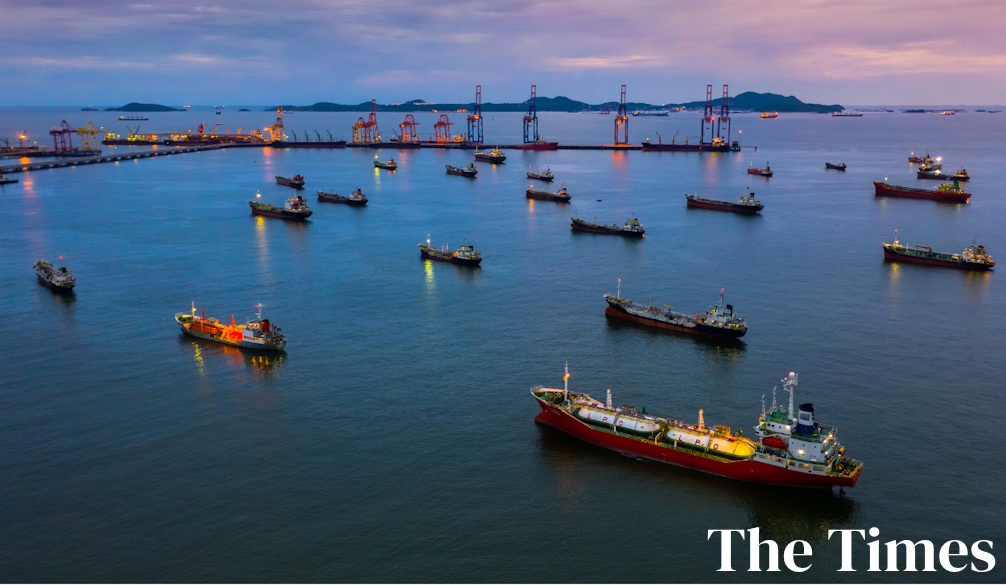
Watch the ships.
We have made this point throughout the changing Hormuz crisis because tanker movements provide physical evidence of what is actually happening.
Diplomatic negotiations can sound promising.
Oil traders can anticipate peace.
Governments can announce that shipping lanes are clear.
But Australia's fuel ultimately depends upon petroleum physically moving through the international supply system.
And shipping was already struggling before Sunday's attack.
Recent Kpler data showed Hormuz traffic falling sharply after a tentative improvement.
Reuters reported only seven commodity vessels crossed on Thursday, compared with a revised 17 the previous day and a 10-day average of around 15.
More recent Reuters-reported tracking data show the deterioration continuing: only five commodity vessels transited on Saturday and none were registered for Sunday, compared with 31 during the previous weekend.
That was before the consequences of the latest US strike and Iran's retaliation threat could be fully assessed.
The next few days will therefore be important.
Australia has fuel — but that does not make us immune
Australia enters this renewed escalation in a considerably stronger position than many might assume.
Climate Change and Energy Minister Chris Bowen said on Saturday that Australia had:
- 41 days of petrol, five more than when the Iran crisis began;
- 36 days of diesel, four more than at the beginning of the crisis;
- 31 days of jet fuel, two more than when the crisis began; and
- 47 fuel ships heading towards Australia, which the government says is consistent with the normal flow seen during the conflict.
Those numbers are reassuring.
They demonstrate an important distinction between fuel security and fuel prices.
Australia has managed to maintain physical supply.
That does not mean the international disruption has been painless.
We have continued buying fuel in a severely distorted global market.
The question has increasingly become not whether Australia can obtain petroleum products, but what Australia must pay for them.
Diesel remains the vulnerability to watch
The international petroleum problem has also changed during the war.
At the beginning, attention naturally focused on crude oil.
Would Hormuz close?
Would the world lose millions of barrels?
Would crude prices explode?
Six months later, another problem has become increasingly important.
Refined fuel is tight.
Diesel is particularly significant.
Russia has extended restrictions on diesel exports after attacks disrupted its refining system.
Middle Eastern refining and shipping have been disrupted.
European diesel refining margins have been near record levels.
The world can therefore have enough crude oil in aggregate while still struggling to produce and distribute enough diesel.
That matters enormously to Australia.
Diesel moves trucks.
It powers agricultural machinery.
It is consumed throughout mining and construction.
It supports regional and remote communities.
It is fundamental to freight.
A sustained increase in diesel costs therefore spreads through the Australian economy.
It becomes part of the cost of food.
Construction.
Mining.
Agriculture.
Retail distribution.
And ultimately inflation.
Australia remains at Level 2
The Australian Government has kept the country at Level 2 — Keeping Australia Moving — under the National Fuel Security Plan.
That does not mean Australia is about to run out of fuel.
The government's own stock figures demonstrate otherwise.
Level 2 reflects something different.
The global fuel system remains sufficiently disrupted and unpredictable that governments are maintaining coordinated measures and preparing for further deterioration.
That caution now looks justified.
Only days after international shipping lanes were declared cleared of mines, the United States says it has attacked Iranian forces preparing to deploy more.
Energy security cannot be built around the assumption that the most recent improvement will continue.
The price consequences may come quickly
Oil markets have shown remarkable resilience during the six-month conflict.
Brent has recently traded below US$90 a barrel despite the enormous disruption to Hormuz.
That reflects alternative supplies, reduced demand in some markets, strategic responses by producers and expectations that the conflict will eventually ease.
But geopolitical risk can return to petroleum prices extremely quickly.
A successful Iranian retaliation against shipping would change the calculation.
So would confirmed new mine-laying.
So would a further round of American attacks.
The effect would not necessarily stop with crude.
Shipping rates and war-risk insurance can respond immediately.
Those costs matter to Australia because we are geographically distant from the major refining centres supplying us.
The further fuel has to travel, the more significant the cost and availability of shipping become.
The diplomatic route has become harder
There had been genuine reasons for cautious optimism.
Iran and Oman had been working on arrangements concerning navigation through Hormuz.
Qatar had become involved in diplomatic efforts.
The physical mine-clearing operation had removed one obstacle.
Oil markets began anticipating improvement.
But Washington says direct US-Iran negotiations are not currently taking place.
And Sunday's attack demonstrates that military operations can return even while diplomatic intermediaries continue working.
That does not make an eventual settlement impossible.
It does make the pathway considerably less predictable.
Hormuz is becoming part of the war settlement
There is an even larger issue emerging.
Hormuz is no longer simply collateral damage from the Iran conflict.
Control of the Strait has become part of the conflict itself.
The United States wants freedom of navigation.
Iran wants a role in determining how the Strait operates and has linked normalisation to its wider demands.
Oman is attempting to establish workable navigation arrangements.
Commercial operators simply want a route they can use safely and predictably.
Those interests have not yet been reconciled.
The Strait therefore risks becoming a bargaining chip in any eventual settlement of the war.
For Australia, that means disruption could persist even if the intensity of direct military confrontation declines.
Australia should learn from this crisis
Australia cannot control what happens on Larak Island.
It cannot determine American military strategy.
It cannot force Iran to permit unrestricted passage.
But Australia can determine how vulnerable we are when distant geopolitical events disrupt the petroleum system.
That means maintaining adequate stocks.
Diversifying supply.
Protecting diesel availability.
Strengthening domestic resilience.
Understanding the vulnerability created by dependence on imported refined fuel.
And preparing before the next crisis rather than after it begins.
The Government has already proposed strengthening Australia's strategic fuel reserves and has placed particular emphasis on diesel.
Six months of Hormuz disruption provide a powerful argument for doing so.
The objective should not be to make Australia completely independent of international petroleum markets.
That would be extraordinarily difficult and expensive.
The objective should be resilience.
If one shipping route fails, Australia should have options.
If one supplier disappears, there should be alternatives.
If international markets tighten, Australia should have sufficient reserves to buy time.
That is what genuine fuel security means.
The Times View
The latest US strike on Larak Island changes the Hormuz story again.
Only days ago, mines had reportedly been removed from the international shipping lanes.
Iran and Oman were discussing arrangements to restore navigation.
Oil markets were contemplating recovery.
Now the United States says Iranian forces were preparing to put sea mines back into the Strait, American forces have attacked them, and Iran has promised retaliation.
Australia should neither panic nor dismiss the significance.
We have fuel.
Our petrol, diesel and jet-fuel stocks are higher than when the war began.
Dozens of fuel ships are heading towards Australia.
That is evidence that our supply system has continued functioning through an extraordinary international energy shock.
But the latest confrontation demonstrates why Australia remains on heightened fuel-security settings.
The Strait of Hormuz is not yet normal.
It is not reliably safe.
And after six months of war, it remains capable of changing the global energy outlook almost overnight.
The next test is now very simple.
Watch the ships.
If tanker traffic continues falling following Sunday's attack, the renewed military confrontation will have produced a measurable commercial consequence.
If ships continue moving and traffic recovers, the international system will have demonstrated greater resilience than might have been expected.
Either way, Australia has been given another warning.
The mines may have been cleared from Hormuz last week. The strategic vulnerability they exposed will take considerably longer to remove.