Economic forecasting is notoriously difficult, but global uncertainty is making it harder
- Written by: Michael Ryan, Lecturer in Economics, University of Waikato
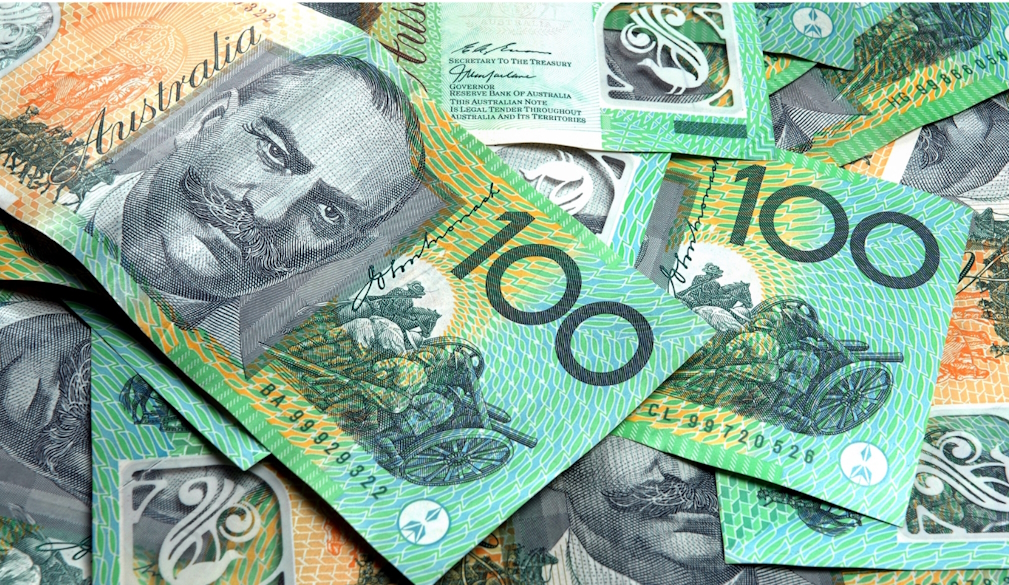
This year’s budget will be one of the tightest in a decade[1], with the New Zealand government halving its operating allowance – the new money it has available to spend – from NZ$2.4 billion to $1.3 billion.
The cut reflects weaker than expected growth owing to global economic turmoil. It also highlights just how difficult it is to predict what is going to happen when it comes to the economy.
Economies are dynamic systems where relationships between variables shift. Even the current state of the economy is uncertain due to data revisions and lags in reporting.
Despite this uncertainty, governments have to assume paths for revenue and expenditure to make meaningful plans.
Based on the Pre-election Economic and Fiscal Update (PREFU 2023[2]), the National Party announced plans to achieve an operating surplus in the year ending June 2027[3] during the 2023 election campaign.
As forecasts changed, so did those plans. By the Half-Year Economic and Fiscal Update (HYEFU 2024[4]), released in December 2024, the goal of an operating surplus had been pushed back to 2029.
The table below shows the change in the 2027 forecasts for key economic indicators between the two fiscal updates.
Nominal gross domestic product[5] (GDP) measures the value of goods and services produced within a country during a specific period. It is a key determinant of tax revenue. Real GDP[6] measures the volume of output of the New Zealand economy.
Ultimately, the 2027 nominal GDP forecast at the half-year update was weaker than expected. This weakness was driven by lower than expected output, not by changes in prices.
The 2027 forecast tax revenue fell even more sharply than the nominal GDP forecast. This was in part due to the government’s personal income tax cuts which have been costed at $3.7 billion a year[7].
More changes afoot
We’re likely to see further downward revisions in economic growth. The Treasury has already lowered its economic growth forecasts for 2025 and 2026[9], in part due to the expected impact of global tariffs.
While the direct effects of the tariffs on New Zealand may be limited[10], the indirect effects – particularly through increased global economic uncertainty – are likely to be substantial.
Research has shown that United States-based uncertainty spills over into the New Zealand economy[11] by making firms more pessimistic about the future. This pessimism leads to firms delaying investment, ultimately reducing potential output in the future.
Potential output is important as it represents the economy’s capacity to grow without generating inflation. Potential GDP is affected by productivity, which has also been weaker than expected[12] and one of the reasons Treasury lowered its forecasts after the pre-election fiscal update.
The lesson from all of this
New Zealand is running a structural budget deficit[13]. That means the government is spending more than it earns, even accounting for the fact that governments automatically spend more and tax less in economic downturns.
These deficits add to government debt, which can limit future spending and taxation choices. High debt can also hamper the government’s ability to assist in counteracting the next downturn if the Reserve Bank’s official cash rate is already near zero.
It can also limit the ability of the government to respond to external shocks such as disasters or extreme weather events. These concerns are possibly behind the government’s goal of returning to surplus by 2029.
But there are counter-arguments. With pressing needs in many areas, some argue the government should be spending more now[14] to boost productivity and growth. These contrasting views reflect a legitimate debate about values and priorities.
Still, one point is clear: weaker than expected economic growth since the pre-election update has made the trade-offs between present and future fiscal choices more acute.
The takeaway is that economic growth is essential for expanding the resources available to both households and governments. This is so they can spend money on things they deem important both now and in the future.
A growing economy is not just about producing more for prestige – it’s about creating the economic and fiscal resources to improve lives both now and in the future.
References
- ^ one of the tightest in a decade (www.rnz.co.nz)
- ^ PREFU 2023 (www.treasury.govt.nz)
- ^ achieve an operating surplus in the year ending June 2027 (www.rnz.co.nz)
- ^ HYEFU 2024 (www.treasury.govt.nz)
- ^ Nominal gross domestic product (www.economy.com)
- ^ Real GDP (www.rbnz.govt.nz)
- ^ $3.7 billion a year (www.nzherald.co.nz)
- ^ Hagen Hopkins/Getty Images (www.gettyimages.com.au)
- ^ lowered its economic growth forecasts for 2025 and 2026 (www.beehive.govt.nz)
- ^ direct effects of the tariffs on New Zealand may be limited (www.stuff.co.nz)
- ^ spills over into the New Zealand economy (papers.ssrn.com)
- ^ weaker than expected (www.treasury.govt.nz)
- ^ structural budget deficit (croakingcassandra.com)
- ^ some argue the government should be spending more now (theconversation.com)