Treasurer Chalmers promises ‘meaningful and substantial’ cost of living help in Tuesday’s budget
- Written by: Michelle Grattan, Professorial Fellow, University of Canberra
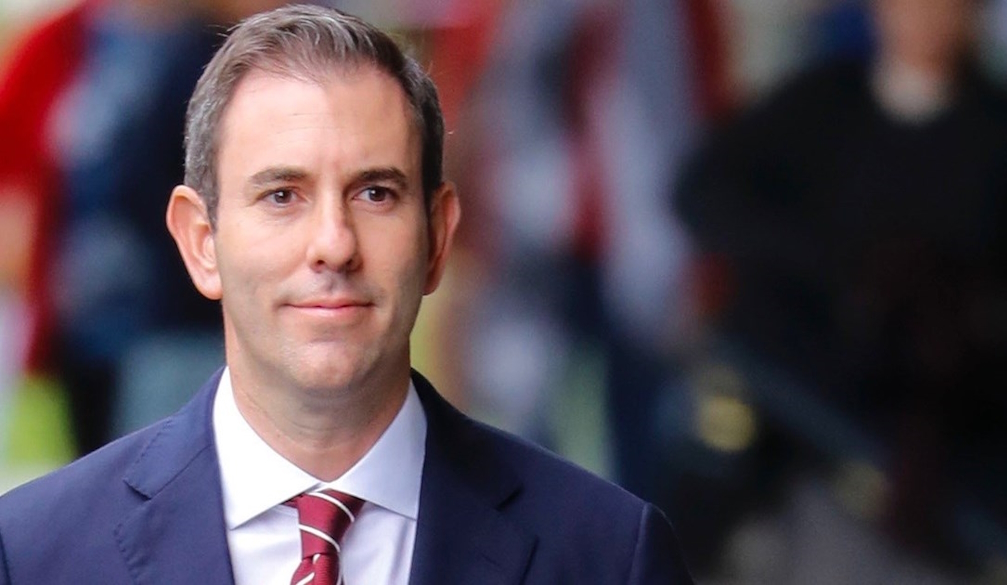
Next week’s budget will have cost-of-living assistance that will be meaningful and substantial but “responsible”, Treasurer Jim Chalmers has said.
In a Tuesday speech framing the budget Chalmers said, “it will be a responsible budget which helps with the cost of living, builds our future, and makes our economy more resilient in the new world of global uncertainty”.
He said the budget would have five major priorities:
-
helping the recovery and rebuild following Cyclone Alfred, for which it will provide $1.2 billion
-
helping with the cost of living and finishing the fight against inflation
-
strengthening Medicare and funding more urgent care clinics
-
putting money into every stage of education
-
making the economy more competitive and productive.
In the question-and-answer part of his appearance at the Queensland Media Club Chalmers refused to be drawn on whether the cost-of-living relief would include more help on power bills, as is widely expected.
He was also put on the spot about his future leadership ambitions, initially being asked whether, given federal Labor’s poor showing in Queensland, it would do better with a leader from that state.
After diverting the question with a joke and a vigorous defence of Anthony Albanese’s “practical pragmatism” and his appreciation of Queensland, he was asked directly, “So you don’t have aspirations to become leader one day yourself?” “No”, he replied.
Chalmers is lowering expectations of extensive new initiatives being announced next Tuesday, because big spending measures in health, education and infrastructure have been announced.
The budget will project deficits throughout the forward estimates. But Chalmers said Treasury did not expect the bottom line this year or the coming years to be substantially changed from the mid year update.
In the mid-year update[1] release in December, Treasury said it expected the deficit this financial year to be $26.9 billion. The deficit was forecast to increase further next year to $46.9 billion, compared with $42.8 billion forecast in last year’s budget.
Chalmers sought to scotch incorrect predictions he said had been made.
“For example, some commentators have made wild and wide-of-the-mark predictions about big surges in revenue.
"Some wrongly predict the tax-to-GDP ratio will go up this year, when Treasury expects it to be stable or even a bit down.
"Revenue upgrades have actually come off very significantly since the highs of October 2022.”
Chalmers argued the Australian economy “has turned a corner” but acknowledged “a new world of uncertainty” in which it was operating.
“The global economy is volatile and unpredictable.
"There’s a new US administration disrupting trade, a slowdown in China, war in eastern Europe and a fragile ceasefire in the Middle East, division and dissatisfaction around the world.
"Overnight, the OECD downgraded its growth expectations for next year and the year after.”
The OECD cut its forecasts for GDP growth to just 1.8% in 2026, down from an earlier forecast of 2.5%.
“Treasury forecasts in the Budget will have Chinese and American growth slowing to around 4.5 and 2 per cent next year, respectively.
"The forecasts for the US are the same as the mid-year update but the downside risks are weighing more heavily now.
"Unemployment is rising overseas from higher interest rates, and in the UK inflation is going up again.
"This is the global backdrop for the Budget.”
Chalmers repeated the government’s criticism of the US failure to grant an exemption from the steel and aluminium tariffs.
He said Treasury had modelled the impact of tariffs on our economy, both before the US election, and after the inauguration.
“Treasury estimates the direct hit to GDP from steel and aluminium tariffs would be less than 0.02 per cent by 2030. So the direct overall impacts on Australia should be manageable.
"But when you add in the indirect effects, the hit to GDP could be more like 0.1 per cent by 2030.
"In fact, over a range of scenarios, Treasury found the indirect GDP impacts of a trade war could be up to four times larger than the direct effects of tariffs on our economy.
"In a world of retaliation and escalation, the impacts of tariffs are amplified, they linger for longer, resulting in a bigger reduction in GDP and a bigger increase in prices.”
References
- ^ mid-year update (theconversation.com)