Another decisive Labor win in WA, but much remains at stake
- Written by: Narelle Miragliotta, Associate Professor in Politics, Murdoch University
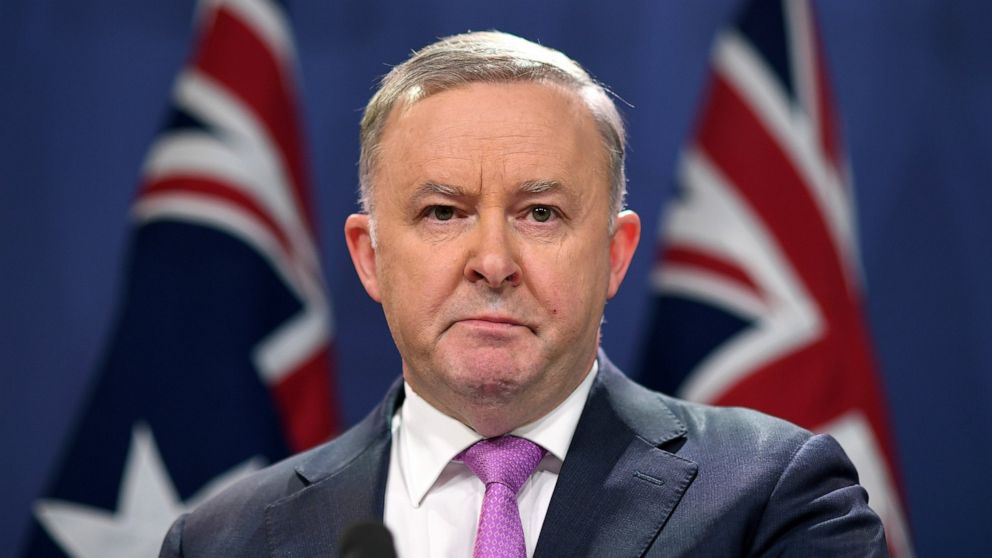
The Roger Cook Labor government has been returned comfortably to government in Western Australia, securing a commanding, even if reduced, majority in the Legislative Assembly.
On election night, ABC election analyst Antony Green projected[1] Labor had secured at least 40 of the 59 lower house seats. Even Labor’s deputy premier and treasurer, Rita Saffioti, expressed her surprise at the size of the party’s victory.
The Liberals also made ground, despite conceding Labor’s “emphatic[2]” victory. They achieved a more than +7% swing in the state-wide share of the primary vote and, by late on Saturday night, had gained double-digit swings on a two-party basis in 33 electorates. At at least two seats had registered swings of more than 20%.
The Liberals retained the two lower house seats they held coming into this election – Vasse and Cottesloe – and regained the seats of Carine, Churchlands and Nedlands. The victory in Nedlands[3] was achieved with an almost +12% swing. The Liberals are also ahead in the count in the seats of Albany, Kalgoorlie, Murray-Wellington. The Liberals will enter the 42nd parliament as the official opposition party.
The Nationals also have reason to celebrate. The party retained its three lower seats, and have gained a fourth seat, winning Geraldton, which was previously held by Labor and the Liberals at different periods. The party is also ahead in the count in the seat of Warren-Blackwood, a seat Labor won from the Nationals in 2021. Interestingly, the Poll Bludger’s[4], William Bowe has the Nationals ahead in Albany.
The Greens’ share of the state-wide primary vote rebounded to double digits, registering a swing of +3.5%. The Greens’ representation in the Legislative Council has also quadrupled from one councillor to four. And at least one of the teal independents[5], Kate Hulett, might just wrestle the inner metropolitan seat of Fremantle from Labor.
Losing amid the winning
While the parties will be able to claim their share of success, all lost ground in some way.
The vote correction Labor was expecting was emphatically delivered. The state-wide swing against Labor was around 18%, its primary vote likely to land somewhere in the low 40% range[6]. The party will also lose its majority in the Legislative Council, with the party securing 15 seats[7] (compared to 22 in 2021) in the 37 seat chamber. Even though Labor strategists were anticipating decline in its vote share given the fantastical swings the party enjoyed in 2021, they will be smarting from the outcome.
The swing against Labor did not break decisively in the Liberals’ direction. The Liberals barely regained two of their traditional blue-ribbon seats. The party narrowly won the seat of Churchlands (+1.8% swing), the most marginal Labor-held seat coming into this election. Cottesloe, a seat the Liberals have occupied uninterrupted since its creation in 1950, managed a swing of just under +5%. This is despite the Liberals’ candidate, Sandra Brewer, campaigning full time for 12 months.
In the Legislative Council, the party’s primary vote did strengthen but was a subdued 27.79%, which has delivered the Liberals three[8] additional council members on their 2021 numbers.
The Liberals’ traditional inner metropolitan electorates are not in a hurry to return to the party. This may reflect the difficulties for the Liberals in straddling the policy and, perhaps, cultural divides between their traditional inner metropolitan seats, and outer metropolitan and rural and regional seats.
The Nationals increased their lower house contingent, but their statewide primary vote grew by just over 1%, despite fielding four more candidates than they did in 2021. Specifically, the Nationals ran candidates in the (traditionally safe Liberal) inner metropolitan seats of Bateman, Darling Range, Kalamunda and South Perth[9], ostensibly in response to the Liberals’ pre-election refusal[10] to not run candidates against the Nationals.
However, the Nationals’ primary vote in these inner metropolitan seats averaged around 6.5%, confirming the party’s appeal in metropolitan seats is thin. The Nationals representation in the Legislative Council declined from three to two[11] councillors.
And while the Greens managed to improve their primary vote, it is hard to know whether it is a positive vote for the Greens or a vote against the major parties. The Greens (15.8%) were also out polled by the Teal independent (28.8%) in the inner metropolitan electorate of Fremantle. The Greens might have been expected to have finished in second place behind Labor, not third, in this seat.
What next?
Labor will now have to get on with the business of governing, and hope to be able to do enough in the intervening four years to remain competitive for a fourth term, especially among their own supporters. As expert Ben Raue has pointed out, some of the largest swings against Labor were “in their safer seats[12]”.
The Liberals will have to make a decision about who will lead the parliamentary party. It is unclear whether Libby Mettam will remain the leader. Well before the results were in on election night, her colleague, Steve Thomas, was not prepared to offer his full-throated endorsement.
However, Mettam’s putative successor, Basil Zemplias, did not emerge from this election unscathed, barely scraping a victory in Churchlands despite his high-profile status. Realistically, however, Mettam is the only person with the experience to lead the party in the lower house.
The other relationship to watch is between the Nationals and the Liberals. The two parties are not on great terms, and with the federal seat of Bullwinkel to be fiercely contested, one might expect things between them to get worse before they get better.
Certainly, Nationals leader Shane Love was quick to point out on election night that the Liberals had not been responsive to cooperation. Former Liberal Premier Colin Barnett[13] has suggested the two parties should again entertain a merger. However, given the history between them, it is unlikely.
The election is over, but the reverberation for all parties will be felt for months and years to come.
References
- ^ Antony Green projected (www.abc.net.au)
- ^ emphatic (www.youtube.com)
- ^ Nedlands (www.abc.net.au)
- ^ Poll Bludger’s (www.pollbludger.net)
- ^ teal independents (www.abc.net.au)
- ^ low 40% range (pollbludger.net)
- ^ securing 15 seats (www.elections.wa.gov.au)
- ^ three (www.abc.net.au)
- ^ Bateman, Darling Range, Kalamunda and South Perth (www.nationalswa.com)
- ^ Liberals’ pre-election refusal (www.watoday.com.au)
- ^ three to two (www.abc.net.au)
- ^ in their safer seats (www.tallyroom.com.au)
- ^ Colin Barnett (www.smh.com.au)
Read more https://theconversation.com/another-decisive-labor-win-in-wa-but-much-remains-at-stake-249693