Peter Dutton is promising to slash the public service. Voters won’t know how many jobs are lost until after the election
- Written by: Andrew Podger, Honorary Professor of Public Policy, Australian National University
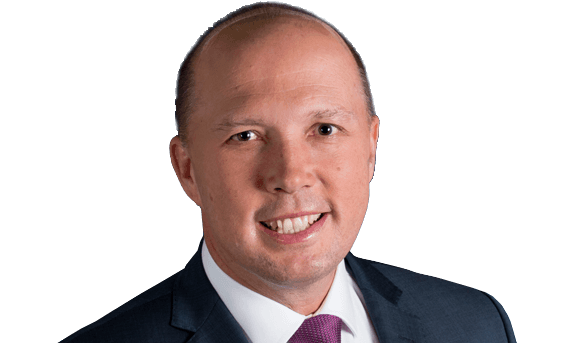
Opposition Leader Peter Dutton has doubled down on his commitment to sack thousands of public servants if he’s elected prime minister.
Dutton has again highlighted the “wasteful” 36,000 increase in public service jobs under Labor, which he says has made the Australian Public service “bloated and inefficient[1]”.
While there is considerable political hyperbole and Trumpian allusions in Dutton’s statements, there are areas where legitimate savings could be made by whoever wins the coming election. That includes a second-term Albanese government, which would need to find efficiencies to offset promised wage increases.
Dutton’s commitment
Dutton unrealistically mentioned A$24 billion in potential savings over four years by reversing the growth in the number of new public service jobs since the last election.
Dutton’s claim of 36,000 extra bureaucrats under the Albanese government is broadly correct. The latest State of the Service Report[2] shows the ongoing workforce increased from 133,976 in June 2021 to 170,186 in June last year. This was offset by a reduction of around 4,000 non-ongoing employees.
Labor has reduced the use of consultants and contractors, though at best those savings only partially offset the costs of the public service expansion.
Reversing the net increase in costs in the next term of Parliament, however, will not be easy and could not be done immediately.
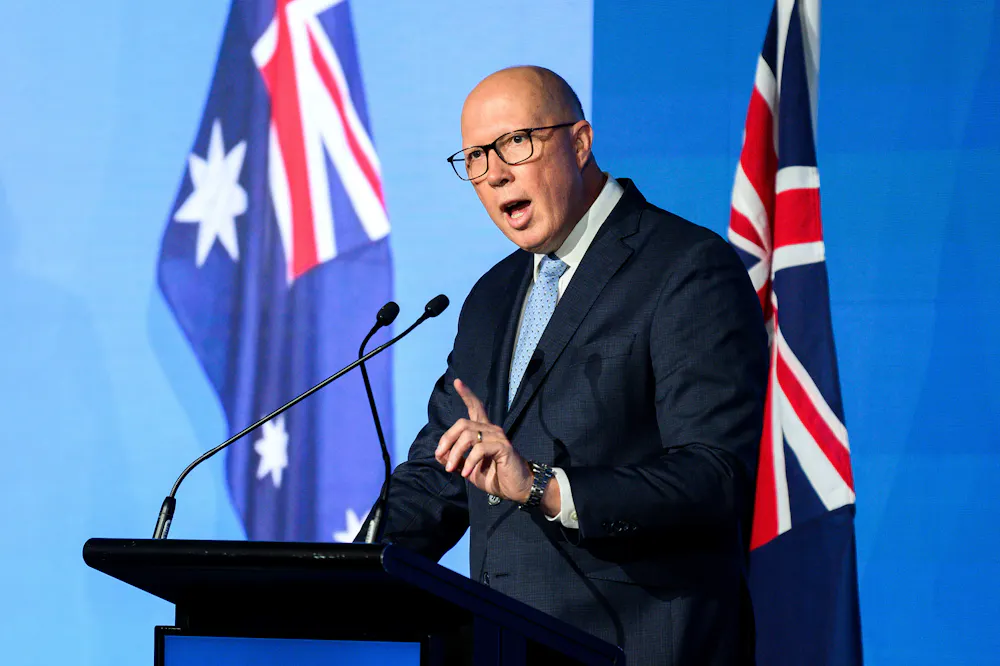
In turn, Labor is hiring fewer consultants and contractors[4]. Those numbers could rise again if permanent positions are axed under a Coalition government.
Dutton is careful not to make any specific commitments regarding the number of jobs that would go nor the dollar savings involved. However, he and his shadow ministers have repeatedly referred to the 36,000 new positions under Labor.
While the Coalition won’t be detailing any spending cuts until after the election[5], Dutton has alluded to US President Donald Trump’s playbook by targeting “culture, diversity[6] and inclusion advisers”.
Dutton contends these roles add to costs while providing little public service:
Such positions, as I say, do nothing to improve the lives of everyday Australians.
Putting the public service growth into context
Despite Dutton’s combative language, the growth of the Australian Public Service is not nearly as dramatic as he claims, nor is it concentrated in Canberra.
The State of the Service Report shows the Australian Public Service headcount is lower now (0.68%) as a percentage of the Australian population than it was in 2008 (0.75%). It is also a smaller share of the overall Australian workforce (1.36% compared to 1.52%).
Despite Dutton’s often repeated claim that all of the additional public servants are based in Canberra[7], the proportion of the public service working in the capital has decreased to just 36.9%.
The numbers back up the government’s claim that the expanded bureaucracy has delivered improvements to critical public services such as the National Disability Insurance Scheme, Veterans’ Affairs and Centrelink[8] outside of Canberra.
Labor has also committed to savings
Despite its defence of the public service, a re-elected Labor government would also need to find efficiencies.
The Australian Financial Review[9] has drawn attention to the mid-year budget update, which forecast no growth in the public service wages bill from 2025–26 to 2027–28. This is despite an enterprise bargaining agreement to increase wages by 11.2% over the three years to March 2026.
Finance and Public Service Minister Katy Gallagher has dismissed the Coalition’s claims of a $7.4 billion black hole. She says Labor’s forecasting method is the same as the one the Liberals used in government[10]
And the minister has restated Labor’s commitment to finding its own savings through the 1% efficiency dividend, which she says is “largely a good thing[11]”.
In other words, the Albanese government is assuming pay increases will be offset by efficiency measures over the next three years. That will require some effort.

Where savings could actually be made
Regardless of who forms the next government, there are savings to be made across the public service, which has become too top heavy.
Remuneration is a mess[13], with extraordinary variations in pay, particularly among the senior executive level.
A wholesale change in the membership of the Remuneration Tribunal, which sets public service pay levels, and a review of its methodology are much needed.
There should also be more emphasis on skills and capability, and less on diversity. A strong business case exists to maximise the talent pool the public service draws on, but care is needed to not compromise the merit principle in the pursuit of equity.
Dutton’s plan raises legitimate concerns
Dutton’s populist rhetoric about the public service raises legitimate concerns beyond the potential job cuts.
There’s a real risk the Coalition will resurrect its ideological preference for the private sector, with its associated extra costs and conflicts of interest.
Nor is there any clear commitment to avoiding a return to the politicisation of the bureaucracy evident under former prime minister Scott Morrison, which contributed to the Robodebt scandal.
The Albanese government has sadly dropped the ball by failing to legislate to promote merit-based appointments, leaving open opportunities for politically based hirings and firings.
With election day fast approaching, voters may reasonably be wary of both sides of politics when it comes to the independence and performance of the public service.
References
- ^ bloated and inefficient (www.peterdutton.com.au)
- ^ State of the Service Report (www.apsc.gov.au)
- ^ Steven Markham/AAP (photos.aap.com.au)
- ^ consultants and contractors (ministers.pmc.gov.au)
- ^ after the election (www.theguardian.com)
- ^ diversity (www.news.com.au)
- ^ based in Canberra (www.peterdutton.com.au)
- ^ Centrelink (ministers.pmc.gov.au)
- ^ Australian Financial Review (www.afr.com)
- ^ government (www.themandarin.com.au)
- ^ largely a good thing (www.thesenior.com.au)
- ^ Mick Tsikas/AAP (photos.aap.com.au)
- ^ mess (www.apsc.gov.au)