Google AI
The Times Australia

Times Media

Too many Australians miss out on essential medical care every year. Here’s how to fix ‘GP deserts’

  • Written by: Peter Breadon, Program Director, Health and Aged Care, Grattan Institute
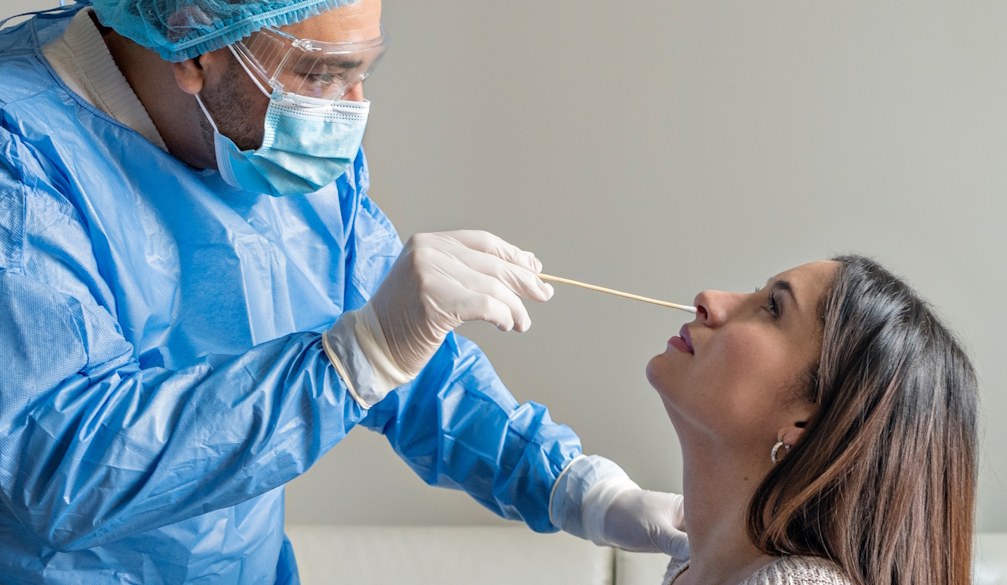
Some communities are “GP deserts”, where there are too few GPs to ensure everyone can get the care they need when they need it. These communities are typically sicker and poorer than the rest of Australia, but receive less care and face higher fees.

At the 2025 federal election, all parties should commit to changing that. The next government – whether Labor or Coalition, majority or minority – should set a minimum level of access to GP care, and fund local schemes to fill the worst gaps.

People in GP deserts miss out on care

About half a million Australians live in GP deserts. These are communities in the bottom 5%[1] for GP services per person. Most GP deserts are in remote Queensland, Western Australia and the Northern Territory, and some are in Canberra.

People in GP deserts receive 40% fewer GP services[2] than the national average. This means less of the essential check-ups, screening and medication management GPs provide.

Nurses and Aboriginal health workers help plug some of the gap, but even then GP deserts aren’t close to catching up to other areas.

And some people miss out altogether. Last year, 8% of people older than 65 in these areas didn’t see the GP at all, compared to less than 1% in the rest of the country.

Poorer and sicker places miss out, year after year GP deserts are in the worst possible places. These communities are typically sicker and poorer, so they should be getting more care than the rest of Australia, not less. People in GP deserts are almost twice more likely to go to hospital for a condition that might have been avoided with good primary care, or to die from an avoidable cause. Most GP deserts are in the bottom 40% for wealth, yet pay more for care. Patients in GP deserts are bulk billed[3] six percentage points less than the national average.
These communities miss out year after year. While rises and falls in national bulk billing rates get headlines, the persistent gaps in GP care are ignored. The same communities have languished well below the national average for more than a decade. Policies to boost rural primary care don’t go far enough Most GP deserts are rural, so recent policies to boost rural primary care could help a bit. In response to rising out-of-pocket costs, the government has committed A$3.5 billion to triple bulk-billing payments for the most disadvantaged[4]. Those payments are much higher for clinics in rural areas. An uptick in rural bulk billing last year[5] is an early indication it may be working. Older man sits in living room in a wheelchair Older people in GP deserts are much less likely to see a GP than their peers in other parts of the country. Theera Disayarat/Shutterstock[6] New rural medical schools[7] and programs[8] should help boost rural GP supply, since students who come from, and train in, rural areas are more likely to work in them[9]. A “rural generalist”[10] pathway recognises GPs who have trained in an additional skill, such as obstetrics or mental health services. But broad-based rural policies are not enough. Not all rural areas are GP deserts, and not all GP deserts are rural. Australia also needs more tailored approaches. Local schemes can work Some communities have taken matters into their own hands. In Triabunna on Tasmania’s east coast, a retirement in 2020 saw residents left with only one GP[11], forcing people to travel to other areas for care, sometimes for well over an hour. This was a problem for other towns in the region too, such as Swansea and Bicheno, as well as much of rural Tasmania. In desperation, the local council has introduced a A$90 medical levy[12] to help fund new clinics. It’s also trialling a new multidisciplinary care approach[13], bringing together many different health practitioners to provide care at a single contact point and reduce pressure on GPs. Residents get more care and spend less time and effort coordinating individual appointments. Murrumbidgee in New South Wales has taken a different approach. There, trainee doctors retain a single employer[14] throughout their placements. That means they can work across the region, in clinics funded by the federal government and hospitals managed by the state government, without losing employment benefits. That helps trainees to stay closely connected to their communities and their patients. Murrumbidgee’s success has inspired similar trials in other parts of NSW[15], South Australia[16], Queensland[17] and Tasmania[18]. These are promising approaches, but they put the burden on communities to piece together funding to plug holes. Without secure funding, these fixes will remain piecemeal and precarious, and risk a bidding war[19] to attract GPs, which would leave poorer communities behind. Australia should guarantee a minimum level of GP care The federal government should guarantee a minimum level of general practice for all communities. If services funded by Medicare and other sources stay below that level for years, funding should automatically become available to bridge the gap. The federal and state governments should be accountable for fixing GP deserts. These regions typically have small populations, few clinicians, and limited infrastructure. So governments must work together to make the best use of scarce resources. GP writes script for patient. Some states have introduced schemes where doctors can work in a range of locations. Stephen Barnes/Shutterstock[20] Funding must be flexible, because every GP desert is different. Sometimes the solution may be as simple as helping an existing clinic hire extra staff. Other communities may want to set up a new clinic, or introduce telehealth for routine check-ups. There is no lack of ideas about how to close gaps in care, the problem lies in funding them. Lifting all GP deserts to the top of the desert threshold – or guaranteeing at least 4.5 GP services per person per year, adjusted for age, would cost the federal government at least A$30 million a year in Medicare payments. Providing extra services in GP deserts will be more expensive than average. But even if the cost was doubled or tripled, it would still be only a fraction of the billions of dollars of extra incentives GPs are getting to bulk bill – and it would transform the communities that need help the most. GP deserts didn’t appear overnight. Successive governments have left some communities with too little primary care. The looming federal election gives every party the opportunity to make amends. If they do, the next term of government could see GP deserts eliminated for good. References^ the bottom 5% (www.aihw.gov.au)^ receive 40% fewer GP services (www.aihw.gov.au)^ bulk billed (www.health.gov.au)^ triple bulk-billing payments for the most disadvantaged (www.health.gov.au)^ uptick in rural bulk billing last year (www.aihw.gov.au)^ Theera Disayarat/Shutterstock (www.shutterstock.com)^ medical schools (www.unsw.edu.au)^ programs (www.flinders.edu.au)^ more likely to work in them (human-resources-health.biomedcentral.com)^ rural generalist” (www.health.gov.au)^ a retirement in 2020 saw residents left with only one GP (www.parliament.tas.gov.au)^ introduced a A$90 medical levy (www.abc.net.au)^ new multidisciplinary care approach (www.cohealth.org.au)^ trainee doctors retain a single employer (www.health.gov.au)^ NSW (www.health.nsw.gov.au)^ South Australia (www.ruralgeneralist.sa.gov.au)^ Queensland (www.health.qld.gov.au)^ Tasmania (www.health.tas.gov.au)^ risk a bidding war (www.abc.net.au)^ Stephen Barnes/Shutterstock (www.shutterstock.com)
Read more https://theconversation.com/too-many-australians-miss-out-on-essential-medical-care-every-year-heres-how-to-fix-gp-deserts-245253

Australia

NSW history teachers offered fully funded trip to Gallipoli, the Western Front or Thailand

A Sydney-headquartered battlefield tour company has teamed up with the state's peak history teaching body to sen...

iPhone 18 Pro Max: Apple turns its flagship into an AI-powered camera and computer

Apple’s new iPhone 18 Pro Max is not a radical reinvention of the smartphone’s appearance. It is something poten...

Daylight saving 2026: when the clocks change and why Australians do not get a direct say

Daylight saving will begin in participating Australian states and territories on Sunday, 4 October 2026. At 2am...

Times Magazine

BYD Shark 6 v Toyota LandCruiser 300: can new technology defeat an Australian legend?

The BYD Shark 6 and Toyota LandCruiser 300 Series may appear to belong in different vehicle catego...

Australia Needs Permission Budgets for AI Agents

The Times recently argued that Australia should keep building the data centres the AI economy requ...

Nikon Is Developing Nine New Cinema Lenses and a Major ZR Firmware Update

Nikon is developing a new series of nine NIKKOR Z CINEMA T1.9 VV cinema lenses, designed for cinem...

Technology

Australia Needs Permission Budgets …

The Times recently argued that Australia should keep building the data centres the AI economy requ...

Local News

Fitstop Global Games to Bring 1,000…

The Australian-born fitness brand is bringing its global competition home, with athletes from across...

Culture

Could a Prescription for a Bushwalk or Art Cl…

New social and nature prescribing hubs connect locals to community activities to combat loneliness...

Travel

School holiday pricing: fair market economics…

Every Australian family with school-aged children knows the pattern. Look at an airfare, hotel ro...

The Times Features

Could a Prescription for a Bushwalk or Art Class Be the…

New social and nature prescribing hubs connect locals to community activities to combat loneliness...

The Silent Health Crisis: Why 27% of Female Deaths Are …

Medical experts issue an urgent wake-up call for Women’s Health Week, revealing how everyday delay t...

Grill'd Wraps Up Lunch With Biggest Menu Expansion…

After more than two decades spent perfecting burgers, Grill'd is entering new territory. The Aust...