Australia’s air and tourism industries need government-backed insolvency insurance. Here’s why
- Written by: David Beirman, Adjunct Fellow Management & Tourism, University of Technology Sydney
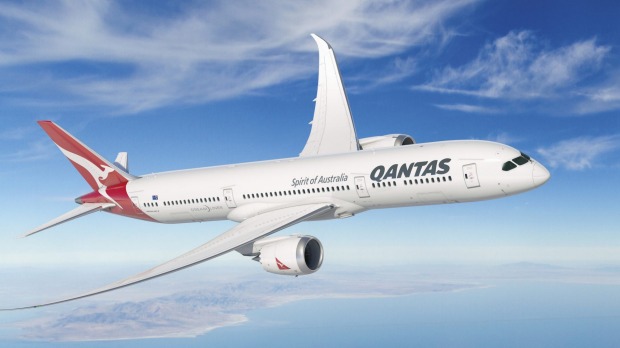
Australia has a long history of domestic airlines collapsing, often affecting thousands of travellers, yet the industry provides little or no recompense.
Even the federal government’s recently released aviation discussion paper recognised the need for change by recommending important protections for passengers. These included making airlines honour refunds if flights were cancelled or significantly delayed.
The 2024 Aviation White Paper[1] included the most consumer friendly proposals in 30 years. However, there was one significant omission in the 156-page report.
There was no mention of insolvency protection for airline passengers. To put it simply, if a domestic or international airline collapses there is little likelihood passengers who paid airfares will receive a refund.
In most cases, passengers affected by airline collapses receive little or no compensation. Fewer than 20% [2] of Australian domestic passengers pay for domestic travel insurance compared to the 90% of Australians who buy insurance when they fly internationally.
A history of failed airlines
Since 1990 we have seen the rise and fall of multiple Australian airlines[3]. This includes Compass Mark 1, Compass Mark 2, Ansett Airlines, Impulse Air and Aussie Air.
In May, Bonza [4]collapsed after less than a year of operation. And more recently, services operated by REX (Regional Air Express)[5] between capital cities stopped and its regional services are under pressure.
Virgin and Qantas immediately volunteered to honour the inter-city bookings of some REX ticket holders. However, nearly all affected Bonza passengers lost their money because no other airlines flew the same routes.
The risk of both domestic and international airline collapses affecting Australian travellers is real. Consumers are as entitled to be protected from that risk as they are from many other travel related risks.
The UK and European approach
The UK approach to insolvency insurance has worked well since 1973. The UK scheme is known as “ATOL” or Air Travel Operators Licence[7]. It applies to package tour companies who sell air travel combined with land tours or accommodation
This user-pays, government-guaranteed insurance cover is compulsory for all British travellers who book a package tour. It costs only A$5 per person. It guarantees a full refund and return flights to the passenger’s point of origin if the tour operator goes out of business.
A similar scheme has operated in the European Union since 1990, its known as the European Package Travel Directive[8].
As part of a 2024 book[9] I co-edited with Bruce Prideaux, I focused on the collapse of the famous British tour operator, Thomas Cook in 2019.
I also compared insolvency consumer protection in the UK with that of Australia and New Zealand.
The Thomas Cook experience
When Thomas Cook collapsed in the United Kingdom and Europe, 600,000 British and European Union passengers were fully refunded the cost of their tours and flown to their port of departure under their regions’ respective schemes. And the cost of their disrupted tours was refunded.
Funding built into the UK scheme covered full refunds to affected passengers at negligible cost to government which guaranteed the scheme.

By contrast, a far smaller collapse of two Australian based tour operators, Tempo Holidays and Bentours[11] in September 2019 affected fewer than 1,000 passengers.
However not all the affected travellers were refunded due to the limitations of the insolvency scheme run by what was then the Australian Federation of Travel Agents.
Under this scheme travellers only receive insolvency protection if they pay by credit or debit card. There is a reliance on banks to refund if a tour operator becomes insolvent. If the passenger paid for their tour by cheque or cash, no refund applied.
What Australia needs
There are three key categories of business insolvency which affect travellers. The collapse of an airline, the collapse of a tour operator and the collapse of a travel agent.
If the Australian government is genuinely interested in protecting travel consumers at minimal cost to the taxpayer we should be using the UK and European schemes as a model.
A compulsory user-pays, government guaranteed insolvency protection scheme would cost the consumer very little and would be an ideal safety net for consumers in the event that their travel company goes bust.
References
- ^ Aviation White Paper (www.infrastructure.gov.au)
- ^ Fewer than 20% (insurancecouncil.com.au)
- ^ multiple Australian airlines (www.theguardian.com)
- ^ Bonza (www.aviationbusinessnews.com)
- ^ REX (Regional Air Express) (www.smh.com.au)
- ^ Joel Carrett/AAP (photos.aap.com.au)
- ^ “ATOL” or Air Travel Operators Licence (www.atol.org)
- ^ European Package Travel Directive (commission.europa.eu)
- ^ 2024 book (www.elgaronline.com)
- ^ Francisco Ubilla/AAP (photos.aap.com.au)
- ^ Tempo Holidays and Bentours (travelweekly.com.au)