The 2027 Broken Hill Mundi Mundi Bash
- Written by: The Times
AUSTRALIA’S BIGGEST OUTBACK MUSIC EVENT UNVEILS A MONSTER 2027 LINEUP
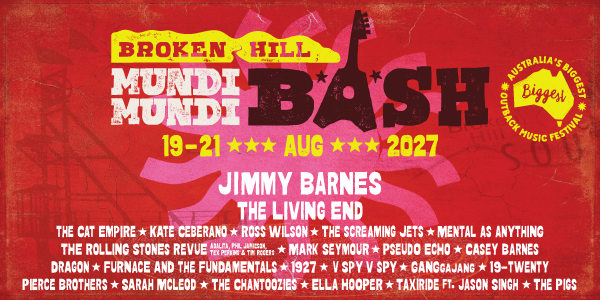
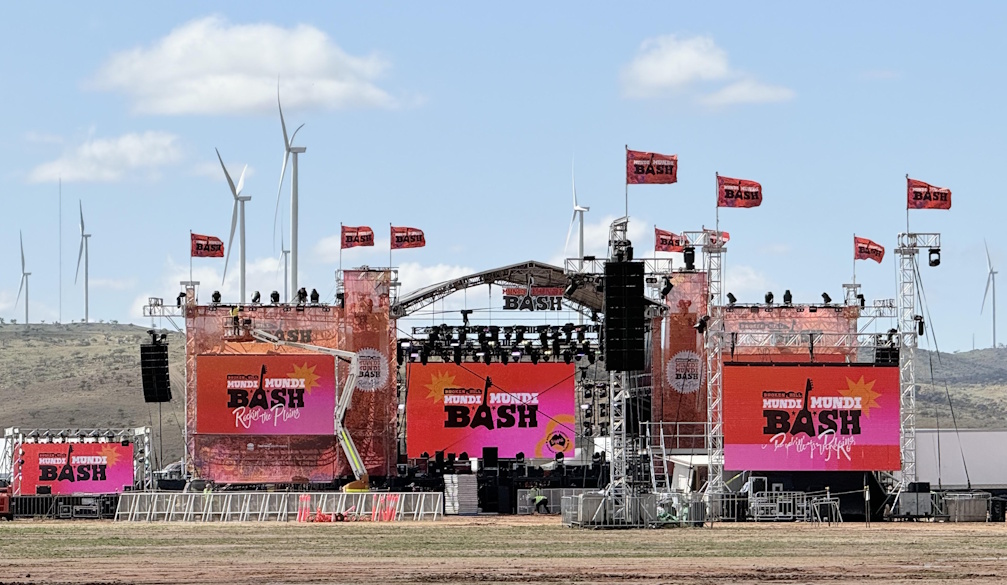
The 2027 Broken Hill Mundi Mundi Bash is set to be an explosion of power performances in the quiet vastness of the NSW Outback when the iconic event returns to the red-dirt of the Mundi Mundi Plains outside Silverton from August 19-21 next year.
Festival organisers have announced a stacked, 25-act lineup for the 2027 event that will deliver a rollcall of rock royalty and other Outback fun next August.
Jimmy Barnes will lead the charge on stage, with the legendary performer saying, “The Mundi Mundi Bash is one of the greatest festivals on the planet. For a start, you get to see some of the best artists Australia has produced, which is always great, and secondly, the location for this festival is like no other place in the world. It is absolutely breathtaking. Driving out to the site takes you through some of the most stunning scenery ever. I for one can’t wait to get out there and get my band rocking. See you all there.”
Already renowned as the biggest event in Outback Australia, the 2027 Mundi Mundi Bash program boasts the largest number of acts in the festival’s six year history.
Joining Barnes on the extraordinary Mundi Mundi Bash stage at the foot of the Barrier Ranges will be The Living End, The Cat Empire, Kate Ceberano, Ross Wilson, The Screaming Jets, Mental as Anything, The Rolling Stones Revue - featuring Adalita, Phil Jamieson, Tex Perkins and Tim Rogers, Mark Seymour, Pseudo Echo, Casey Barnes, Dragon, Furnace and the Fundamentals, 1927, Spy V Spy, Ganggajang, 19-Twenty, Pierce Brothers, Sarah McLeod, The Chantoozies, Ella Hooper, Taxiride, Jason Singh, The Pigs with artist supported by the talent of the Mundi Mundi Bash Band including Jak Housden, Dario Bortolin, Gordon Rhytmeister, Colin Coorie, Robyn Loau and Miranda Carey.
“We’re definitely not the usual live music experience of an indoor venue or even a parkland setting in suburbia, at a winery or by the beach. And the Mundi Mundi Bash isn’t a rinse and repeat gig. We only run the event once a year because so much goes into creating an extraordinary experience in the middle of the Outback. There’s something very special and entirely unique about seeing artists like Jimmy Barnes on our Outback stage surrounded by beautiful red dirt plains as far as the eye can see. It’s a different energy, and the fun extends well beyond the on-stage experience,” said Greg Donovan, event founder and Managing Director of the Outback Music Festival Group.
Much more than just a music festival, the Broken Hill Mundi Mundi Bash is a pilgrimage for those seeking a bucket-list Outback experience soundtracked by a rollcall of rock royalty – it has a community connection that is rarely experienced at events.
“Attending a Bash event is a badge of honor and something that connects thousands of people from all corners of Australia. They come together on the red dirt plains and make lifelong friends and core memories. There’s something intangible in the way the Bash community is touched by the experience,” added Donovan.
Beyond the music, the three-day camping based festival is an all-ages, dog friendly destination adventure.
Set under wide open outback skies of cornflower blue during the day, and a thick canopy of stars by night the event delivers world-record attempts like the Big Blue Day blue map of Australia that raises funds for Beyond Blue as well as the Mundi Undi Run and the new Bash Choir that was launched at this year’s event that both fundraise for the Royal Flying Doctor Service (RFDS) as well as a Mad Max dress up gathering that celebrates the rich history of the Mundi Mundi Plains with George Miller’s Mad Max films.
Add to these unique elements camel rides, nursery animals, morning yoga on the plains, helicopter rides, outdoor film nights, dunny door painting and more the event gives festival goers an immersive Outback experience like no other.
“We’re proud that no one else in Australia is delivering festivals that even come close to the Bash experience. And that we’re also able to do so much good for our charity partners – having raised more than a million dollars already for the RFDS and hundreds of thousands of dollars for Beyond Blue. And with our sister festival the Birdsville Big Red Bash calling time after the 2027 event the Mundi Mundi Bash will become our entire focus and the only event on the calendar to experience our special brand of outback entertainment,” concluded Greg Donovan.
While festival attendees can bring their own supplies – including BYO alcohol, a wide selection of food vendors will also be on-site, serving hot and cold food and non-alcoholic beverages.
The Mundi Mundi Bash is mostly accessed by road travel, with sealed roads right up to the festival site, however there are also regular flights and trains into Broken Hill.
EVENT DETAILS
What:
2027 Broken Hill Mundi Mundi Bash
Where:
Belmont Station, on the Mundi Mundi Plains 9km north of Silverton 35km north of Broken Hill
When:
August 19-21, 2027
More info & tickets: www.mundimundibash.com.au (tickets released October 22, 2026 @ 10am AEDT)
Full Line-Up: Jimmy Barnes, The Living End, The Cat Empire, Kate Ceberano, Ross Wilson, The Screaming Jets, Mental as Anything, The Rolling Stones Revue - featuring Adalita, Phil Jamieson, Tex Perkins and Tim Rogers, Mark Seymour, Pseudo Echo, Casey Barnes, Dragon, Furnace and the Fundamentals, 1927, Spy V Spy, Ganggajang, 19-Twenty, Pierce Brothers, Sarah McLeod, The Chantoozies, Ella Hooper, Taxiride, Jason Singh, The Pigs with artist supported by the talent of the Mundi Mundi Bash Band Jak Housden, Dario Bortolin, Gordon Rhytmeister, Colin Coorie, Robyn Loau and Miranda Carey.