Google AI
The Times Australia
Fashion and Beauty

.

When AI starts shopping for you, fashion may be entering a new era of pricing

  • Written by: Aayushi Badhwar, Lecturer in Enterprise and Technology, RMIT University
When AI starts shopping for you, fashion may be entering a new era of pricing

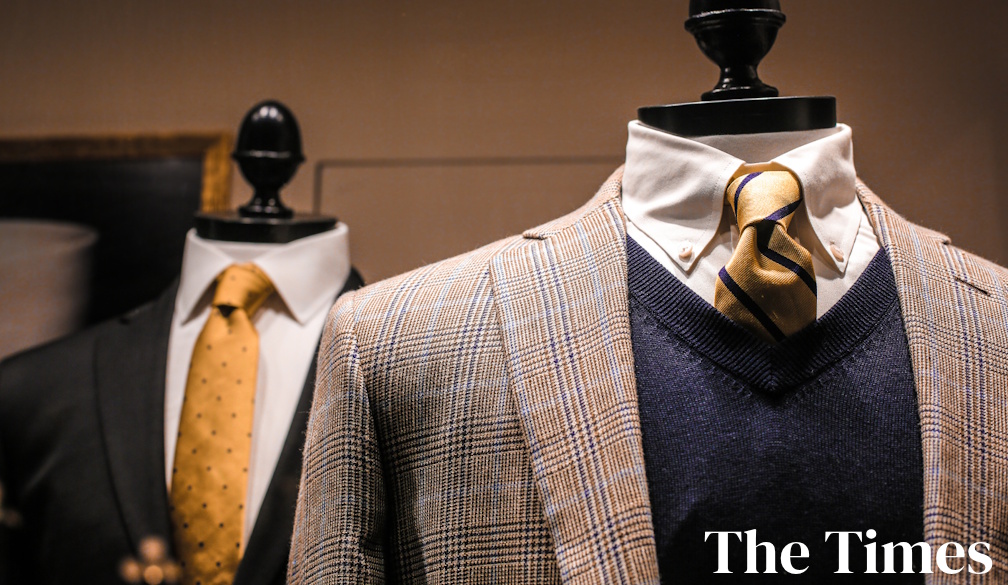
Fashion has always been a bit different to other industries. Consumers do not just buy because they need something. They buy because they are bored, influenced or simply browsing.

That makes it a perfect space for technologies designed to shape how we shop. Fashion sales are driven by cyclical trends and volume.

Much of the industry depends on overproduction, followed by constant cycles of discounting to clear stock. Sales are not just occasional events. They are built into how the system operates[1].

And now, a new layer of AI technology[2] is starting to turbocharge that system.

Pricing is already starting to change

Dynamic pricing has been around for years. We see it most clearly with flights and ride sharing, where prices often increase the more you search[3], especially when there is a clear intention to pay for the service.

But in fashion, demand is not always tied to necessity[4]. Because of this, pricing does not just reward urgency. It can also reward patience.

This suggests that dynamic pricing in fashion is not simply about pushing prices up. It is about constantly adjusting them to keep products moving.

A recent report from Business Insider[5] in the United States shows how dynamic pricing is already taking hold in fashion retail. Prices of items sitting in an online cart at a major clothing retailer changed multiple times over a few days. Sometimes they went up, sometimes they dropped. In some instances, waiting resulted in a discount of up to 17%.

As this becomes more common, shopping will feel less like a simple decision and more like timing a system.

In Australia, the consumer watchdog does not consider dynamic pricing inherently unlawful[6]. Broader data-use guidelines around pricing are not yet comprehensive.

When the bot does the shopping

At first glance, new AI tools for online shopping seem focused on convenience.

Virtual try-ons are becoming more realistic[7], allowing people to see how garments fit and drape on their own bodies. This could help reduce returns, which are a costly burden to retailers.

But companies like Google are taking this a step further[8]. You can try items on, set the price you are willing to pay, and the system will track it, notify you when it hits that price, and even complete the purchase if you give permission.

What starts as a tool for convenience quickly becomes something more. You’re not even actively shopping anymore, your bot is purchasing on your behalf.

This is part of a broader shift towards what is called “agentic commerce[9]”, where an AI agent acts on your behalf based on pre-set preferences.

Is the consumer setting the price?

Using a shopping agent changes how dynamic pricing works.

Traditionally, brands set prices and adjust them based on demand, inventory and consumer behaviour. But in this emerging model, consumers are also feeding into that system directly by stating what they are willing to pay.

At first, this feels empowering. It sounds like consumers are gaining more control. But it also creates a new dynamic.

Who’s really in control of pricing if both sides are driven by AI?

If someone sets a price they are comfortable with, the system can complete the purchase as soon as that price is reached. But the price might have dropped even lower if that data was not available.

In effect, consumers may be setting their own limits without realising it.

This creates a feedback loop. Retailers optimise prices using data, while consumers provide their own price thresholds. Both sides are guided by algorithms[10] and the final outcome sits somewhere in between.

The question is no longer just how prices are set, but who is really influencing them.

Convenience meets over-consumption

There are clear benefits to this shift. Automating purchases could make everyday shopping easier.

But in fashion, where consumption is already high[11], tech tools that make pricing feel more personalised or within reach are unlikely to reduce consumption. They may even encourage overconsumption.

Consumers should be mindful not to let the apparent convenience of shopping bots and personalised pricing alerts lead to a rise in impulse purchases.

References

  1. ^ how the system operates (journals.sagepub.com)
  2. ^ new layer of AI technology (link.springer.com)
  3. ^ increase the more you search (theconversation.com)
  4. ^ not always tied to necessity (link.springer.com)
  5. ^ report from Business Insider (www.businessinsider.com)
  6. ^ inherently unlawful (www.accc.gov.au)
  7. ^ becoming more realistic (blog.google)
  8. ^ a step further (youtube.com)
  9. ^ agentic commerce (cloud.google.com)
  10. ^ guided by algorithms (hbr.org)
  11. ^ consumption is already high (australiainstitute.org.au)

Read more https://theconversation.com/when-ai-starts-shopping-for-you-fashion-may-be-entering-a-new-era-of-pricing-280142

Fashion & Beauty

REFLECTIONS: A Legacy in the Rain at Carla Zampatti AFW 2026

Words & Photography by Cesar Ocampo There is a specific kind of magic that happens when high fashion meets the elements. Last night, as Australian Fashion Week 2026 kicked off with the Opening Night Consumer Show, the Sydney skies offered a driz...

MARIAM SEDDIQ UNVEILS “ECHOES” AT AUSTRALIAN FASHION WEEK 2026

At Australian Fashion Week 2026, MARIAM SEDDIQ will unveil “ECHOES”: a collection that exists in the  space between power and softness. The collection creates a space where sculptural tailoring meets fluid  drape, and graphic edge is softened by emot...

KMS x Daisy Edgar Jones Met Gala

For the 2026 Met Gala red carpet, Celebrity Stylist, Bryce Scarlett, created a voluminous, polished style for Daisy Edgar Jones with soft movement and a refined, touchable finish using KMS Hair.    BREAKDOWNOn clean, towel-dried hair, Bryce began b...

Goldwell x Margot Robbie at the Met Gala

For the 2026 Met Gala red carpet, Celebrity Stylist, Bryce Scarlett, created a defined, twisted updo for Margot Robbie using Goldwell, drawing inspiration from her sleek yet sculptural gown that fused minimalism with structure.   BREAKDOWNStarting ...

Natural Skincare in Australia: Why Consumers Are Shifting to Simpler, Ingredient-Led Products

Walk into most bathrooms ten years ago and you would probably see the same thing, a crowded shelf filled with natural skincare and conventional products alike, all promising something slightly different. More steps. More actives. More results. No...

In 2006, The Devil Wears Prada Became One of the First Social Influencers: Fashion Was the Product

When The Devil Wears Prada premiered in 2006, it was marketed as a sharp, entertaining adaptation of a bestselling novel. What it became, in hindsight, was something far more commercially significant: one of the earliest examples of modern influenc...

Times Magazine

Federal Budget and Motoring: Luxury Car Tax, Fuel Excise and the Cost of Driving in Australia

For millions of Australians, the Federal Budget is not an abstract economic document discussed onl...

Buying a New Car: Insider Tips

Buying a new car is one of the largest purchases many Australians make outside buying a home. Yet ...

Hybrid Vehicles: What Is a Hybrid, an EV and a Plug-In Hybrid?

Australia’s car market is changing faster than at any point since the decline of the local Holden ...

Chinese Cars: If You Are Not Willing to Risk Buying One, What Are the Current Affordable Petrol Alternatives

For years Australian motorists shopping for an affordable new car generally looked toward familiar...

Australia’s East Coast Braces for Wet Week as Weather Pattern Shifts

Large sections of Australia’s east coast are preparing for a significant period of wet weather as ...

A Report From France: The Mood of a Nation

France occupies a unique place in the global imagination. To many outsiders, it remains the land ...

The Times Features

Why every drop counts

Accurate water measurement and confidence in Sustainable Diversion Limits (SDLs) are essential to ...

Dining Out Is Expensive. Buying High Quality Meat and F…

For many Australians, dining out has quietly shifted from a weekly habit to an occasional indulgen...

REFLECTIONS: A Legacy in the Rain at Carla Zampatti AFW…

Words & Photography by Cesar Ocampo There is a specific kind of magic that happens when high fa...

Where Our Batteries Come From: Battery making is big bu…

Batteries are now so deeply embedded in modern life that most people rarely stop to think about th...

Did Trump Secure China’s Assistance to Protect Middle E…

As tensions in the Middle East continue to threaten global energy markets, a new geopolitical ques...

China and America: Trump Tried to Be Nice. Did It Work?

For years the relationship between the United States and China has resembled a slow-moving collisi...

Since the Budget: How the Real Estate Industry Reacted

Australia’s real estate industry has reacted to the federal budget with a mixture of optimism, cau...

Budget Holidays in Australia: How to Travel More and Sp…

For many Australians, the idea of a holiday now comes with a difficult question: can we still affo...

Street Side Medics Calls for Canberra Clinic Volunteers

Street Side Medics – a not-for-profit, GP-led mobile medical service dedicated to people experienc...