The Supports Are Working — They Are Not Optional
- Written by: Eric Barrett-O’Keefe
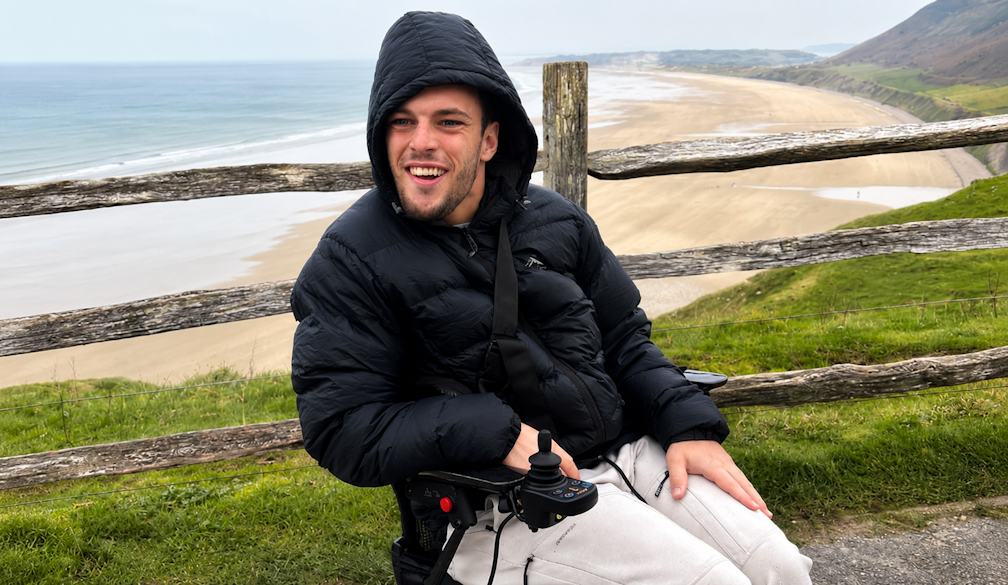
When I work, live in supported accommodation and take part in my community, that is evidence the NDIS is doing its job — not proof that I need less help.
When I arrive at Royal Prince Alfred Hospital for work, people see an employee turning up and contributing. They see me living in supported accommodation, going to appointments, taking part in basketball and speaking up about disability. From the outside, that can look like independence.
I am proud of all of those things. I am 27, I have cerebral palsy and autism, and I want the same things most people want: meaningful work, a safe home, friends, purpose and a say in the decisions that shape my life. But there is something essential that can disappear from view: I can do these things because I have support.
My success is the outcome of support — not evidence that support is no longer needed. |
The support behind one ordinary day is a chain. It can include help with personal care, getting ready, meals, communication, mobility, transport, staying safe, attending medical and therapy appointments, reaching work and taking part in the community. If one link is weakened, the whole day can become harder — or stop altogether.
This is why I worry when visible progress is treated as a reason to reduce support. That reasoning is backwards. If a bridge carries people safely across a river, we do not remove it because nobody fell in. We maintain it because it is working.
For me, NDIS supports are not a luxury or an optional extra. They are the infrastructure around my life. They help turn rights on paper into real opportunities. They make it possible for me to contribute at work, to make choices about my own life and to be part of my community instead of being shut away from it.
Home is a clear example. Supported Independent Living is about assistance with daily life for people who need substantial support to live as independently as possible. A stable arrangement is not just a roof and a roster. It is consistency, safety, people who understand how I communicate and move, and the confidence that essential help will still be there tomorrow. I am still working towards stable, appropriate long-term Home and Living support. Uncertainty around that support affects every other part of my life.
At the time of writing, Parliament has just passed the NDIS Amendment (Securing the NDIS for Future Generations) Bill 2026. The government says most participants will not see immediate changes and that existing access and planning arrangements will remain while reforms are introduced. Support needs assessments are due to become part of a new planning system from April 2027. The NDIA says plans will be approved by trained staff, not automated systems, and that participants will keep the right to seek a review.
Those assurances matter. But the real test will be implementation: what happens when a person sits in front of an assessor, how the information is translated into a budget, and whether a participant can understand and challenge the result. A system can be described as human-led and still feel mechanical if the rules are too rigid or the person making the decision cannot see beyond a standard form.
Consistency is a worthy goal. Participants want the NDIS to be fair, trustworthy and sustainable. But consistency must not mean forcing complex lives into neat categories. Disability is not experienced as a spreadsheet. Needs can change from day to day. A short assessment may not show the planning, fatigue, risk and support that sit behind a successful shift at work or a safe evening at home.
Any assessment tool, budget method or digital system must support human judgment rather than replace it. It must be tested with people who have complex needs, and the reasoning behind a decision must be explained in plain language. Review rights must be practical, timely and accessible — not simply written into a policy that people cannot use.
The stakes are bigger than a line item in a plan. If transport support is reduced, a person may lose access to work. If help at home is cut, they may miss meals, personal care or medication. If community participation support disappears, isolation can grow. What looks like a saving in one part of a budget can create a much greater cost in another part of someone’s life.
My work at RPA has taught me what genuine inclusion can look like. Inclusion is not about lowering expectations. It is about removing barriers, asking what a person needs and giving them a fair opportunity to contribute. When that happens, disability is not the end of the conversation. Skill, effort and belonging can come to the front.
The same principle should guide the NDIS. Start with the person, not the savings target. Ask what a good life looks like and what support makes it possible. Listen to disabled people early, while policy is still being designed, rather than asking for our stories after the decisions have already been made.
The current consultation on the future of Supported Independent Living is one opportunity to do that. It closes on 13 September 2026. People who rely on SIL, their families and workers should be at the centre of what comes next. Consultation must be more than a box-ticking exercise; participants should be able to see how their evidence changed the final design.
The NDIS should be judged not only by the size of its budget, but by the lives it makes possible. It should be judged by whether people are safe, whether they can leave the house, whether they can work, whether they can build relationships and whether they have genuine choice and control.
One of my goals is to take this advocacy to Parliament House in Canberra — to speak directly with the people shaping the NDIS and make sure lived experience is heard before decisions are made. Disabled people should not be spoken about only through budgets and targets. We should be in the room, explaining what support makes possible and helping to shape the policies that affect our lives.
I am doing well because support is working in the moments I need it. Please do not mistake that success for proof that the support can be taken away. Protect the foundation, and people like me can keep building our lives on it.
About the author:
Eric Barrett-O’Keefe is a 27-year-old NDIS participant with cerebral palsy and autism, a part-time NSW Health employee at Royal Prince Alfred Hospital and a disability advocate. He lives in supported accommodation and is involved in basketball and community life.