AI Health Coaching Pilot Shows Potential to Extend Primary Care Without Adding Workforce
Early results from a New Zealand primary care rollout suggest AI could help health teams reach significantly more high-need patients, collect more consistent health information and continue supporting people between appointments without requiring equivalent increases in workforce capacity.
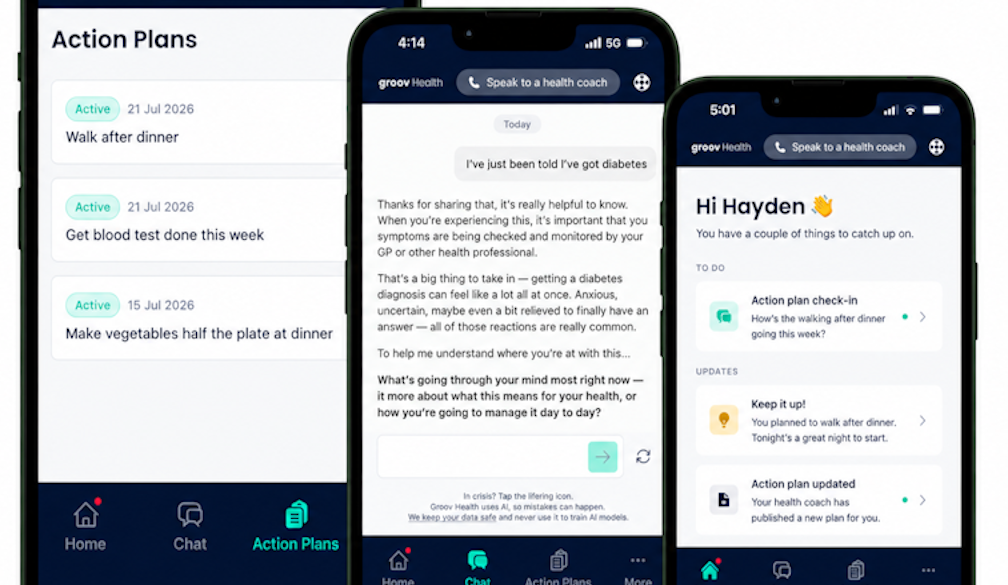
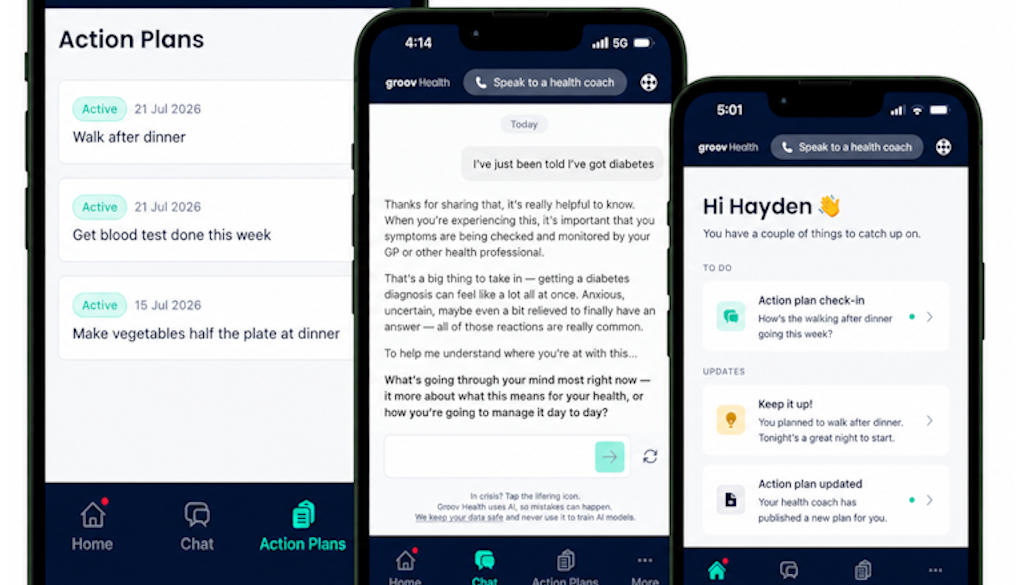
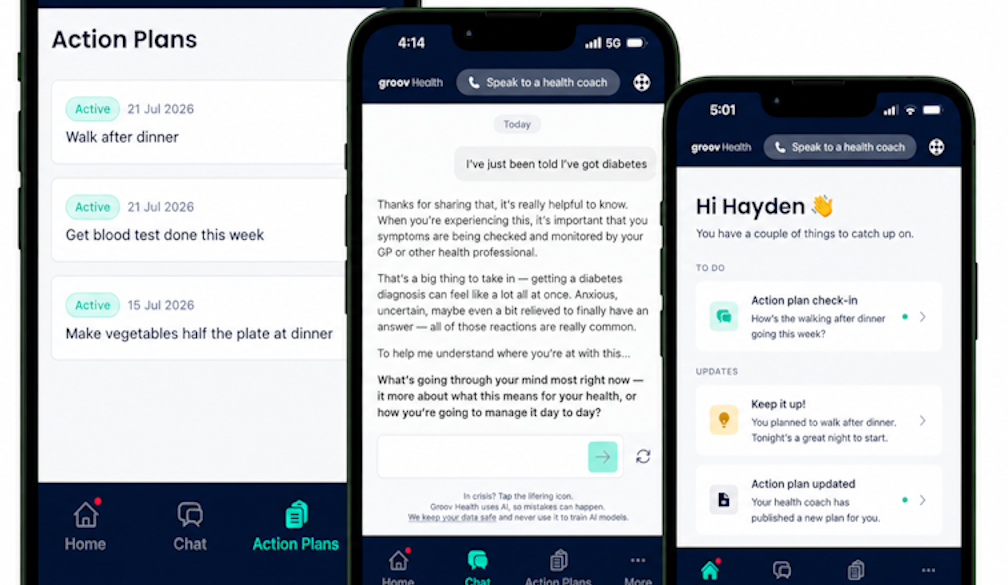
Tāmaki Health introduced an AI Health Coach across six clinics in July, working with New Zealand health technology company Groov. The technology was co-designed with patients, workforce and clinical leaders and operates alongside six human Health Coaches as part of routine primary care.
Data from the first six weeks is now providing an early picture of what a combined human and AI model could deliver.
One of the most significant results came from proactive outreach to people living with diabetes whose blood glucose levels indicated poorly controlled diabetes and who had not attended a clinic for at least six months. Rather than waiting for these patients to return to care, Tāmaki Health proactively offered them access to both the AI Health Coach and a human Health Coach.
The campaign achieved a 2.7% enrolment rate, compared with a 0.4% seasonal benchmark from comparable previous human-only outreach, representing a seven-fold increase. The cohort was relatively small and higher-need, meaning the result is indicative rather than a controlled comparison, but it provides an early signal that the model may help reconnect patients who have become disengaged from care.
Across the pilot, uptake also increased as the rollout progressed. Enrolment in the AI Health Coach as a proportion of patients seen rose from 41% in week one to 75% by week six. This was 4.4 times the enrolment rate of Tāmaki Health's existing digital portal, used as the closest available benchmark for this population.
The early participation data also points to the potential for the model to reach populations where health inequities remain a persistent challenge. Māori and Pacific Peoples together represented 56% of patients enrolled in the AI Health Coach, 1.4 times their representation across the clinics involved in the pilot.
Groov CEO Matt Krogstad says reaching people before their health deteriorates further is an important part of the opportunity.
“This is a group the health system really wants to reach: people living with diabetes whose blood glucose levels indicate their condition is not well controlled and who have been out of care for six months or more. Instead of waiting for them to come back through the door, we can bring support to them proactively.”
AI takes on more of the information-gathering workload
The pilot is also testing whether AI can remove some of the administrative work associated with collecting patient-reported health information.
During the first six weeks, overall collection of patient-reported outcome information increased by 8% compared with Health Coaches' performance before the AI Health Coach was introduced. Completion at the beginning of a patient's care increased by 15%.
More than half of all collection was performed by the AI Health Coach, with that contribution increasing to 78% in week six. Among patients using the platform, 84% completed their patient-reported health forms through the AI Health Coach.
The significance is not simply collecting more information. Patient-reported outcome measures help providers understand whether care is making a difference, while providing wider insight into programme performance and where services may need to change. Automating more of that collection could improve the consistency of the information available without creating another manual task for frontline teams.
Extending care beyond the appointment
Another early finding is how patients are using the AI Health Coach once they leave the clinic.
More than a quarter of enrolled patients had a conversation with the AI Health Coach between clinic visits and 12% returned to check in on their action plan. Across six weeks, this created 105 additional patient touchpoints without additional workforce time. Patients gave the AI Health Coach an average helpfulness rating of 8.9 out of 10.
Dr David Codyre, Clinical Director, Wellness Support Team at Tāmaki Health, says this reflects where much of health improvement actually occurs.
“Most health improvement happens outside the consultation room. The AI Health Coach gives people practical, evidence-based support to turn advice into action, build confidence and sustain healthier behaviours between appointments, while ensuring they can be directed back to human care whenever needed.”
Human oversight remains part of the model. Every AI Health Coach conversation generated during the pilot is anonymised and clinically reviewed, with no unsafe responses identified during the first six weeks.
Tāmaki Health CEO Dr Lloyd McCann says the early results support further exploration of a model that combines technology with the existing health workforce.
“Early results are promising and indicate that further roll-out and investment where we blend the best of our human teams with technology is a sustainable path forward.”
The next phase will extend the AI Health Coach to Tāmaki Health's Health Improvement Practitioners. The model could also potentially be applied to other priority populations, including people affected by gout or obesity, young people and pre- and post-natal populations. Several large Primary Health Organisations have also expressed interest in implementing the approach in primary care settings.