Are mental health issues genetic? New research identifies brain cells linked to depression
- Written by: Times Media

Scientists from McGill University and the Douglas Institute recently published new research findings1,2 in Nature Genetics that demonstrate how the brain can be affected by depression.
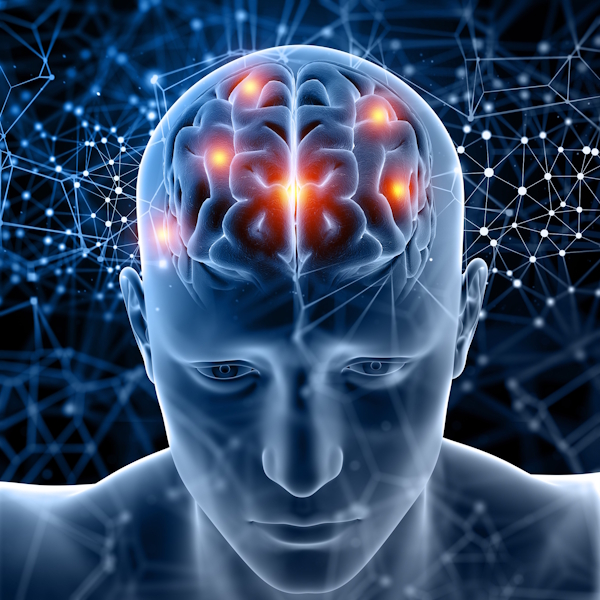
Their research found that certain neurons and microglia might function differently in depressed individuals, altering brain systems tied to mood, stress, and inflammation in the brain.
The research team utilised post-mortem brain tissue from the Douglas-Bell Canada Brain Bank that includes donations from people with psychiatric conditions. The study examined and analysed the RNA and DNA of brain tissue from 44 individuals who died during an episode of MDD (major depressive disorder) and 40 who did not. By identifying the specific affected cells, they could ascertain possible disruptions in vital neural systems.
With more than 264 million people worldwide affected by depression2, the new data offers hope for the future creation of more effective, targeted treatments.
“This research makes an important contribution to a key area of study looking at how genetics play a role in mental health,” says Enzo Somosi, a psychologist at Clarity Health Care. “This research is a great demonstration of how our emotional states are directly informed by our biology.
“Importantly, if you have a genetic predisposition of mental health challenges in your family, it does not mean you will go on to inherit the same or similar mental health challenges,” he says. ”It’s best to think of mental health issues as the result of a gene–environment interaction. Genes can make someone more sensitive to stress, for instance, but supportive environments or mental health interventions can offset that risk.”
How to improve your mental health outcome
Visit a GP to get a referral to a psychologist or psychiatrist to create a mental health care plan.
Talk to a trusted friend or family member about your mental health concerns.
Join a mental health group, attend community meet ups, or volunteer and help others.
Utilise an evidence-informed mental health program / app such as the Clarity Optimal Health Program
Conversely, there are environmental factors out of your control that can increase the risk of developing mental health conditions, such as:
Biological / physical health impacts: Bad diet and lack of exercise are not conducive to good mental health.
Systematic disadvantage is widely regarded as a complex and ongoing life stressor that can increase the likelihood of developing mental health conditions.
Adverse childhood experiences have been shown to increase the risk of mental health conditions. These could include various forms of childhood abuse and/or highly stressful events, such as the loss of a caregiver or experiences of family violence.
Are you a dandelion or an orchid?
Despite these challenging environmental elements, people respond differently depending on whether they are a ‘dandelion’ or an ‘orchid.’
Created by Dr. W. Thomas Boyce, this framework is based on a theory that describes a person's sensitivity to their environment.
Dandelion people are resilient and can thrive in most conditions, regardless of their upbringing. They are less vulnerable and able to handle challenges that life throws at them, whereas orchid individuals are predisposed to sensitivity and therefore require more supportive environments to thrive.
Orchids can be more physically and emotionally reactive to their world, but given the right support, they can experience optimal health outcomes.
Somosi concludes, “With the right supports that foster wellbeing, every human has the capacity to live a worthwhile life, irrespective of their environment or their background.”
- Anjali Chawla, Doruk Cakmakci, Laura M. Fiori, Wenmin Zang, Malosree Maitra, Jennie Yang, Dariusz Żurawek, Gabriella Frosi, Reza Rahimian, Haruka Mitsuhashi, Maria Antonietta Davoli, Ryan Denniston, Gary Gang Chen, Volodymyr Yerko, Deborah Mash, Kiran Girdhar, Schahram Akbarian, Naguib Mechawar, Matthew Suderman, Yue Li, Corina Nagy, Gustavo Turecki. Single-nucleus chromatin accessibility profiling identifies cell types and functional variants contributing to major depression. Nature Genetics, 2025; 57 (8): 1890 DOI: 10.1038/s41588-025-02249-4
- https://www.sciencedaily.com/releases/2025/10/251010091559.htm
- https://www.clarityhealthcare.com.au/optimal-health-program/
- https://www.sciencedirect.com/science/article/pii/S0165032725020312#:~:text=Poverty%20is%20a%20major%20factor,et%20al.%2C%202020).
About Clarity Health Care - https://www.clarityhealthcare.com.au/
Founded in 2013, Clarity Health Care aims to provide an alternative to the hospital setting for individuals experiencing severe mental illness. Clarity Health Care offers mental health care in Melbourne (Fitzroy and Malvern) and Hobart (Sandy Bay and Kingston) with a more comprehensive approach.
The team comprises psychiatrists, psychologists, occupational therapists, mental health social workers, and registered nurses to provide evidence-based care through various modalities that are flexible and accessible to all consumers. Our model is proven to deliver recovery outcomes, with one review showing a 90% reduction in psychiatric hospital readmissions due to our intervention.