
Morrison government commits $1 billion over 12 years for new vaccine manufacturing supply
- Written by: The Conversation
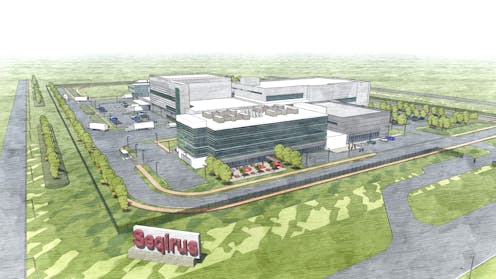
The federal government has concluded a $1 billion agreement, funded over 12 years, with Seqirus to secure supply from a new high-tech manufacturing facility in Melbourne which would produce pandemic influenza vaccines as well as antivenoms.
This would boost Australia’s sovereignty when the country was faced with a future pandemic, and make for quick responses.
Seqirus, a subsidiary of CSL Ltd, will invest $800 million in the facility, which will be built at Tullamarine, near Melbourne airport. It will replace Seqirus’ facility in the inner Melbourne suburb of Parkville which is more than 60 years old. The Victorian government has supported the procurement of the land for the new operation.
Seqirus says the complex will be the only cell-based influenza vaccine manufacturing facility in the southern hemisphere, producing seasonal and pandemic flu vaccines, Seqirus’ proprietary adjuvant MF59 ®, Australian antivenoms and Q-Fever vaccine.
Work on construction will begin next year; the project will provide some 520 construction jobs. The facility is due to be fully operating by 2026, with the contract for supply of its products running to 2036.
The present agreement between the federal government and Seqirus is due to end in 2024-25.
Seqirus is presently the only company making influenza and Q fever vaccine in Australia, and the only one in the world making life-saving antivenom products against 11 poisonous Australian creatures, including snakes, marine creatures and spiders.
Scott Morrison said that “while we are rightly focused on both the health and economic challenges of COVID-19, we must also guard against future threats.
"This agreement cements Australia’s long-term sovereign medical capabilities, giving us the ability to develop vaccines when we need them.
"Just as major defence equipment must be ordered well in advance, this is an investment in our national health security against future pandemics,” he said.
Stressing the importance of domestic production capability, the government says when there is a global pandemic, countries with onshore capabilities have priority access to vaccines.
Health minister Greg Hunt said: “This new facility will guarantee Australian health security against pandemic influenza for the next two decades”.
Seqirus General Manager Stephen Marlow said: “While the facility is located in Australia, it will have a truly global role. Demand for flu vaccines continues to grow each year, in recognition of the importance of influenza vaccination programs. This investment will boost our capacity to ensure as many people as possible – right across the world – can access flu vaccines in the future.”
To deal with the present pandemic, the government has earlier announced $3.2 billion to secure access to over 134.8 million doses of potential COVID-19 vaccine candidates developed by the University of Oxford-Astra Zeneca and the University of Queensland, Pfizer-BioNTech and Novavax.