Australians Can Choose Their Supermarket — But Have Little Independence With Electricity
- Written by: The Times
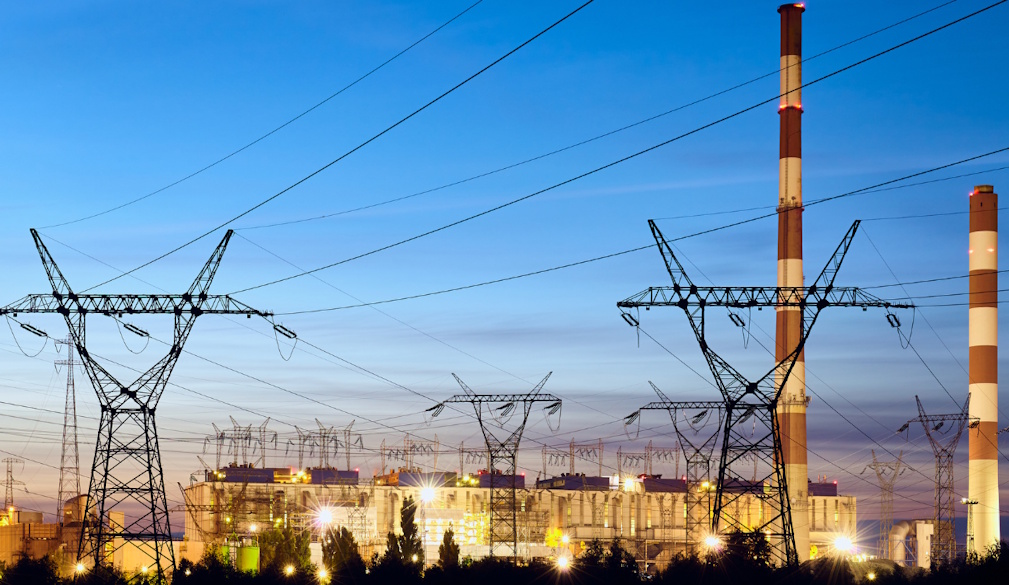
Australians can choose where they shop for groceries. If one supermarket lifts prices, reduces quality, or cuts service, consumers can walk across the road. Coles, Woolworths, Aldi, Costco, independents and local grocers all compete for the weekly shop. Choice exists, and competition — however imperfect — at least gives households leverage.
Electricity is different. While governments often speak of “choice” in the energy market, for most Australians that choice is limited, confusing, and ultimately constrained by a system that was sold off to private enterprise — enterprises that exist to maximise profits, not guarantee affordability or security.
The result is a sense of powerlessness: households pay more, understand less, and have almost no genuine independence over a service that is essential to modern life.
From Public Utility to Private Profit
For much of the 20th century, electricity in Australia was treated as what it plainly is: a public utility. State-owned electricity commissions generated power, maintained transmission networks, and supplied households at regulated prices. Reliability, coverage and affordability were the priorities. Profits were either modest or recycled back into the system.
That changed from the 1990s onward. Governments of both major political persuasions sold electricity assets — generation, retail, and in many cases transmission — to private operators. The rationale was familiar: competition would drive efficiency, innovation, and lower prices.
Three decades later, Australians are entitled to ask whether that promise has been kept.
Electricity prices have risen sharply over time, even after accounting for inflation. Bills are opaque, comparison is difficult, and “discounts” are often applied to inflated reference prices that few fully understand. Meanwhile, electricity retailers report healthy profits, and shareholders — often offshore — benefit from an essential service Australians cannot live without.
A Market You Can’t Opt Out Of
You can stop buying premium groceries. You can shop at a discount store, grow your own vegetables, or change your diet entirely. Electricity offers no such escape.
You need power to refrigerate food, heat water, run medical equipment, study, work from home, and increasingly, charge vehicles. Electricity is not discretionary. It is foundational.
And while Australians are told they can “choose their retailer”, the reality is constrained:
-
The poles and wires are monopolies — you cannot choose who owns or maintains them.
-
Retail competition is mostly on paper — many brands are owned by the same parent companies.
-
Switching is complex and time-consuming, with plans designed to confuse rather than clarify.
-
Price rises are often uniform, moving in the same direction at the same time.
In practice, electricity behaves less like a competitive consumer market and more like a privatised toll road — unavoidable, expensive, and largely outside individual control.
Profits First, Households Second
Private electricity retailers exist for one reason: to generate profits for shareholders. This is not a moral judgement — it is a legal obligation.
Companies such as AGL Energy, Origin Energy, and EnergyAustralia operate within this framework. Their responsibility is not to ensure electricity remains affordable in tough economic times; it is to maintain margins, manage risk, and deliver returns.
When wholesale prices rise, costs are passed on. When policy uncertainty increases, risk premiums are added. When infrastructure investment is required, consumers ultimately pay.
Contrast this with supermarkets. They seek profits too, but they face real behavioural consequences if prices jump too far. Electricity retailers face none. Demand does not fall when prices rise. People simply absorb the pain — or go without something else.
Governments Stepped Back — But Never Fully Let Go
Despite selling assets, governments remain deeply involved in electricity — setting rules, offering rebates, intervening during crises, and copping the blame when bills rise.
This creates a strange contradiction:
-
Governments no longer control pricing directly
-
Governments still carry political responsibility
-
Private companies collect profits
-
Consumers bear the risk
When prices spike, governments scramble to issue temporary relief payments or energy rebates. These are effectively taxpayer-funded band-aids — public money cushioning households from private pricing decisions.
If electricity were still publicly owned, those same funds could be used to permanently lower prices or invest directly in capacity and reliability.
Renewable Energy: Promise Meets Reality
Australia’s energy transition adds another layer of complexity. Renewable energy — solar and wind — is cheaper to generate but expensive to integrate at scale. Storage, transmission upgrades, and grid stability all require massive investment.
Private companies are reluctant to spend without guaranteed returns. Governments hesitate to re-enter ownership. Consumers pay higher bills during the transition while being told cheaper power is just around the corner.
Household solar has given some Australians a taste of independence, but even that comes with limits:
-
Feed-in tariffs have collapsed
-
Grid access fees are increasing
-
Battery systems remain expensive
-
Export controls are being introduced in some states
The system still belongs to someone else.
Why Electricity Is Not Like Groceries
Electricity fails the basic tests of a normal consumer market:
| Supermarkets | Electricity |
|---|---|
| Optional purchases | Essential service |
| Easy comparison | Complex pricing |
| Real alternatives | No substitute |
| Consumer can opt out | Consumer cannot |
| Price sensitivity | Price inelastic |
Treating electricity as just another market ignores its social and economic importance. It is closer to water, roads, or healthcare infrastructure than retail shopping.
Rebuilding Independence — What Could Change?
Australians are not powerless, but real reform would require political courage:
-
Reconsider public ownership
Partial or full re-nationalisation of key assets — particularly transmission — could stabilise long-term costs. -
Stronger price regulation
Genuine caps on margins for essential electricity supply, not just headline “default offers”. -
Simpler billing and transparency
One-page bills, clear unit pricing, and an end to misleading discounts. -
Community and local energy models
Councils, co-operatives and regional utilities generating and selling power locally. -
Treat electricity as essential infrastructure
Not just another profit centre, but a service tied to national productivity and household wellbeing.
The Question Australians Are Beginning to Ask
Australians are practical people. They understand that businesses need to make money. But they also understand when something fundamental has gone too far.
Electricity is not a luxury. It is not a lifestyle choice. It is a prerequisite for modern living.
When governments sold electricity assets, they also sold a measure of independence — trading long-term control for short-term budget relief. The consequences are now visible on every quarterly bill.
Australians can choose where they buy their bread and milk. But when it comes to electricity, the switch is often an illusion — and the power, quite literally, belongs to someone else.