

The worst is not over in the crisis tearing at Scott Morrison's government
- Written by: Michelle Grattan, Professorial Fellow, University of Canberra
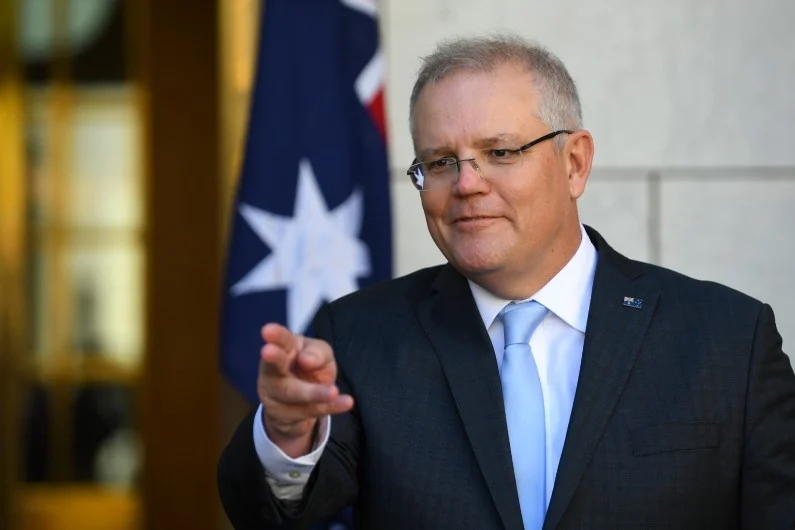
“Is your leadership safe?” Scott Morrison was asked on the ABC on Thursday. The Prime Minister’s leadership is quite safe, but that the question was put says volumes for how embattled he’s become in a few weeks.
As did some early words in his answer. “What suggestions are you picking up there?”
These days Morrison gets out of bed each morning not knowing what disturbing, sometimes bizarre, story might hit him before he retires for the night.
Late Thursday, for instance, Nine went to Morrison with evidence Queensland Liberal backbencher Andrew Laming had bullied two women in his community via Facebook.
Morrison immediately summoned Laming, who was dispatched to the House to retract his comments and make a grovelling apology.
The string of accounts of dreadful behaviour in parliament house, from alleged rape to government staffers engaging in disgusting sexual acts and so-called “orgies”, is making the nation’s seat of democracy sound like the set of an X-rated movie.
Questioned about Network Ten’s graphic report, Morrison said: “This is conduct that is completely mysterious to me, it is not something that I can even conceive of, to be honest.” He wasn’t the only one.
Read more: Morrison says Coalition staffer sacked after 'disgusting' allegation[1]
As we’ve seen, the broad message of disrespect and much worse from the revelations has lit a fire among women in the community, as they share their own experiences of assault, harassment and denigration with each other and publicly.
In another context, Morrison famously said “you know, I don’t hold a hose, mate”. But in this crisis engulfing the government, he’s frantically on the tools, announcing inquiries, promising initiatives, advocating quotas, delivering mea culpas, declaring empathy, inviting Brittany Higgins to meet.
Often, however, it’s one step forward, one back. Like the own goal when he turned aggressive, stupidly blurting out (inaccurate) gossip, during the news conference called to project an image of the caring man who listens.
Now he’s forced into a reshuffle, made imperative by the issues surrounding Attorney-General Christian Porter.
Morrison should have dealt with Porter’s situation much earlier, regardless of his going on mental health leave. (It is, incidentally, at least in my memory, very unusual for a minister at the centre of a political storm to take leave.)
In the imminent changes, Porter will be moved out of attorney-general’s and Defence Minister Linda Reynolds, under fire for her handling of Higgins (and on medical leave) will go from defence.
In a fig leaf of solidarity – or a sign of stubbornness – Morrison will keep both in cabinet.
Morrison stuck by Porter initially but it’s clear (a point presumably spelled out in the advice from the Solicitor-General) that he would be riddled with potential conflicts of interest now he’s suing the ABC.
Porter should have stepped down for the good of the government as soon as the allegation of historical rape landed – even though he strongly denies it.
But neither Morrison nor Porter were willing to take that course, arguing it would set a new low bar for forcing ministerial departures.
It’s ironic that Porter’s move to try to clear his name through the courts will be the catalyst for moving him.
Reynolds’ future has been problematic since she entered hospital when she was under political fire and her heart condition became common knowledge.
The reshuffle – in which Michaelia Cash is tipped to become attorney-general and Peter Dutton defence minister – won’t be a magic carpet ride to the other side of this crisis.
Morrison will be helped by having no parliament until the May budget. But allegations and revelations are expected to continue, and striking the right tone and mustering effective responses will remain a struggle for the PM.
On Thursday Higgins struck again, with a letter to Morrison’s chief of staff, John Kunkel, lodging a complaint saying the PM’s media team had backgrounded against her partner.
Morrison, who’d dodged numerous opposition questions about this, later said a “primary” and “direct source” – apparently someone who had allegedly witnessed what had happened – had now come to Kunkel with “confidential information”.
Morrison said he’d asked Kunkel to commence a process to deal with the complaint. This sounded like a ticking time bomb.
On the positive side, the crisis has generated momentum for action on the Sex Discrimination Commissioner’s report on workplace sexual harassment – on which little had been done – with a full response before the budget.
And Morrison says he’s open to quotas to get more Liberal women into parliament. We’ll see where that gritty debate goes within the party.
Read more: Politics with Michelle Grattan: Sussan Ley on being a woman in politics[2]
With the government taking such a battering, the question is how lasting the damage will be. Specifically, at election time next year will a significant number of women take their anger with them into the polling booth?
Not long ago bold commentators were declaring the election unlosable for Morrison.
Now, bets are hedged. But in politics, fallout is often unpredictable.
For example, shortly before the 2004 election, John Howard’s credibility came into serious question after a whistleblower made damaging claims about what the then prime minister had been told in the 2001 “children overboard” affair. Undeterred, Howard made “trust” central when he announced the election, at which he increased his majority.
Again, when Julia Gillard became PM in June 2010, putting her head-to-head with Tony Abbott, she instantly boosted Labor’s two-party vote, and nearly twice as many women preferred her to Abbott, according to an Age/Nielsen poll. In August, she almost lost the election.
There’s an election saying “the pig can’t be fattened on market day”. But it’s true as well that situations change incredibly fast, especially in today’s hyper cycles.
Equally true, is that people have a hierarchy of considerations when they vote. Many women will be critical of Morrison’s performance in recent weeks. But even if some of that feeling remains strong, where would it rate when they vote compared with, say, their judgment on how the government is performing on the economy?
Oppositions mightn’t win elections but opposition leaders have to attract votes for positive reasons (as did Whitlam, Hawke, Rudd) as well as harvesting people’s discontent with the government. The Coalition looks shambolic, but Anthony Albanese and his party remain unimpressive.
In earlier times, Labor’s national conference would be a significant event that could be used by the leader as a rallying moment.
However next week’s conference, delayed from 2020 by COVID, will be “virtual”, reducing the opportunity for hoopla.
There are no major issues – the policy arguments will be in the weeds. That’s good for the appearance of unity but it also removes the opportunity for the leader to show his command.
The best Albanese can look for is a good public reaction to whatever policy he decides to announce.
Recent weeks have been appalling for Morrison. They do not give us a pointer to an election result probably roughly a year away. They do indicate the contest looks more open than it appeared as 2021 began.
References
- ^ Morrison says Coalition staffer sacked after 'disgusting' allegation (theconversation.com)
- ^ Politics with Michelle Grattan: Sussan Ley on being a woman in politics (theconversation.com)