

Another family law review, another shrug. Why conduct time-consuming inquiries if they go nowhere?
- Written by: Patrick Parkinson, Professor of Law, The University of Queensland

Another month, another report on the family law system: and a disappointing government response on one of our most pressing domestic issues.
Two weeks ago, the Joint Select Committee on Australia’s Family Law System[1] published its major report[2] on ways to reform the overstretched, beleaguered legal system overseeing parenting and property disputes when relationships break down.
Meanwhile, another substantial report[3] from the Australian Law Reform Commission[4] (ALRC) in April 2019 has all but been forgotten.
Launched with great fanfare in 2017 by then-Attorney-General George Brandis, the inquiry was billed as the first comprehensive review of the Family Law Act[5] since its commencement in 1976 — a rather bold claim, given the plethora of inquiries and reports on almost every aspect of family law in the intervening years.
Read more: We don't need another inquiry into family law – we need action[6]
The ALRC’s terms of reference[7] were so broad as to be utterly unmanageable. They included such things as:
-
the appropriate, early and cost-effective resolution of all family law disputes
-
how to determine the best interests of children and listen to their views
-
issues concerning family violence, child abuse, drug or alcohol addiction and serious mental illness
-
whether the adversarial court system is the best way to deal with family law issues
-
the law on how to divide property when relationships break down.
The list went on and on. Any one of these topics alone was worthy of a reference to a law reform body.
Most of these issues had already been extensively explored in reports by parliamentary committees, previous ALRC inquiries and the many carefully considered reports of the Family Law Council, a statutory body that was put into hibernation by the Turnbull government.
Notwithstanding the breadth of the terms of reference, the ALRC’s small group of commissioners and research staff were given only 18 months to report.
The commission struggled valiantly with the enormous task it was given. Its report, published in April 2019, contained 60 recommendations.
The government responds — two years later
So what happened? Quietly, on March 21, nearly two years after the report was published, the Morrison government released its response[8].
Few of the commission’s recommendations were accepted. And those which were accepted largely involved tinkering at the margins. Numerous recommendations were simply “noted”.
The major proposed changes to the law on property division and parenting after separation were all rejected, although the government says it will attempt some redrafting to help “clarify” the law.
Many of the other recommendations were marked as “agreed in principle” or “agreed in part”.
Read more: To fix the family law system, we need to ask parents what really works[9]
Law reform bodies, parliamentary committees and governments have a shared interest in demonstrating how many recommendations have been accepted.
Permanent bodies like the ALRC keep score of their “success rate”[10] when recommendations are put into action. Governments, likewise, enjoy being able to say they have implemented the recommendations of these often costly and time-consuming inquiries.
However, even where the ALRC’s proposals were “accepted in principle” or “in part”, the government’s written responses often indicated that the recommendations had, in reality, not been accepted at all. For example, it agreed in principle some disputes about children should be able to be arbitrated - but then explained all the problems involved in doing so.
Typically, the response to many recommendations sounded like, “we will think about it”, or “we will consult with stakeholders” or “we might draft something vaguely along the lines of what the ALRC was trying to achieve”.
What is not clear is why, in the two years since the report was received, the government hasn’t already thought about it, consulted with stakeholders and developed proposed reforms to the act.
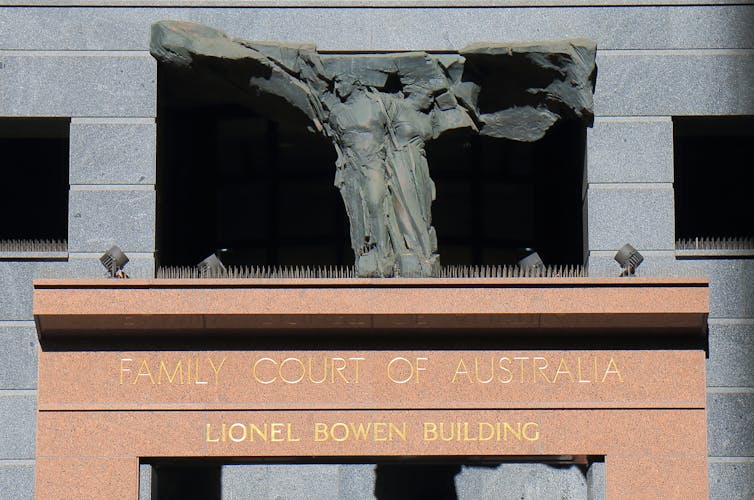 Family law experts agree we already have enough data to fix the system. Shutterstock
The community’s expectations from inquiries
This raises a larger question about how governments deal with the recommendations of such bodies.
Inquiries launched with as much fanfare[11] as the “first comprehensive review of the family law system in 40 years” create expectations there will be significant change as a result.
People and organisations invest large amounts of unpaid time in making submissions. The inquiry team burns the midnight oil to finalise the report.
These reports are written by experts or drawing on the submissions of experts. But they are too often then considered by staff in government departments who lack the same expertise and practical experience.
Public servants are generalists. They rotate through different sections of their departments every two or three years, and sometimes between departments, building up a broad range of experience. The downside of this model is a lack of continuity and depth of expertise.
Read more: The government still wants a Family Court merger — new research shows why this is not the answer[12]
In addition, the process by which governments decide whether to accept or reject recommendations from inquiries is far from transparent. Many reports never receive a response, or action, at all. That has been the case for many Family Law Council reports.
The “good news” from last week’s announcement is the government did announce its intention to reinstate the Family Law Council.
The council will write more reports. However, without a process by which governments commit to honour the effort that goes into making submissions and writing such reports, people and organisations could be forgiven for not wanting to offer any more of their time.
There is no point launching a rocket towards a black hole.
References
- ^ Joint Select Committee on Australia’s Family Law System (www.aph.gov.au)
- ^ major report (www.aph.gov.au)
- ^ substantial report (www.alrc.gov.au)
- ^ Australian Law Reform Commission (www.alrc.gov.au)
- ^ billed as the first comprehensive review of the Family Law Act (thenewdaily.com.au)
- ^ We don't need another inquiry into family law – we need action (theconversation.com)
- ^ ALRC’s terms of reference (www.alrc.gov.au)
- ^ its response (www.ag.gov.au)
- ^ To fix the family law system, we need to ask parents what really works (theconversation.com)
- ^ keep score of their “success rate” (www.alrc.gov.au)
- ^ much fanfare (www.aph.gov.au)
- ^ The government still wants a Family Court merger — new research shows why this is not the answer (theconversation.com)